A luxury patio’s value is best judged over its useful life, not by its upfront cost alone. Homeowners can often recoup between 55% and 75% of an outdoor project’s cost at resale. Justifying the cost of a luxury patio also means weighing how its materials, maintenance needs, and everyday use affect its long-term value.
Justifying the cost of a luxury patio starts with looking beyond the initial price. Design, materials, and features shape the investment, while upkeep affects how the space serves your home over time. A well-planned patio can also add everyday enjoyment, not just potential appeal to a future buyer.
This guide explains what influences patio costs, how durability and maintenance factor into long-term value, and how to think about possible resale benefits. Use it to weigh the project’s upfront expense against the comfort and appeal it can provide.
Key Takeaways
- Separate the major cost drivers, from the patio structure to furniture and added features, to understand what shapes the overall investment.
- Compare upkeep and replacement needs over time, not just the initial purchase, when evaluating materials and outdoor furnishings.
- Consider how hardscaping elements contribute to the complete space and its everyday function.
- Weigh potential resale contribution alongside the comfort, usability, and appeal the patio brings while you live in the home.
What Drives the Cost of an Outdoor Project?
The overall investment depends on what the plan includes, how the design connects to your home, and the finishes you choose. A dining area, cooking station, shade structure, and furniture each bring different requirements. A covered seating area, for example, has a different scope from a patio with a grill station and dining space. To justify the cost of a luxury patio, break the plan into components instead of treating the entire outdoor space as one purchase.
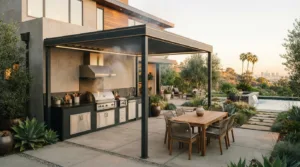
Cooking features can add significantly to a project’s scope. Equipment, counter space, and layout all matter: a compact grilling station is different from a full outdoor kitchen with several work areas. Decide what you need the space to support before comparing designs, so the plan reflects how you’ll use it rather than adding extras without a clear purpose.
Furniture costs depend on the number of pieces and the finish you choose. A compact seating area may need fewer items than a space planned for both dining and conversation. Start by deciding which activities the patio should support, then select furniture to suit.
Set size matters as much as the category. Count the seats and accessories required for the intended layout before comparing complete sets with individual pieces.
The project’s scope also determines how the components work together. A larger dining arrangement needs enough usable surface area, while a grilling station needs room for cooking and serving. These choices affect the layout and finish, even when no single feature defines the investment. List intended uses, such as dining, lounging, or cooking, and separate essential features from optional ones. That makes different design concepts easier to compare fairly.
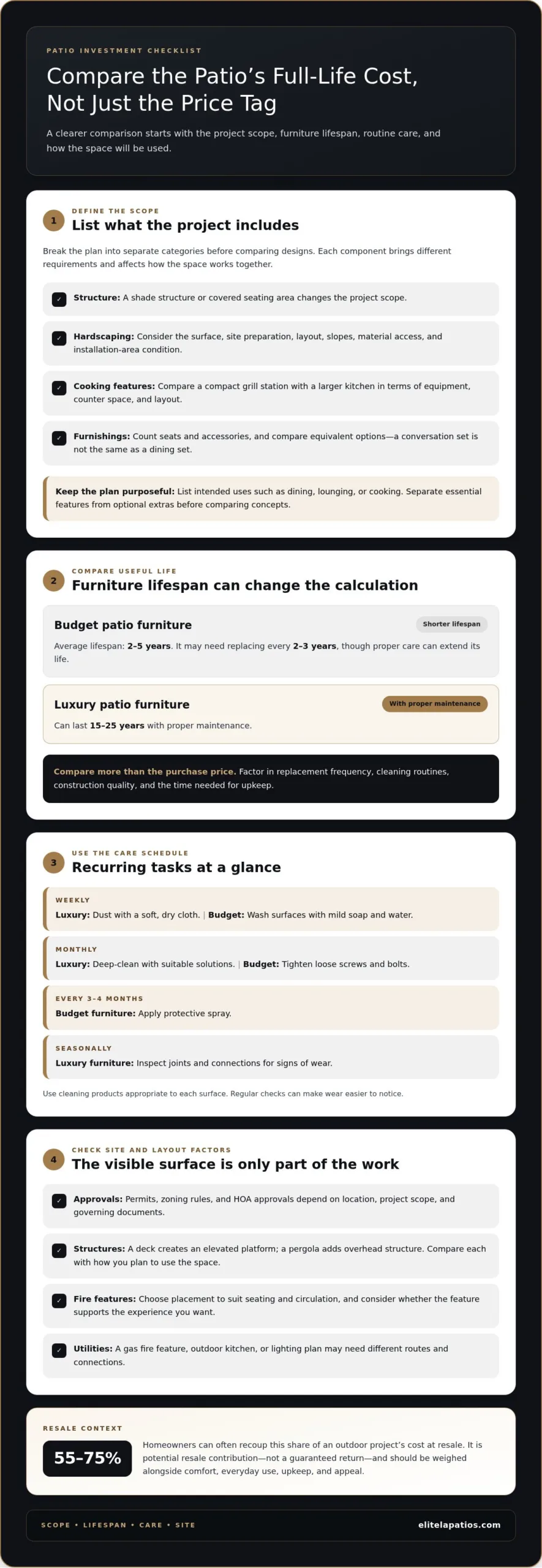
For a practical comparison, group the plan into structure, hardscaping, cooking features, and furnishings. Track each category separately and compare equivalent options: a conversation set is not the same as a dining set. This breakdown makes it easier to see which choices drive the investment and where a simpler scope could preserve the experience without unnecessary additions.
Maintenance needs and replacement frequency
Maintenance changes the real cost of outdoor furniture over time. Budget patio furniture may need replacing every 2 to 3 years, though proper care can extend its life. Its average lifespan is 2 to 5 years. Luxury patio furniture can last 15 to 25 years with proper maintenance. That difference makes cleaning routines and construction quality important parts of a long-term comparison, not minor details after purchase.
A patio’s value involves more than its initial price. Comfort, regular use, and upkeep all affect how well it serves your household. Before choosing furniture, consider how people will sit, dine, or lounge. An arrangement sized for those activities is more likely to remain useful than one chosen for appearance alone.
Care routines vary by furniture type. Luxury patio furniture should be dusted weekly with a soft, dry cloth, deep-cleaned monthly with suitable cleaning solutions, and inspected seasonally for joints and connections. These tasks help keep surfaces presentable and make wear easier to notice. For example, a seasonal inspection can reveal a loose connection before continued use puts added strain on it.
Budget furniture needs consistent attention too. Clean its surfaces weekly with mild soap and water, apply protective sprays every 3 to 4 months, and tighten loose screws and bolts monthly. These recurring tasks take time, but they can help furniture last longer than expected. A household comparing lower-cost pieces should account for both replacement frequency and the effort required to maintain them.
- Weekly: Dust luxury furniture with a soft, dry cloth; wash budget furniture surfaces with mild soap and water.
- Monthly: Deep-clean luxury pieces with appropriate solutions and tighten loose budget-furniture screws or bolts.
- Every 3 to 4 months: Apply protective spray to budget furniture.
- Seasonally: Inspect luxury furniture joints and connections for signs of wear.
Comfort deserves a place in the maintenance calculation. Cushions and seating surfaces should suit the intended use, whether the patio hosts meals or longer conversations. Check whether pieces remain comfortable after regular use, and keep cleaning products appropriate to their surfaces. For an outdoor setting where shade and seating can shape everyday comfort, you can discuss your outdoor project.
Patio and hardscaping costs
Permits, zoning rules, and homeowners association approvals depend on the project’s location, scope, and governing documents. For example, a homeowner may need to review local requirements and HOA design rules before planning construction, especially when the work changes the property’s outdoor layout.
Hardscaping scope depends on the surface, site preparation, and layout. A simple seating area differs from a plan with multiple hardscape features. Slopes, material access, and the condition of the installation area can also affect the work. Consider these factors together: the visible surface is only one part of creating a functional outdoor space.
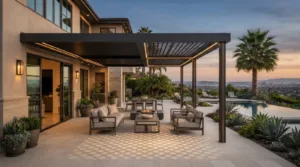
Adding structures can change the project scope considerably. A deck creates an elevated platform, while a pergola adds overhead structure, so they serve different purposes. Compare each against how you plan to use the space, whether for dining, lounging, or connecting the patio to your home.
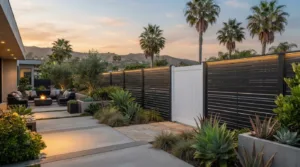
Fire features add another element to the plan. Their placement should suit the seating arrangement and circulation space. A fire pit at the center of a conversation area serves a different purpose from one at the edge of a larger patio. Decide whether it supports the experience you want before including it in the scope.
Utility connections can affect the design and construction plan. A gas fire feature, outdoor kitchen, or lighting plan may require different routes and connections. The distance to existing utilities, access beneath finished surfaces, and coordination with other work all shape the scope. Planning a cooking station before installing the patio surface, for example, can help avoid revisiting finished areas later.
Some ownership responsibilities continue after construction. Cleaning surfaces, caring for furniture, and addressing repairs take time and materials. Consider drainage and water movement during planning, since poor flow can affect the patio and nearby landscaping. Include these practical needs when comparing designs. A patio with a pergola, deck, fire pit, and utility connections may offer several amenities, but each addition expands the scope. Prioritize features by purpose and assess how they fit the property and your intended use.
Depending on the location and project scope, local permits or zoning compliance may be required. HOA review or approval may also apply under the governing design rules, especially if the patio changes the outdoor layout.
Material choices and durability
Choose materials to suit the patio’s use, exposure, and upkeep needs. To manage the investment without compromising core quality, simplify the design before cutting back on installation or essential materials. You could keep a durable primary surface and postpone decorative borders or secondary features. That preserves the parts that shape daily use while keeping optional details separate.
View material samples in the setting where they will be installed. A surface beside a pool faces different moisture and cleaning demands from one beneath a covered dining area. Ask how each option handles routine cleaning, staining, and repairs, then compare its care instructions. Materials that need specialized upkeep have a different ownership profile from those cleaned with ordinary products.
Construction details matter as much as the visible finish. Look at how edges meet, how adjoining surfaces transition, and whether individual sections can be repaired without replacing a larger area. For example, a damaged paver may be replaceable on its own, unlike a continuous surface that might require broader work. Compare both the material and how the finished patio is assembled.
Use this checklist when assessing durability:
- Intended use: Match the surface to dining, lounging, cooking, or frequent foot traffic.
- Exposure: Consider sun, rain, shade, and nearby landscaping at the actual installation site.
- Care: Review the cleaning method and products each material requires.
- Repair: Determine whether a worn or damaged section can be addressed on its own.
Quality does not require the most elaborate finish in every area. Emphasize a refined surface where it will be seen and used most, and simplify less prominent edges or transitions. A dining zone could be the visual focus, while a side passage has a more restrained finish. A coordinated palette helps different materials feel intentional rather than mismatched.
Before settling on a plan, compare complete assemblies rather than isolated samples. A sample shows color and texture, but the finished project also depends on seams, edges, drainage, and connections to the home. Consider how the surface suits the layout and maintenance routine. This helps distinguish lasting functional value from decorative upgrades that add complexity without improving the space.
Outdoor project resale value
Resale value can help put an outdoor project’s investment in perspective. Homeowners can often recoup between 55% and 75% of an outdoor project’s cost at resale. That range offers a way to think about potential recovery, not a substitute for the enjoyment and use the space provides beforehand. A patio that supports dining, relaxing, or entertaining may deliver value during ownership as well as at sale.
Consider any potential resale contribution in the context of the whole project. If the plan includes hardscaping, a shade structure, furniture, and a fire feature, those components make up a combined investment. A potential return for the outdoor project does not mean each feature contributes the same value. Keep a clear record of the scope, including the patio surface and significant additions, so you know what the investment covers.
Presentation shapes a buyer’s first impression. A coherent layout, maintained surfaces, and a clear purpose can make an outdoor area easier to understand. A defined dining zone beside comfortable seating, for instance, shows how the patio can meet different needs. Disconnected features may make the space feel less intentional. Design around how people will use the area, then maintain it to support that purpose.
Resale planning also calls for restraint. A feature chosen for personal taste may not appeal to every future homeowner. Focus on a useful, well-integrated outdoor setting instead of adding elements just to expand the project. A shaded lounge area, for example, may support daily living more than a decorative feature that sees little use. A strong value case connects the investment to function and lasting condition.
Use these questions to assess the investment:
- Purpose: Does each feature support dining, relaxation, or another clear use?
- Integration: Do the layout and finishes feel cohesive with the home?
- Condition: Can routine care keep the space presentable over time?
- Scope: Are the additions valuable to your household, not just visually impressive?
For a sound decision, weigh potential resale recovery alongside years of personal use. The 55% to 75% range can inform expectations, while comfort, upkeep, and a considered design shape the broader value. If you’re planning an outdoor space, discuss your patio project and its design priorities.
Elite L.A. Patios: 4K Aluminum lattice patio cover
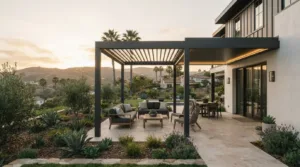
Elite L.A. Patios offers a premium aluminum lattice patio cover for homeowners planning a defined outdoor shade structure. The right choice depends on how you want the space to function and feel. A lattice cover suits a design that keeps an open, patterned overhead appearance, while a solid twin wall or insulated solid roof offers a different covered setting. A cantilever design is another option for projects where the structure’s layout calls for that specific configuration.
Consider the patio’s intended use, the home’s architecture, and how the cover will connect with existing outdoor areas. These priorities help shape a considered project rather than adding features without purpose. To discuss a patio cover that fits your outdoor plans, contact Elite L.A. Patios.
Shape an Outdoor Space Around Your Priorities
Start by deciding what you want the space to make possible in everyday life. Picture a quiet morning outdoors, dinner with friends, or a comfortable place to unwind at the end of the day. Those moments help clarify which design choices matter and which additions can wait. Justifying the cost of a luxury patio is a personal decision grounded in how you plan to live, not solely in potential resale.
Bring those priorities into a conversation about the setting, layout, and atmosphere you want to create. Elite L.A. Patios can help you explore an outdoor structure suited to your home and vision. Contact Elite L.A. Patios to discuss your patio project, and take the next step toward an outdoor space that feels distinctly yours.
Frequently Asked Questions
What Is the Return on an Outdoor Investment?
Value includes both any resale contribution and the use you get from the space while you own your home. Consider how often you will use the patio for dining, relaxation, or entertaining, then weigh that against the project’s total scope. Also consider how the outdoor design complements the home. This broader view separates everyday value from the portion that might be reflected in resale.
What Other Costs Should You Plan For?
Plan for work beyond the main structure, including site access, removal of existing features, and restoring nearby landscaping. Outdoor lighting or cooking features may also need coordinated utility routes. Furniture, accessories, and routine care add to the overall ownership picture. List each planned element and related task before comparing proposals, so supporting work remains part of the budget discussion.
How much does a luxury patio cost in the United States?
There’s no single national price for a luxury patio because the scope, materials, site preparation, and selected features differ. For homeowners in Los Angeles County, Orange County, Ventura County, and San Diego County, a custom project’s price depends on the case and is provided after a quote request. These factors help explain why a general figure wouldn’t reliably represent a particular home or design.
What factors drive the cost of a high-end patio?
Project size, surface choice, site conditions, and design complexity all affect a high-end patio’s cost. Integrated lighting or cooking features add components and coordination. Access to the work area and the connection between the patio and home also shape the scope. For a fair comparison, assess complete designs with similar functions rather than treating different feature sets as equivalent.
Does a luxury patio increase home value or resale appeal?
A thoughtfully designed patio can support resale appeal by giving buyers a clear, usable outdoor living area. Its contribution depends on how well it fits the home, how the space functions, and how it has been maintained. A defined dining area, comfortable seating, and a cohesive connection to the house show a more practical benefit than disconnected features without an overall plan.
What are the ongoing maintenance and repair costs for luxury patio materials?
Ongoing care depends on the materials, maintenance requirements, and repairs the patio needs over time. Plan for routine cleaning and occasional attention to worn surfaces, joints, or connections. A surface that needs specialized products, for example, requires a different routine from one cleaned with ordinary supplies. Keep installation and care guidance together so maintenance suits the actual finishes.
What risks and hidden costs should homeowners budget for when building a patio?
Site conditions and scope changes can add work beyond the visible finish. Drainage issues, difficult access, removal work, or utility routing may require construction adjustments. Review the property layout and planned features together before work begins, and account for restoring affected areas and caring for furnishings afterward. A complete scope brings these considerations into view earlier and keeps planning aligned with the finished space.