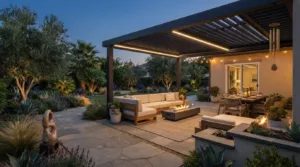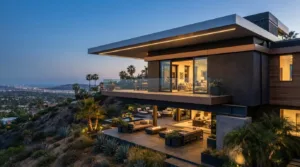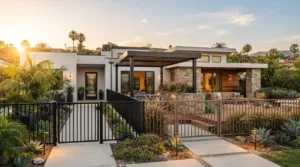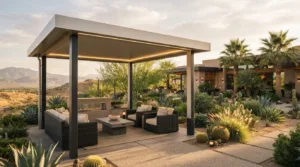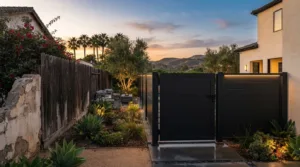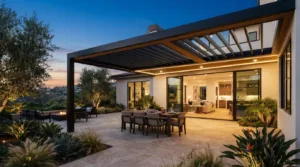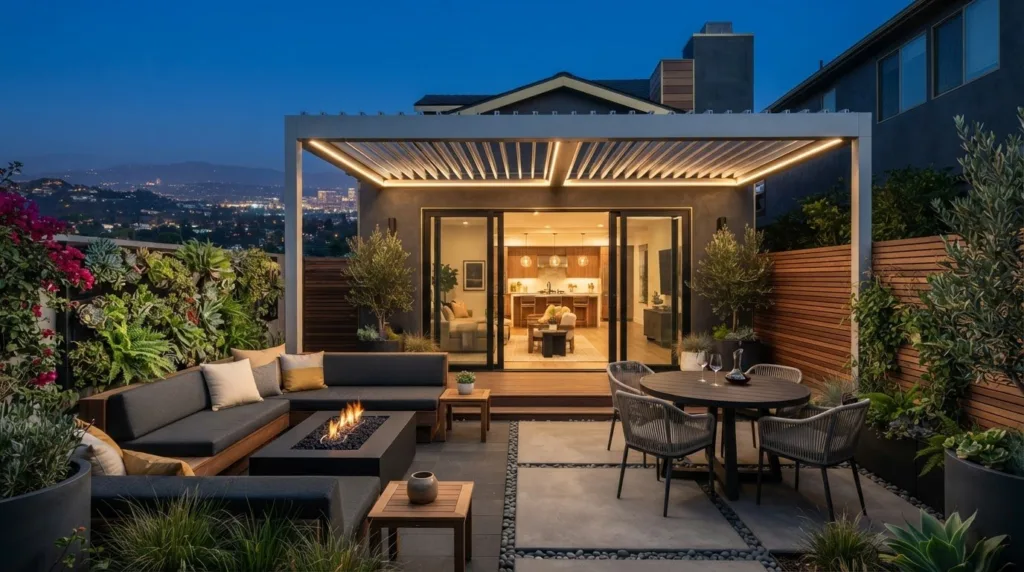
A smaller backyard can deliver greater everyday value when each area has a clear purpose. Defined zones, built-in seating, vertical landscaping, lighting, and compact dining or cooking areas can make a small yard more useful, while a new patio is estimated to recover 60% to 70% of its cost. Thoughtful investment-grade backyard improvements balance that potential with how well the design suits your home and lifestyle.
It’s natural to wonder whether limited space can support the comfort and privacy you want without overspending. With a focused plan, even a modest yard can feel more functional, sheltered, and inviting, while giving you a clearer basis for deciding where your budget belongs.
This guide explores patio value, small-yard design, privacy options, and the decisions that shape a realistic project budget. You’ll learn how to weigh resale potential against everyday enjoyment and how thoughtful planning can make outdoor space a more polished extension of your home.
Key Takeaways
- A new patio is estimated to recover 60% to 70% of its cost, but design that complements the home is central to preserving visual balance.
- Make a small yard work harder by defining purposeful zones for relaxing, dining, or entertaining.
- Fencing and green screens can create privacy while also helping reduce noise.
- Build a practical budget that accounts for design, construction, landscaping, lighting, furnishings, and future maintenance.
- Compare potential resale appeal with everyday usefulness to prioritize the outdoor improvements that best fit your home and plans.
1. Patio cost recovery and appraisal value
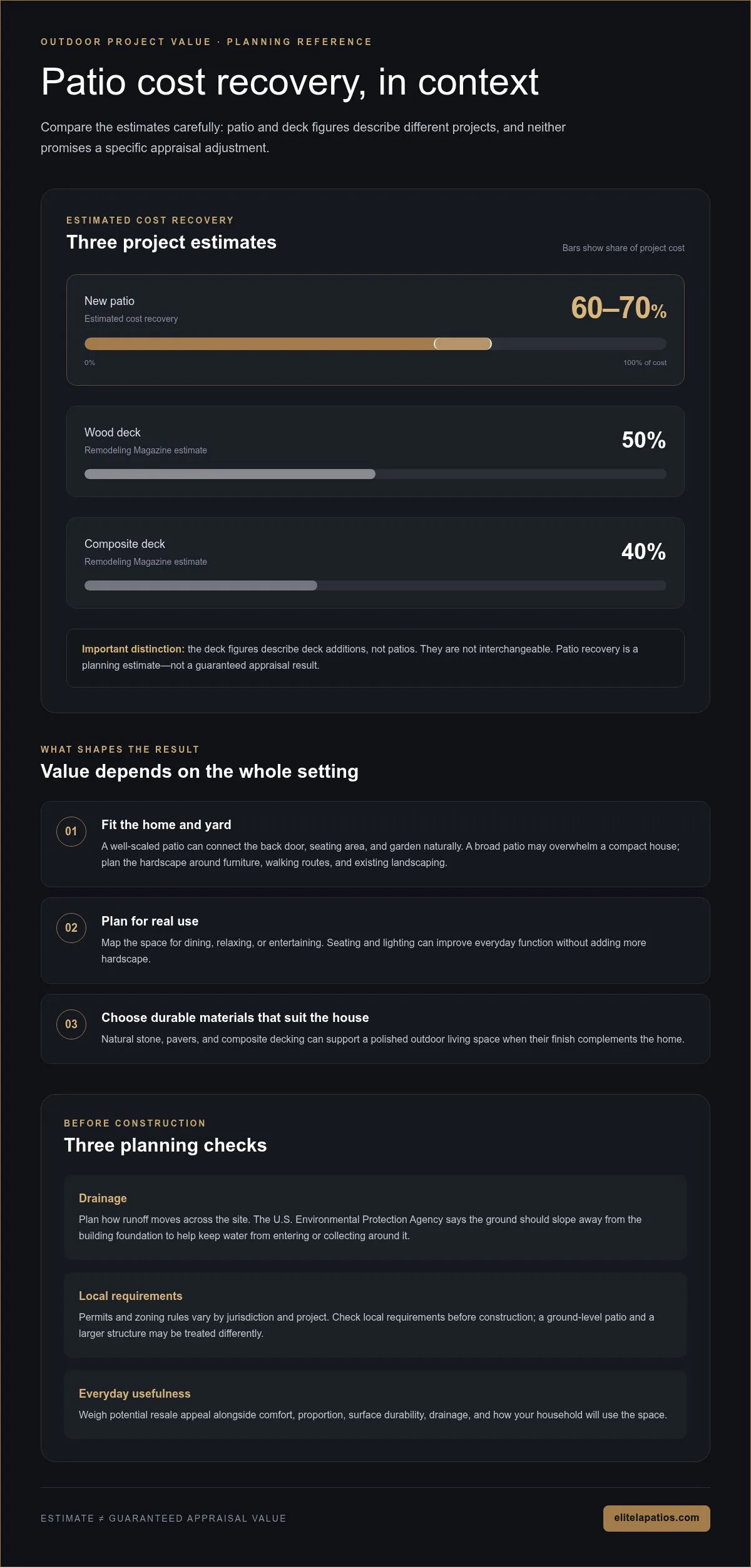
A patio’s resale contribution depends on cost recovery, design fit, and how buyers can use the space. A new outdoor patio is estimated to recover 60% to 70% of its cost. That estimate is a planning reference, not a promise of a particular appraisal adjustment. Compare the project’s likely resale appeal with the comfort it brings your household each season.
Deck figures illustrate how materials can shift cost recovery. Remodeling Magazine estimated that a wood deck returns 50% of its cost, while a composite deck returns 40%. These figures describe deck additions, not patios, so they aren’t interchangeable. For either project, durable materials such as natural stone, pavers, and composite decking can support a polished outdoor living space when their finish suits the home.
Appraisal value also depends on proportion. A broad stone patio may overwhelm a compact house, while a well-scaled paver patio can connect the back door, seating area, and garden naturally. Before installation, map how you’ll use the space, for dining, relaxing, or entertaining. Size the hardscaping around furniture, walking routes, and existing landscaping rather than paving the entire yard.
For paver patio installation, start with the layout and the ground beneath it. Define the patio edge, plan a route from the house, and consider how runoff will move across the site. The U.S. Environmental Protection Agency says the ground should slope away from the building foundation to keep water from entering or collecting around it. Planning drainage helps protect both the patio and nearby structures.
Permits and zoning rules for backyard decks, patios, pools, and structures vary by local jurisdiction. Requirements depend on the project and its location, so there is no single nationwide rule for every yard. Check local requirements before construction: a ground-level patio and a larger structure may be treated differently under local review.
Lighting and seating can make a modest patio more usable after installation. Arrange seating to support conversation, then place outdoor lighting along the route between the house and gathering area. These choices add function without requiring more hardscape. A cohesive design connects the patio’s material, scale, and purpose with the home’s architecture.
For investment-grade backyard improvements, assess more than projected resale value. Consider the patio’s scale, surface durability, drainage, and everyday use together. A coherent stone or paver layout can define an outdoor living space, while mismatched proportions may disrupt the home’s visual balance. Buyers see the whole setting, not just the new surface.
2. Can backyard upgrades make a small yard more useful?
Yes. A compact yard can serve several purposes when each area has a clear role. Sketch the back door, existing paths, and fixed features such as trees. Then reserve usable space for one or two priorities, such as dining and gardening. A narrow bench along a boundary can provide seating without obstructing the main walking route.
In Los Angeles, Orange, Ventura, and San Diego counties, choose features to suit the site’s sun, shade, and household routines. A covered outdoor area can provide shelter, while movable seating adapts the space for meals or quiet time. Observe where sunlight falls during the hours you expect to use the yard, then position shade and seating accordingly.
Prioritize upgrades by identifying what most limits your use of the yard. If a side passage is difficult to navigate, clear the route before adding planters. If there’s no comfortable gathering spot, define one with seating and a compact dining surface. Vertical planting adds greenery in a small footprint, while outdoor lighting makes paths and seating areas more functional after dusk.
Pool decisions should reflect available space and intended use. Around an existing pool, refreshed decking, modern LED lighting, or eco-friendly water solutions from Bionizer can improve the setting and reduce chemical upkeep without changing the pool’s footprint. In a yard without a pool, compare the space a pool would need with other priorities, such as dining, play, or planting. Preserve clear routes to make the whole yard easier to use.
Drainage, grading, and irrigation affect both project scope and the usability of the finished yard. Drainage directs runoff away from areas where water could collect; grading shapes the ground’s slope, and irrigation supports planted areas. Map water movement before placing paving, seating, or garden beds so later work doesn’t obstruct runoff or force layout changes.
A small fire pit or compact cooking area can become a focal point, but keep it in proportion to the property. Leave clear routes around furniture and avoid placing every feature in the center. For example, position dining near the house and planting along the perimeter to preserve open space for movement. Choose materials and furnishings that complement the home rather than compete with it.
To plan a shaded layout around your yard’s dimensions and routines, discuss a shaded outdoor layout as a possible next step.
3. Fencing, privacy, and green screens
Privacy improvements work best when they address a specific view or activity. In Los Angeles County, for example, identify which neighboring windows overlook the patio seating before choosing a screen. A fence creates a defined boundary, while a green screen uses planting to soften exposed edges. Either option can also help reduce noise.
Walk the yard from the house, patio, and garden before settling on a layout. Note where sightlines enter, where conversation or dining happens, and which boundary feels most exposed. In a narrow side yard, screening one section may preserve openness better than enclosing the whole perimeter. In a larger yard, screening near the seating area can make that zone feel more intimate.
Fencing and planting create different visual effects. A fence gives the property a clear edge, while a green screen blends that edge with landscaping. Shrubs along a boundary, for instance, can soften the view behind a dining table, while a privacy wall can provide a defined backdrop for an outdoor kitchen. Consider how each option relates to the home’s exterior and nearby paths.
Plan planting with mature size and care needs in mind. A screen of small plants may look sparse at first, while established greenery can change light and views around the yard. Leave access to the boundary for maintenance, and keep gates and paths usable. In Orange County, advance layout planning can connect screening with the rest of the property instead of treating it as a separate feature.
For a balanced design, choose the privacy level that suits each activity. Dining may benefit from screening close to the table, while a garden view can remain open. In Ventura or San Diego County, use a simple site sketch to mark exposed sightlines, proposed fence runs, planting beds, and access routes. This makes it easier to compare a continuous boundary with targeted screening.
Consider return in both practical and financial terms. Privacy can make a relaxing area more comfortable for everyday use, and fencing or green screens can help reduce noise. Resale adjustments depend on the property and its market, so first consider whether the improvement solves a visible problem. A well-designed boundary that complements the home can support the overall outdoor setting, without assuming a particular return on investment.
4. Budgeting and project planning
A useful budget covers the complete project, not just its most visible feature. List design, construction, landscaping, lighting, furniture, and future maintenance separately. A patio project, for example, may also need pathway lighting, seating, planting, and drainage work. This fuller view helps prevent the finished surface from consuming funds needed to make the outdoor living area comfortable and functional.
Compare project quotes by matching their scope line by line. Check that each covers the same dimensions, materials, site preparation, drainage, lighting, landscaping, and cleanup. Then compare what each allowance includes, such as furniture or planting. A lower total may cover fewer elements, so comparing matching scopes is more useful than focusing on the apparent price difference.
Estimate project payback by comparing total spending with likely resale contribution, then weigh the result against years of personal use. Keep resale and lifestyle value separate in your calculation. A comfortable entertaining area may be valuable to your household even if an appraisal doesn’t reflect its full cost. Record your assumptions clearly rather than treating projected resale value as guaranteed income.
Include site conditions before setting a final budget. A sloped yard may require grading, while poor runoff patterns can call for drainage work before construction. Irrigation also affects planning: a new system may cost $5,000. If landscaping is part of the project, account for watering needs and future upkeep alongside the initial planting and materials.
Timing can change the preparation needed. That figure applies to a lawn-preparation task, not a complete backyard transformation. For a larger project, separate immediate construction from optional additions, such as outdoor lighting or upgraded seating, so priorities remain clear.
Use a simple planning sequence: define how the yard should function, map the layout, price the core construction, then add supporting features. For homeowners integrating outdoor spaces with broader home renovations, design-build contractors such as timberworxcg.com emphasize coordinating exterior living areas directly with the home’s layout. A household focused on outdoor dining, for example, might prioritize a stable patio and seating before decorative landscaping. A family that entertains often could reserve funds for lighting and furniture. This sequence connects each expense to a specific purpose.
Include maintenance in your budget for the materials and features you choose. Planting may need ongoing care, while lighting and irrigation bring their own upkeep considerations. Review these commitments alongside construction to make the budget more realistic. The best plan balances appeal, daily use, and the property’s long-term needs without letting one attractive feature dictate every decision.
5. Which backyard improvements add the most resale value in the United States?
No single backyard project leads in every U.S. market. Resale value depends on climate, neighborhood expectations, maintenance needs, and how well an improvement fits the home. Compare each project’s estimated cost recovery with its usefulness to likely buyers. Landscaping, irrigation, and outdoor kitchens have measurable resale estimates, but their appeal varies by location and design.
Professional landscaping can increase a home’s resale value by 15%–20%. Prioritize improvements that make the property look cared for: native, low-maintenance plants, fresh mulch, trimmed shrubs, and clean walkway borders. For homeowners expecting to sell within three to five years, larger trees can create a visible effect sooner. One recommendation is to plant trees around 8 feet tall, or choose trees 1–2 inches in diameter in 15-gallon pots.
Outdoor kitchens have a wide estimated cost recovery, from 55% to 200%. That range makes project scale and local use especially important. A compact grill station with a prep counter and storage may suit a smaller property; a more complete setup can include a built-in grill, refrigerator, durable prep counter, and integrated storage. Choose the configuration that complements the home and fits buyers’ likely use.
Irrigation and landscaping should be evaluated together. An irrigation system has an estimated cost recovery of 83%, while planting choices influence ongoing water and maintenance needs. Match the watering plan to the garden’s layout and plant selection, rather than installing a system without considering what it must support. A well-maintained landscape can strengthen curb appeal, but its long-term value also rests on practical upkeep.
To prioritize, assess each project against three questions: Does it suit the climate? Does it improve everyday use? Does it fit the property’s scale? A pool may be a major selling point in warmer climates, while an outdoor kitchen may be more useful where the season supports frequent outdoor dining. Visual coherence matters too: oversized features can feel out of place beside a modest home.
Use these estimates as comparisons, not interchangeable rankings. A 15%–20% landscaping estimate describes a different improvement from an outdoor kitchen’s 55%–200% range. Start with the property’s most visible needs, then select materials and features that complement its architecture. For a tailored outdoor improvement plan, discuss your backyard project and how its design can support your home’s appeal.
Elite L.A. Patios: 4K Aluminum lattice patio cover
Elite L.A. Patios helps homeowners shape a more considered outdoor setting with 4K Aluminum patio structures. A lattice patio cover can complement an outdoor area planned for open-air enjoyment, while a 4K Aluminum solid twin wall or insulated Solid Roof offers a distinct covered-roof option. The 4K Aluminum Cantilever provides another configuration to consider when planning the patio’s layout.
Choose based on how you want the space to function, how a structure will relate to your home, and which areas you want to define. A clear plan can align shade, seating, and circulation with your broader backyard goals.
Contact Elite L.A. Patios to discuss your patio plans.
Shape an outdoor space with lasting purpose
The next step is to turn your priorities into a design that feels connected to your home. Decide how you want to use the yard, which areas need shade or privacy, and what visual character should carry through the space. This gives investment-grade backyard improvements a stronger foundation than selecting features one at a time.
For a patio designed around cover, Elite L.A. Patios offers a 4K Aluminum lattice patio cover, 4K Aluminum solid twin wall, and 4K Aluminum Cantilever. Each option gives you a starting point for considering how the structure can complement your outdoor layout and intended use.
Bring your ideas and priorities together before the next project decision. Contact Elite L.A. Patios to discuss your patio plans and explore a considered direction for your home. A thoughtful design can make the backyard feel more distinctly yours.
Frequently Asked Questions
Can backyard upgrades make a small yard more useful?
Yes. Give each area a specific function, then keep paths clear between doors, seating, and planting. In a narrow yard, a foldable dining table can leave room to move when meals are over. Wall-mounted planters add greenery without taking up floor space. Keeping the center open also makes it easier to rearrange furniture as household needs change.
Exactly how much value do backyard improvements add?
There is no single nationwide dollar amount for backyard improvements. Appraisal value reflects comparable properties, the home’s condition, and whether an upgrade fits the surrounding area. Cost recovery is a separate measure, comparing estimated resale contribution with project spending. To assess a particular improvement, distinguish its appraisal impact from its everyday usefulness and consider how buyers in the neighborhood use outdoor space.
How do I know which backyard upgrade to start with?
Start with the limitation that most affects your use of the yard. If afternoon sun makes the patio uncomfortable, shade may matter more than decorative planting. If furniture blocks the route to the garden, revise the layout first. Write down the problem, the improvement that addresses it, and the supporting work it requires. This creates a project order based on function, not appearance alone.
What Adds the Most Backyard Value in Texas?
For homeowners in Los Angeles, Orange, Ventura, and San Diego counties, prioritize shade, efficient irrigation, and landscaping suited to the property’s sun exposure and water needs. A covered seating area can make outdoor use more comfortable, while drought-tolerant plants can reduce watering needs. Group plants with similar watering requirements and place seating where shade is most useful. Choose upgrades that suit the site and your maintenance preferences.
What Makes a Backyard Feel Truly Luxurious?
A luxurious backyard feels cohesive, comfortable, and carefully finished, not crowded with features. Coordinate hardscape colors with the home’s exterior, repeat a small set of materials, and keep transitions between patio, planting, and paths visually clean. Details such as concealed storage for cushions or garden tools help preserve an uncluttered look. Comfort comes from a layout that feels composed and easy to use.
What are low-maintenance backyard upgrade options?
Choose durable surfaces and planting suited to local conditions. Pavers or composite decking can provide a lasting foundation, while native or climate-adapted plants generally need less watering and maintenance. Grouping plants by water needs makes irrigation easier to manage. Mulch in planting beds can help retain moisture and limit weeds, while clean edging keeps the landscape orderly and easier to maintain.
Which Outdoor Projects Should You Avoid?
Avoid projects that create ongoing work without meeting a real household need. An oversized outdoor kitchen can dominate a compact yard, while extra paving may leave too little room for planting or play. Poorly planned drainage can also undermine landscaping and hardscaping. Before committing, sketch the proposed footprint and check how people will move between the house, seating, and garden.
What is the average cost and ROI of a backyard patio or deck?
There is no single average project cost that applies across patio and deck designs, materials, and site conditions. A new patio is estimated to recover 60% to 70% of its cost. Treat that as estimated cost recovery, not profit or a guaranteed appraisal increase. Compare quotes using the same scope, including preparation, materials, drainage, and finishing, to understand what each total covers.