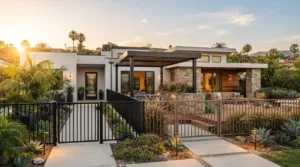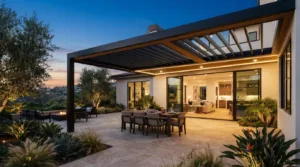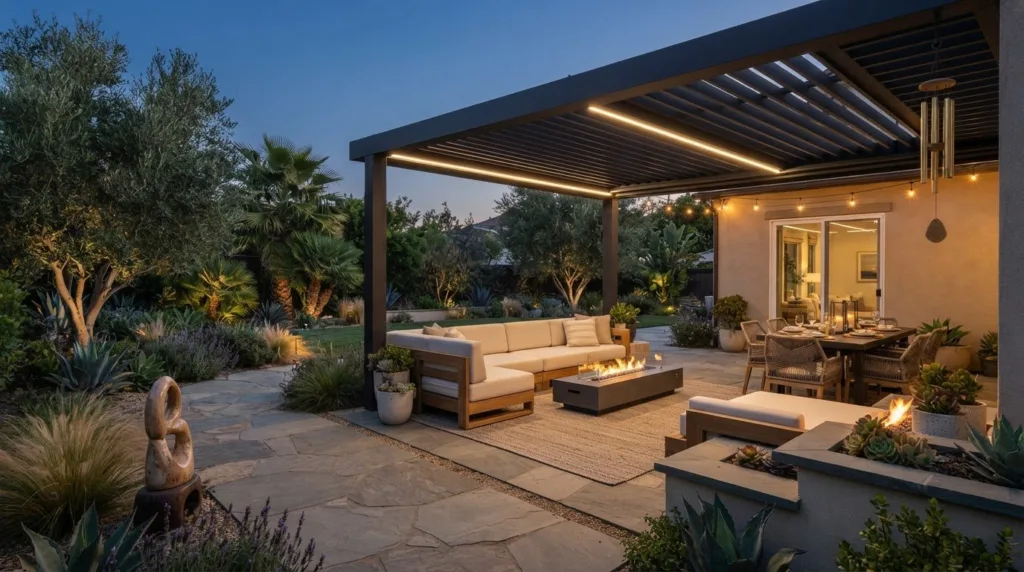
Making my backyard an oasis starts with a comfortable place to relax, a thoughtful layout, and personal details. Add one or two meaningful accents, such as wind chimes or a ceramic sculpture, then plan around how you want to unwind and entertain. A beautiful retreat doesn’t need to feel crowded to feel complete.
It’s easy to imagine an inviting backyard, but harder to make every element work together. The goal is a space that feels serene for quiet moments, welcoming when family and friends gather, and practical for everyday life.
This guide will help you shape that vision with personal touches, natural materials, comfortable zones for relaxing and entertaining, and family-friendly details. You’ll also learn to plan a functional layout, whether you’re refreshing a small corner or rethinking the whole yard. Intentional choices can make your outdoor space feel like a natural extension of home.
Key Takeaways
- Choose a small number of personal accents to give your backyard a distinctive, welcoming feel.
- Shape separate areas for unwinding and entertaining so the space supports both quiet moments and gatherings.
- Use natural materials and a calm palette to create a cohesive atmosphere that feels connected to the outdoors.
- Plan comfortable, visible spaces for children and pets, with shade and practical features for everyday use.
- Map out your layout before adding furniture or plants, then refine it to keep the retreat functional and uncluttered.
1. Adding meaningful personal touches
Begin with one or two meaningful pieces rather than filling every surface with décor. A ceramic sculpture from a memorable trip or wind chimes that recall a favorite place can give the yard a personal anchor. Choose objects connected to your routines, interests, or family stories. Their significance matters more than matching a trend. Place each accent where it can be noticed, such as near a garden path or beside the main seating area.
Consider an object’s placement before taking it outdoors. A sculpture can sit on a stable pedestal, while wind chimes need room to move without striking walls or furniture. Observe how sunlight, shade, and weather reach the spot throughout the day. Display delicate items in a sheltered corner rather than exposing them to constant wind or rain. Thoughtful placement makes each piece feel intentional without getting in the way of useful outdoor features.
A shade sail can carry a personal detail without adding clutter. For a nautical theme, use boat cleats, grosgrain ribbon, or sisal as decorative accents. Repeat one material elsewhere, perhaps in a planter or nearby accessory, to make the detail feel connected. Keep the sail’s practical role in mind: decoration shouldn’t obstruct its use or distract from the seating below. A restrained palette gives distinctive touches room to stand out.
Personalize a patio surface with a stencil pattern and concrete stain. Use the stain as a base coat, then apply a motif that complements the surrounding pots or textiles. Concrete stain can cover the surface without becoming slick when damp. A simple leaf or geometric pattern gives the patio character while keeping the design visually composed. Test the pattern’s placement on paper first, then align it with the patio edges before applying the design.
Plants bring color and seasonal interest to your outdoor space. Fill a container with flowers suited to summer heat, or choose flowers and shrubs that attract butterflies and bees. Group containers by color or shape, then vary their heights for a curated display. Plants can make a quiet corner feel personal and give the yard a changing, seasonal character.
For a larger statement, consider a cedar-fence-picket outdoor bar as a personal project. Give it a clear purpose, such as serving drinks during gatherings, and echo its material in a nearby planter or shelf. One memorable feature, a few considered accents, and a cohesive palette can make the backyard feel personal without looking overdecorated.
2. Creating a space for relaxation and entertaining
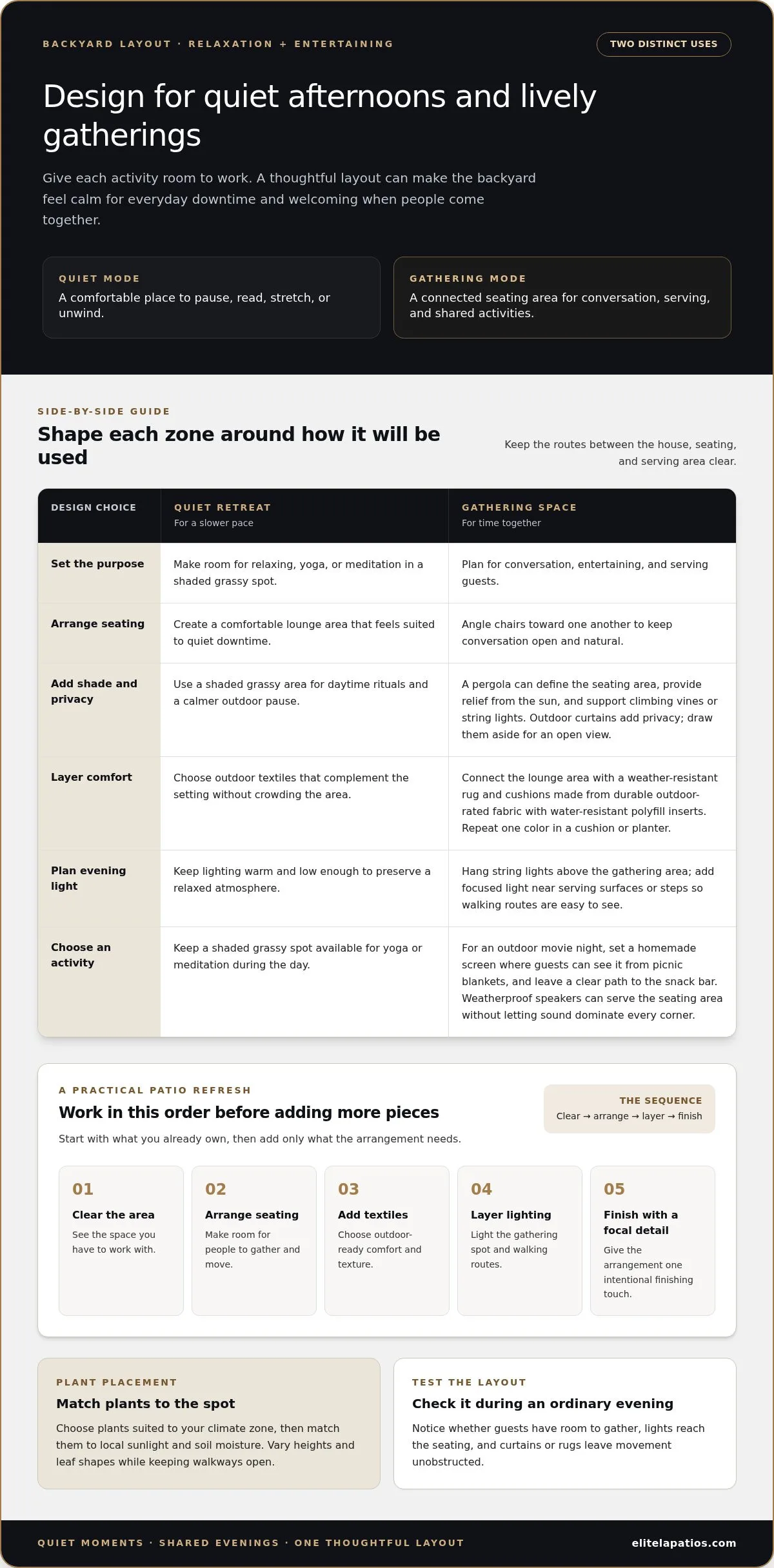
Decide how the backyard should feel during a quiet afternoon and a lively gathering. A practical patio refresh can start with existing furniture: clear the area, arrange seating, add textiles, layer lighting, and finish with one focal detail. This sequence helps you identify what the space needs before bringing in more pieces. Keep a comfortable route between the house, seating, and serving area so guests can move naturally.
Which plants create a lush backyard oasis in my climate zone? Choose plants suited to your climate zone, then match them to the sunlight and soil moisture in each spot. For containers, heat-tolerant flowers can add summer color. A mix of heights and leaf shapes makes the display feel full without crowding walkways.
A pergola can define a seating area and add atmosphere. Use it to hang string lights, train climbing vines, or create relief from the sun. Keep the layout open for conversation, with chairs angled toward one another rather than lined along the edge. Outdoor curtains can soften the structure and add privacy; draw them aside when you want an unobstructed view.
Textiles make a patio feel finished, but choose them for outdoor weather. A weather-resistant rug can visually connect a lounge area and complement the existing décor. Pair it with cushions made from durable outdoor-rated fabric and water-resistant polyfill inserts, rather than bringing indoor cushions outside. For a restrained look, repeat one color from the rug in a cushion or planter. That simple connection makes separate furnishings feel deliberately composed.
Lighting helps a space shift from daytime lounging to evening entertaining. Hang string lights above the gathering area, then add focused illumination near a serving surface or steps. Keep the glow warm and low enough for conversation while making walking routes easy to see. If music suits your gatherings, choose weatherproof outdoor speakers and position them to serve the seating area without letting sound dominate every corner.
For a relaxed evening, plan an outdoor movie night with a snack bar, picnic blankets, and a homemade screen. Set the screen where guests can see it from the blankets, and leave a clear path to the snack area. A separate shaded grassy spot can serve for yoga or meditation during the day. Distinct uses let the yard welcome quiet rituals and shared entertainment without forcing one layout to do everything.
Before adding new furnishings, restyle what you own and test the arrangement during an ordinary evening. Notice whether guests have room to gather, whether lights reach the seating, and whether curtains or rugs interfere with movement. If a defined patio area would support your plans, discuss your outdoor space as a natural next step.
3. Choosing calm, natural materials
Making my backyard an oasis starts with a restrained palette drawn from materials already in the yard. Pair warm-toned wood with stone, clay, or muted metal, then repeat those finishes across planters, side tables, and edging. A terracotta pot beside a pale stone path, for example, creates a quiet contrast without adding another strong color. Natural textures add interest, so a calm palette can still feel layered. Choose a leading material first, then use the others as accents.
Compare the appearance and upkeep of stone, concrete, and gravel before choosing a patio surface. Smooth concrete can suit dining furniture, while gravel can define an informal garden path. Use one main surface through connected zones to make the layout feel cohesive. Where surfaces meet, create a clear transition that’s comfortable to walk across. This gives each area a purpose without making the backyard feel divided into unrelated sections.
Wood can bring warmth to furniture, edging, or a garden bench. Keep its finish consistent with nearby elements, such as a cedar planter or timber table, rather than mixing competing tones. Stone details can balance the warmth through a low border or stepping path. When making my backyard an oasis, I’d also consider how sunlight and weather reach each material. The yard’s exposure and daily use help determine which finishes make practical sense.
Plants can soften hard surfaces and strengthen the natural character of the space. Combine edible plants, such as herbs, with low-maintenance perennials for seasonal color and useful harvests. Ornamental grasses can create a relaxed privacy barrier along an exposed edge. In a compact backyard, a vertical garden uses a wall or fence instead of valuable floor space. Choose containers in clay, stone, or subdued finishes so the planting remains the focal point.
Finish by editing for texture rather than adding more color. A woven outdoor accent, a clay pot, and a stone surface can create variety within a quiet palette. If string lights already illuminate the entertaining area, let their glow complement the finishes rather than compete with them. Review the space from the doorway and seating area, and remove accessories that distract from the garden, the view, or the route through the yard. This final edit keeps materials working together for a composed, personal, comfortable retreat.
4. Comfort and safety for pets and kids
Plan the yard around clear sightlines, easy movement, and comfortable places to pause. Keep a children’s play area visible from the main seating area, not behind a tall planter or outdoor screen. A parent can relax nearby while keeping the play zone in view. Leave a clear route between the house, seating, and play space, and arrange furniture so chairs don’t block it.
During summer heat, make shade and fresh water easy for pets to reach. Set a breathable outdoor bed in a shaded area, and keep water bowls where your pet already spends time. Frozen treats can be another appealing option on warm days. Place bowls away from busy walkways to reduce the chance they’ll be kicked or spilled during a gathering. Check that resting spots stay shaded as sunlight moves across the yard.
Give children a play area with a clear boundary and visible entry. A low border or change in ground surface can distinguish it from a dining area without hiding activity from the main seats. Keep frequently used toys in a nearby basket so they don’t spread across the patio. Position active play away from tables, glass accessories, and the path to the house. This arrangement makes the yard easier to supervise and reset.
Choose outdoor furniture that suits how your household uses the yard. A sturdy bench beside the play area gives adults a comfortable place to sit, while a small table near the door can hold drinks or pet supplies. Leave room for children and pets to move around chairs without squeezing through tight gaps. Use outdoor cushions that are easy to remove and store, keeping seating comfortable without loose items crowding the floor.
Plants can define a family-friendly space without taking over its routes. Use containers to mark the edge of a lounge area, and keep foliage clear of doorways and paths. A planted corner can offer a calm retreat, while open ground gives children room to play. Before settling on a layout, walk from the house to the seating, play area, and pet water bowls. Move anything that narrows a passage or blocks the view from the main seating area.
Make a quick outdoor reset part of the evening routine. Return toys to their basket, refill water bowls, and move cushions out of the walkway. Check the play area from the main seating spot before guests arrive. These simple steps help keep the yard welcoming for family time and gatherings without sacrificing comfort for pets or children.
Keep the children’s play area safe, secure, and visible from the main seating area. Let those needs guide its position in relation to seating and the rest of the yard. A clear view and secure boundary can distinguish the play area while keeping it within sight. Recheck visibility whenever you adjust furniture or plants.
5. Planning a functional backyard retreat
Choose features around the activities you want to make easy. A patio supports dining and flexible seating; a pergola can define an overhead area, while a fire pit or water feature creates a focal point. Start by outlining an 8×8 space with painter’s tape or string, then see whether your favorite feature fits without narrowing the route from the house.
Permit and zoning requirements for pools, decks, fences, and structures vary by jurisdiction and project details. Factors can include a structure’s size, placement, permanence, and relationship to property lines or existing utilities. Account for those considerations during the early layout stage, before choosing final locations or materials.
For an affordable small-yard approach, start with one versatile area instead of several separate zones. A folding café table can serve for meals and laptop time, while a narrow bench keeps seating close to a wall. Use vertical storage for cushions or garden tools, and choose movable furnishings that can be rearranged when you need open floor space.
For a low-maintenance, drought-tolerant yard, group plants by water needs and direct water to their roots with drip irrigation. A layer of mulch helps limit exposed soil, while a simple watering schedule avoids treating every part of the yard alike. Adjust the setup to the site’s sun exposure and soil drainage.
Add shade, privacy, and outdoor lighting by first mapping where people sit and walk. Place a shaded structure over the main seating area, use a screen where neighboring views feel intrusive, and direct lights toward steps or paths. This targeted placement makes each feature useful without covering the entire yard or over-lighting quiet corners.
To manage drainage and mosquitoes, watch where water flows after rain and address low spots that hold puddles. Empty water from saucers, buckets, and unused containers, and keep drains clear of leaves. Store tools securely and keep paths free of hoses and loose equipment to reduce other backyard hazards.
Make the retreat more sustainable and wildlife-friendly by conserving water, reducing chemical pesticide use, and preserving a quiet section as habitat. A shallow birdbath can offer drinking water, but refresh it regularly to prevent stagnation. Choose durable furnishings that can stay in use instead of replacing them as styles change.
After arranging the main features, revisit the layout after three days. Note whether a route feels awkward, a task lacks a useful surface, or an area remains unused, then adjust before adding more. For help planning a covered outdoor area, discuss your backyard design.
After a few days, revisit the retreat and assess what feels missing or cluttered, then make small adjustments. Edible plants and low-maintenance perennials can support outdoor living. In a small backyard, a vertical garden adds planting space while keeping the layout focused on the activities and features that matter most.
Elite L.A. Patios: 4K Aluminum lattice patio cover
Elite L.A. Patios can help bring a backyard plan together with a 4K Aluminum lattice patio cover, a considered option for defining an outdoor living area. It gives the space a clear focal point for seating, dining, or relaxed gatherings, while the surrounding layout can remain tailored to your routines.
If you’re comparing overhead structures, the 4K Aluminum solid twin wall, 4K Aluminum Cantilever, and 4K Aluminum insulated Solid Roof offer additional options to consider for your design. The right fit depends on how you want the patio to function and how the structure should relate to your home and yard. A thoughtful conversation about your outdoor space can help clarify the next step. Contact Elite L.A. Patios to discuss your backyard plans.
Make Your Outdoor Vision a Reality
A considered backyard takes shape through choices that suit your home and the way you want to live outdoors. As you move from inspiration to planning, decide which feature would make the greatest difference to your routine. A defined covered patio can create a welcoming place to unwind; another home may benefit more from a layout designed around family gatherings. Making my backyard an oasis becomes more achievable when each design decision serves a clear purpose.
For an overhead structure, Elite L.A. Patios offers a 4K Aluminum lattice patio cover, 4K Aluminum solid twin wall, and 4K Aluminum Cantilever. Consider how each option could fit your intended use and the character of your home, then shape the rest of the outdoor space around that choice.
When you’re ready to explore the next step for your backyard, share your patio vision with Elite L.A. Patios. A thoughtful plan can turn your outdoor space into a more inviting part of everyday life.
Frequently Asked Questions
What are the first steps to planning a backyard oasis?
Start by listing how you want to use the yard and what currently limits it. Note fixed features such as doors, mature trees, and utility connections, then observe where sunlight and shade fall during the day. Sketch the existing layout before choosing furniture or plants. If the back door opens onto a narrow passage, for example, keep that route clear and place the main seating area beyond it.