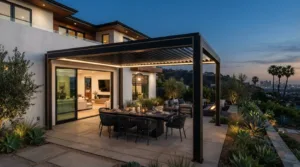
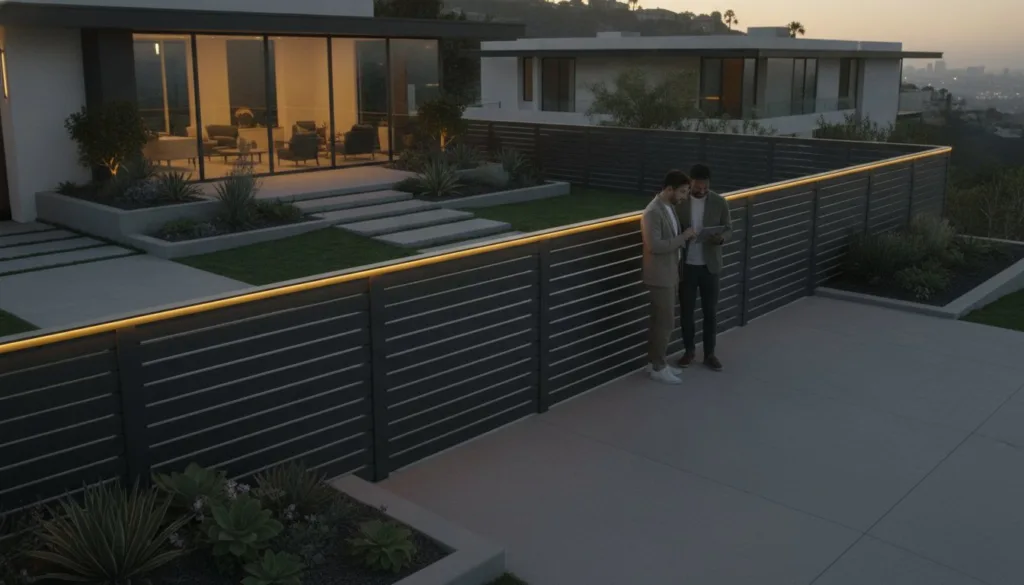
That sleek, architectural perimeter you’ve envisioned for your estate could transform from a symbol of success into a legal headache if you overlook a single municipal requirement. Asking is a permit needed for a fence in Los Angeles is the first step in protecting your property’s value and your own peace of mind. We understand that the boundary between private luxury and city code often feels blurred, especially when navigating the intricate differences between front yard setbacks and hillside height restrictions. You deserve a seamless transition from design to installation without the looming fear of code enforcement or mandatory removals.
Elite L.A. Patios is here to ensure your 4K Aluminum fencing project remains a permanent, sophisticated addition to your home. In this 2026 guide, we provide clear criteria for when official approval is mandatory and detail the specific height limits that define Los Angeles neighborhoods. You’ll gain the confidence to elevate your outdoor living space while understanding the path to total city compliance. We will show you how to secure your sanctuary with the elegance and legality your investment deserves.
Key Takeaways
- Learn how to balance privacy and compliance by understanding why 2026 residential codes permit 8-foot rear boundaries while maintaining 3.5-foot front yard limits.
- Identify the exact height and location triggers that answer if is a permit needed for a fence in Los Angeles for your specific estate.
- Protect your investment from city fines and “Red Tag” orders by mastering the nuances of visibility triangles and hillside setbacks.
- Follow a streamlined 2026 homeowner’s checklist to ensure your architectural vision aligns with the latest Department of City Planning requirements.
- Discover how Elite L.A. Patios integrates 4K Aluminum’s structural superiority with professional regulatory management to elevate your property’s value.
The 6-Foot Rule: When a Building Permit is Not Required
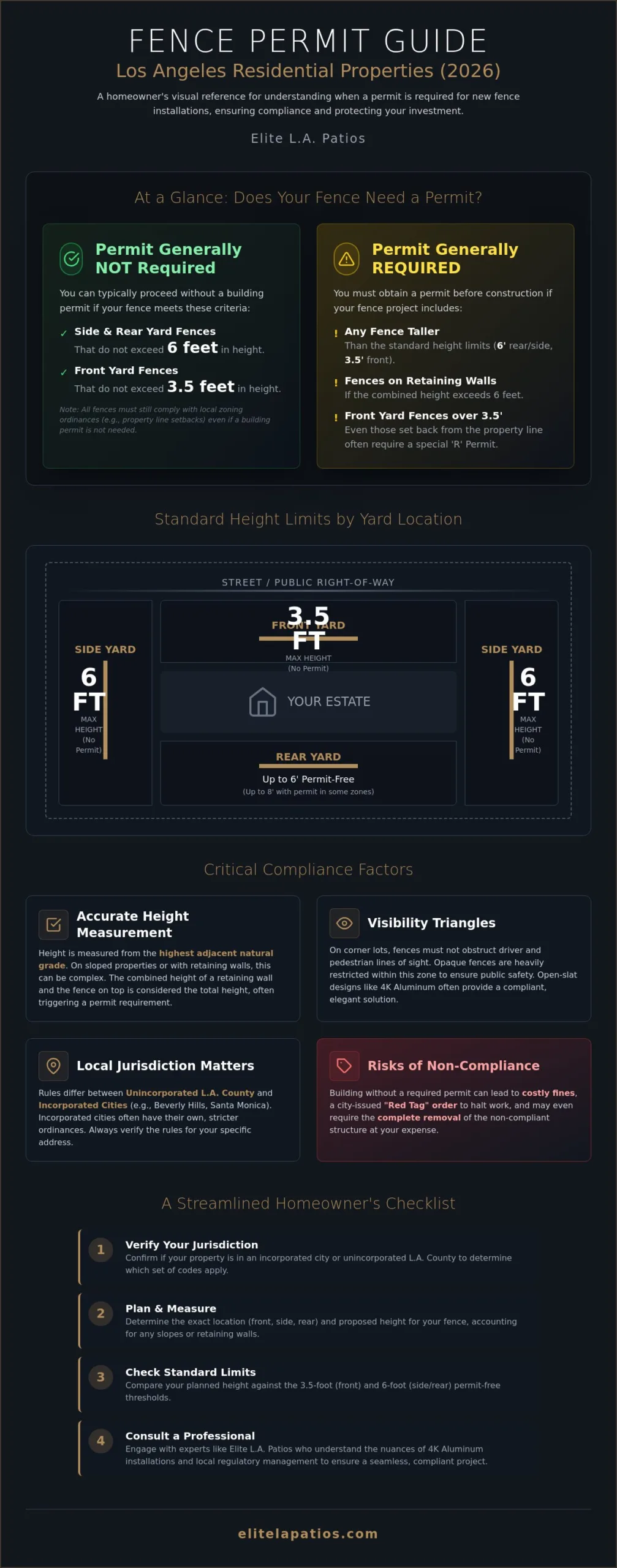
Securing your estate’s privacy is a hallmark of refined living, yet the technicalities of local law often dictate the height of your sanctuary. In the residential landscape of 2026, the most common question remains: is a permit needed for a fence in Los Angeles? For many homeowners, the answer lies in the “6-foot rule.” Generally, a building permit isn’t required for fences in side or rear yards that don’t exceed six feet in height. This baseline provides a streamlined path for those seeking to install sophisticated 4K Aluminum Fencing without the delays of city hall paperwork.
It’s vital to distinguish between a building permit and general Zoning regulations. While you might not need to file a formal building application for a standard height fence, your project must still respect the zoning ordinances of your specific neighborhood. These rules govern where a fence can be placed and how it interacts with your property lines. Even a permit-free installation can be subject to removal if it violates the city’s vision for setbacks or density. Elite L.A. Patios views every installation as a strategic investment, ensuring that your design choices align with both aesthetic desires and legal requirements.
Unincorporated vs. Incorporated Los Angeles
The jurisdiction of your property significantly influences the permitting process. If your home sits within unincorporated Los Angeles County, you follow the broader county standards which often favor the 6-foot threshold for side and rear boundaries. However, incorporated cities like Santa Monica, Beverly Hills, or West Hollywood frequently enforce their own unique ordinances. These local rules often override county baselines, sometimes requiring permits for structures that would be exempt elsewhere. The Department of Regional Planning manages these “permit-free” zones, but verifying your specific city’s status is a necessary step before breaking ground.
Measuring Fence Height Correctly
Precision is everything when avoiding a “Red Tag” from city inspectors. Los Angeles building codes measure height from the highest adjacent grade, which can be tricky on the uneven terrain common in hillside estates. Grade is defined as the lowest point of elevation within five feet of the structure. If your property features retaining walls, the height of the wall is often added to the height of the fence, potentially pushing your project over the 6-foot limit and triggering a permit requirement. Professional guidance ensures these measurements are accurate from the start, protecting the structural and financial integrity of your home.
Front Yard Restrictions and the 3.5-Foot Limit
The curb appeal of a luxury Los Angeles estate is often defined by its architectural boundaries. While your rear yard might allow for an 8-foot sanctuary, the rules change significantly as you move toward the street. In most residential zones, the city maintains a strict 3.5-foot height limit for front yard fences. This regulation ensures that neighborhood aesthetics remain open and inviting while prioritizing the safety of every resident. When homeowners ask is a permit needed for a fence in Los Angeles for their front yard, the answer depends on whether they intend to exceed this 42-inch threshold or build within a specific setback.
Exceptions do exist for those who desire a more commanding presence. For instance, a front yard fence can reach up to 6 feet if it’s set back at least 20 feet from the property line. However, pursuing these heights often requires navigating the Bureau of Engineering’s Revocable ‘R’ Permit process. This permit is essential if any part of your structure encroaches upon the public right-of-way or if you’re seeking a variance from standard height codes. At Elite L.A. Patios, we specialize in designs that balance these rigid requirements with the high-end look your property demands.
Visibility Triangles and Public Safety
Safety is the driving force behind many of the city’s fencing restrictions. The “Visibility Triangle” is a critical calculation for corner lots and properties with busy driveways. Fences near sidewalks must ensure clear lines of sight for motorists to prevent accidents with pedestrians or other vehicles. If your fence is too high or too opaque at these intersections, you risk a citation. Many homeowners prefer 4K Aluminum Fencing with lattice or open-slat designs. These sophisticated options provide a clear architectural statement while meeting 2026 visibility standards, allowing light and sightlines to pass through without sacrificing the security of your perimeter. It’s a way to maintain exclusivity without compromising public safety.
Encroachment and Property Lines
Building with confidence starts with knowing exactly where your land ends. Constructing a permanent structure on a public easement or the “parkway” strip between the sidewalk and the street is a common mistake that leads to costly removals. Before starting an Elite L.A. Patios project, a professional site survey is indispensable to confirm your true property lines. If your design requires a feature that extends into the public right-of-way, you’ll need to submit a Request for Revocable Permit. This process allows the city to grant temporary permission for the encroachment, provided it doesn’t interfere with utilities or public access. If you’re unsure how these setbacks affect your vision, it’s wise to consult with an expert who understands the local landscape.
The Risks of Building a Fence Without a Permit
Choosing to bypass the formal approval process might seem like a shortcut to serenity, but it often leads to a costly disruption of your estate’s peace. When considering is a permit needed for a fence in Los Angeles, the financial and legal consequences of non-compliance should be your primary concern. A single visit from a city inspector can result in a “Red Tag” order, effectively halting any ongoing work and demanding immediate justification for the structure. In 2026, the burden of retroactive permitting often involves significant administrative fees, structural engineering reports, and the potential for total demolition if the design violates existing zoning codes.
The risks extend far beyond mere fines. Luxury residential properties in Los Angeles are subject to intense scrutiny during the escrow process. Savvy buyers and high-end title companies now routinely audit permit histories to ensure every improvement is documented. An unpermitted perimeter can derail a multi-million dollar sale, forcing the seller to either lower the asking price or scramble for emergency city approvals. Beyond the financial impact, non-compliant 4K Aluminum Pedestrian Gates or fences can create significant liability. If a structure fails or causes a visibility issue that leads to an accident, the lack of a permit may invalidate insurance claims, leaving the homeowner personally responsible for damages.
LADBS Enforcement and Code Violations
The Los Angeles Department of Building and Safety (LADBS) operates a robust enforcement system largely driven by community reports. In a city where property values are tied to neighborhood aesthetics, anonymous complaints about non-conforming fences are frequent. Once a violation is recorded, homeowners typically receive a formal notice with a strict 30-day timeline to achieve compliance. While some believe that older structures are “grandfathered” into current codes, this rarely applies to modern, high-performance aluminum installations. Any significant modification or new construction must meet the rigorous 2026 standards to remain legally protected.
Impact on Property Value and Resale
A final sign-off from the city is more than just a piece of paper; it’s a testament to the quality and longevity of your project. Buyers looking for an exclusive lifestyle prioritize homes where the final inspection is clearly documented. This transparency builds trust and reinforces the idea that your property is a secure, well-managed asset. A building permit acts as a legal warranty for your outdoor investment, verifying that every architectural element meets the city’s rigorous safety and structural standards. By partnering with Elite L.A. Patios, you ensure that your architectural vision is backed by the full weight of municipal compliance, protecting your home’s legacy for years to come.
If your property improvements are part of preparing a home for a transition for an older family member, you may also want to check out Senior Housing Locator for assistance in finding local senior living options.
The 2026 Permitting Process: A Homeowner’s Checklist
Securing the architectural integrity of your estate requires more than just a vision; it demands a structured approach to municipal alignment. If you’ve determined that your project exceeds standard exemptions, the next logical step is to navigate the city’s filing system with precision. Understanding is a permit needed for a fence in Los Angeles is only the beginning of the journey. In 2026, the city has streamlined its digital infrastructure, yet the burden of accuracy remains with the homeowner. This checklist ensures your high-end installation moves from concept to reality without administrative delays.
- Secure a professional site survey: Confirm your exact property boundaries to avoid encroaching on public easements or neighboring lots.
- Consult the Department of City Planning: Check for local “Specific Plans” that may impose stricter aesthetic or height rules in your neighborhood.
- Prepare structural drawings: Projects involving fences over six feet, heavy automated gates, or modern features like Integrated LED Lighting often require detailed engineering plans.
- Submit via the 2026 Online Portal: Use the city’s updated digital system to file for an Express Permit or a full Plan Check.
- Final Inspection: Once Elite L.A. Patios completes your installation, schedule a city inspector to sign off on the work.
Express Permits vs. Plan Check
Most standard residential fences qualify for an “Express Permit,” which is often issued through the city’s 2026 online portal for immediate approval. However, if your design includes complex structural elements, such as 4K Aluminum Cantilever sections or integrated electrical systems for security lighting, a full “Plan Check” is mandatory. This process involves a deeper review by city engineers to ensure seismic and fire code compliance. While the “Express” route is faster, complex luxury designs require the patience of a formal review to guarantee long-term legal safety. Utilizing the digital submission portal can significantly reduce wait times, allowing you to move forward with your investment sooner.
Working with HOAs and Historic Districts
Properties located within Historic Preservation Overlay Zones (HPOZs) face an additional layer of scrutiny. In these distinguished areas, the city prioritizes the preservation of neighborhood character, meaning your 4K Aluminum fencing must align with specific period-accurate aesthetics. Beyond city hall, you must also coordinate with your Homeowners Association to ensure your project meets private community standards. Modern 2026 regulations also focus on “smart” features; for instance, adding Integrated LED Lighting to your perimeter may require specific lumens approvals in historic or sensitive ecological zones. To ensure your project satisfies every regulatory body, you should consult with our compliance team before finalized designs are submitted.
Why Professional 4K Aluminum Installation is the Smart Choice
Investing in a high-end estate requires a visionary approach to both aesthetics and compliance. While the initial question of is a permit needed for a fence in Los Angeles often centers on avoiding fines, the deeper value lies in the long-term security of your property. Choosing 4K Aluminum isn’t merely a design preference; it’s a commitment to structural superiority. Unlike wood, which eventually rots and invites maintenance issues, or vinyl, which can become brittle under the California sun, our aluminum solutions are engineered to withstand the unique environmental demands of the region. This durability ensures your project remains “inspection-ready” for decades, maintaining its legal and physical integrity.
The 2026 Los Angeles seismic and fire codes are among the most rigorous in the nation. Elite L.A. Patios manages the complex intersection of these regulations and your personal design goals. Our installations provide the fire-resistant properties essential for hillside estates while offering the structural flexibility needed for seismic resilience. By integrating luxury features like Integrated LED Lighting into the initial permit plan, we eliminate the risk of future code violations. A professionally permitted structure acts as a verified value-add to your home, providing a documented ROI that pays dividends during property appraisals and future sales.
While focusing on compliance for your perimeter, you might also consider how other permitted structures like sunrooms or glass railings can enhance your estate; read more about these premium outdoor living solutions.
Sophisticated Design Meets Rigorous Standards
The 4K Aluminum line represents the pinnacle of modern outdoor architecture. These systems offer a level of refinement that traditional materials cannot replicate, providing clean lines and a premium finish that complements the most exclusive Los Angeles residences. We specialize in customizing pedestrian gates and privacy walls to meet both your privacy needs and city visibility standards. This balance ensures that your home remains a private sanctuary without triggering the safety concerns that lead to municipal citations. Every detail is meticulously planned to ensure a seamless final inspection.
The Elite L.A. Patios Difference
Our reputation for excellence is built on a foundation of professional-grade installations across Los Angeles and Orange County. We understand that our clients value their time as much as their privacy. By choosing high-end materials like aluminum, you’re making a visionary choice for your 2026 property value. Elite L.A. Patios doesn’t just build fences; we create enduring architectural statements that honor the character of your estate. Ready to elevate your estate? Contact Elite L.A. Patios for a sophisticated consultation and discover how we blend luxury with total regulatory peace of mind.
Elevate Your Estate with Uncompromising Compliance
Elevating your property is an investment in your success. Mastering the 6-foot rule and front yard visibility requirements ensures your home remains a sanctuary without municipal interference. Determining is a permit needed for a fence in Los Angeles is the essential first step in any high-end estate upgrade. By choosing professional site surveys and 2026-compliant designs, you protect your home’s equity and your own peace of mind. A secure, sophisticated perimeter isn’t just about privacy; it’s about the long-term value of your investment.
Elite L.A. Patios brings deep expertise in Southern California building codes to every project we undertake. We specialize in sophisticated 4K Aluminum structures that offer superior seismic and fire resistance, often enhanced with Integrated LED Lighting for a modern finish. Our team handles the technical complexities of 2026 regulations, allowing you to focus on the aesthetic transformation of your outdoor space. You deserve a home that reflects your success through both its design and its legal solidness. Discover the Distinction of 4K Aluminum Fencing with Elite L.A. Patios and start your journey toward a more refined lifestyle today.
Frequently Asked Questions
Do I need a permit for a 6-foot fence in Los Angeles?
You don’t need a building permit for a 6-foot fence if it’s located in the side or rear yard of a standard residential lot. However, if you plan to install a 6-foot fence in your front yard, city approval is mandatory because the standard limit for front perimeters is 3.5 feet. Elite L.A. Patios ensures that your installation respects these specific placement rules to avoid future compliance issues.
What is the maximum height for a fence in a front yard in L.A.?
The maximum height for a fence in a front yard is typically 3.5 feet, which is 42 inches. This restriction is designed to maintain visibility for motorists and preserve the aesthetic flow of the neighborhood. A front yard fence can reach up to 6 feet only if it’s set back at least 20 feet from the property line, providing a sophisticated way to gain privacy while following 2026 codes.
Can my neighbor build a fence on the property line without my permission?
California’s Good Neighbor Fence Law requires neighbors to share the responsibility and costs of a boundary fence. Your neighbor must provide you with a 30-day written notice before starting construction on a shared line. This law presumes mutual benefit, so while they can build, the process should be a transparent collaboration that protects the property values of both estates.
Does a fence over 6 feet always require a building permit in Los Angeles County?
Not necessarily, as many residential zones allow side and rear fences to reach 8 feet without a building permit. However, if your property is located in a designated hillside area or the lot is less than 40 feet wide, the permit-free limit is often reduced to 6 feet. Asking is a permit needed for a fence in Los Angeles is essential because your specific lot’s geography determines these height thresholds.
How much does a fence permit cost in Los Angeles in 2026?
In 2026, a typical residential fence permit in Los Angeles is estimated to cost around $198.25. This base fee can increase depending on the total valuation of your project and whether your design requires additional structural plan checks. Securing a permit is a minor expense compared to the financial security and legal “warranty” it provides for your high-end 4K Aluminum investment.
Are there special rules for fences around swimming pools in L.A.?
Yes, swimming pool barriers must meet strict safety requirements that often override standard residential fencing rules. These fences usually need to be at least 5 feet high and must include self-closing, self-latching pedestrian gates that open away from the pool area. These 2026 safety standards are strictly enforced to prevent accidents and ensure your private retreat remains a secure environment.
What happens if I build a fence without a permit and get caught?
Building without a permit can trigger a “Red Tag” from the Los Angeles Department of Building and Safety, leading to immediate fines and a halt to all work. You’ll be forced to apply for a retroactive permit, which often costs significantly more and may require expensive structural modifications. In the worst-case scenario, the city can mandate the total removal of a non-compliant structure at your expense.
Do I need a permit to replace an existing fence in the same location?
You need a permit if the new fence exceeds the current height limits for your specific zone, regardless of what was there before. If the previous fence was “grandfathered” in but didn’t meet modern codes, your new 2026 installation must comply with current standards to be legal. It’s always best to verify is a permit needed for a fence in Los Angeles before replacing an old structure to ensure your new investment is fully protected.