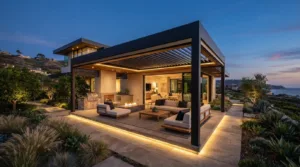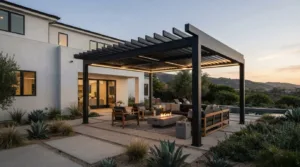
Black aluminum fencing can feel warmer in direct sun than bronze, but the difference depends on the finish and exposure. In the black vs bronze aluminum fencing decision, heat is only one factor: both colors create a refined boundary, while bronze pairs naturally with earthy materials and black offers crisp, versatile contrast.
It’s worth considering how a fence will look and feel in the Los Angeles sun, along with its upkeep and cost. A darker finish can absorb more sunlight than a lighter one, so placement, shade, and airflow matter as much as color.
This comparison will help you weigh heat, appearance, complementary materials, upfront cost, and long-term value. You’ll come away with a clearer sense of which finish suits your home’s architecture, landscape, and priorities.
Key Takeaways
- Choose a fence color with sun exposure and nearby outdoor seating in mind, since darker finishes can feel warmer in direct sunlight.
- Use bronze to complement natural materials such as stone, wood, and planting, or black to create contrast and a versatile backdrop.
- Compare more than the initial installation cost: upkeep, finish durability, and how well the fence suits your landscape all influence long-term value.
- Consider the fence’s visibility and airflow as part of the design, since open picket and slat styles offer a different feel from solid privacy features.
Does a Black Aluminum Fence Get Hot?
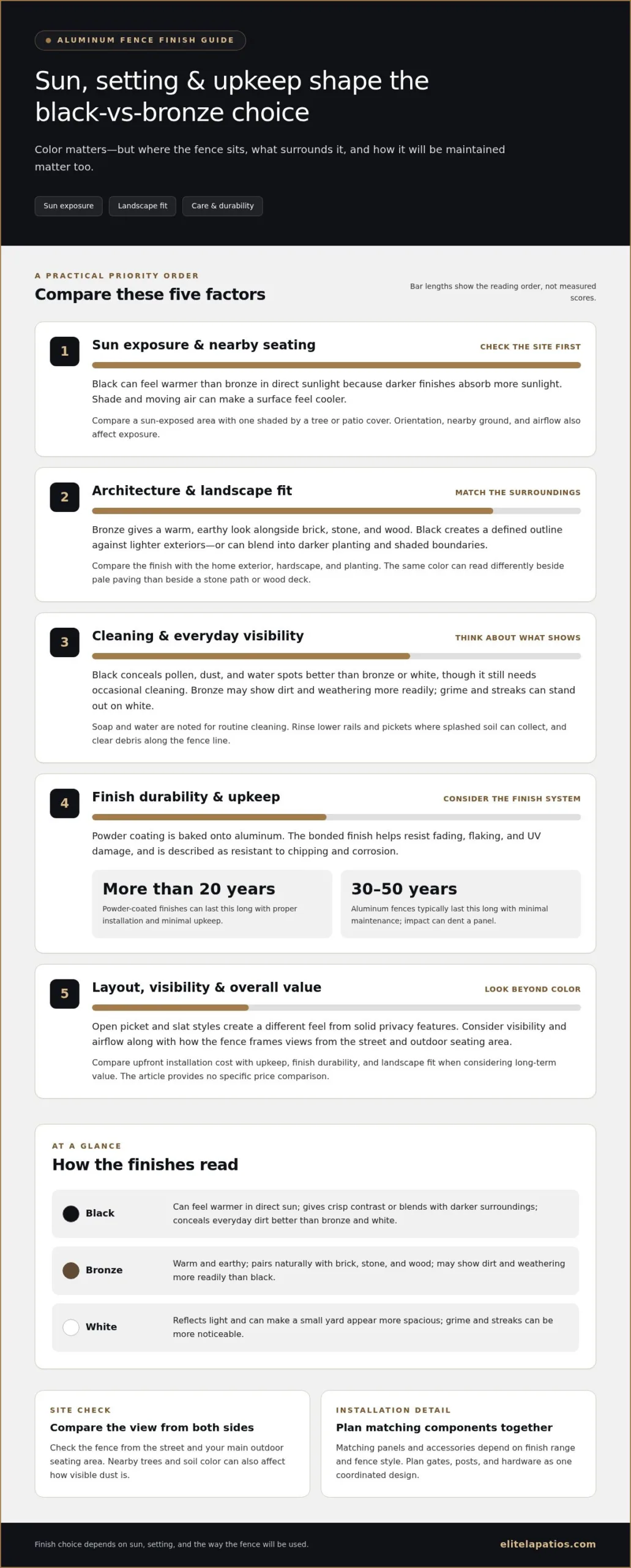
Yes, a black aluminum fence can feel warmer in direct sun than a bronze one. Dark finishes absorb more sunlight, while shade and moving air can make a surface feel cooler. In a Los Angeles yard, compare a sun-exposed section with one shaded by a tree or patio cover. Orientation, nearby ground, and airflow all affect exposure. Color matters, but so does where the panels sit in the landscape.
Finish quality influences how the fence weathers. Powder coating is baked onto aluminum, forming a bond that helps resist fading, flaking, and UV damage. Powder-coated aluminum is also described as resistant to chipping and corrosion. With proper installation and minimal upkeep, powder-coated finishes can last more than 20 years. Aluminum fences typically last 30 to 50 years with minimal maintenance, though impact can dent a panel and affect its appearance. Inspect panels after a heavy impact, then clean away accumulated dirt with soap and water.
Black can be practical in a garden with pollen, dusty paths, or frequent water spots. It can conceal dirt and weathering better than bronze or white, while pale finishes may show grime and streaks more clearly. Black still needs occasional cleaning with soap and water. Rinse lower rails and pickets, where splashed soil can collect, and clear debris along the fence line. A simple rinse may be enough for routine cleaning.
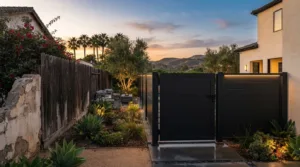
Consider the view from the neighborhood as well as from your yard. Against a light exterior, black pickets create a defined outline; against dark planting or a shaded boundary, they can blend into the landscape. View the fence from the street and your main outdoor seating area to balance curb appeal with the way it frames everyday outdoor spaces. Nearby trees and soil color also affect how visible dust is.
| Finish | Sun and appearance | Cleaning considerations |
|---|---|---|
| Black | Can feel warmer in direct sun; creates contrast or blends with darker surroundings. | Conceals pollen, dust, and water spots better than bronze and white. |
| Bronze | Offers a warm, earthy look that suits natural materials. | May show dirt and weathering more readily than black. |
| White | Reflects light and can make a small yard appear more spacious. | Grime and streaks can be more noticeable. |
For a closer look at aluminum fencing design, consider how its finish will read against your home, planting, and ground materials. Choose black for a stronger outline and easier concealment of everyday dust; choose bronze when a softer, earthy relationship with the landscape matters most.
Bronze fence appearance and complementary materials
Bronze aluminum fencing adds a warm, dark-brown accent to a residential boundary. Its earthy tone pairs naturally with brick, stone, and wood, connecting the fence visually with materials already around the home. Beside a stone path, for example, bronze can feel integrated rather than sharply outlined. Wooden decks and planted borders offer complementary textures that help the fence sit comfortably in the landscape.
In Southern California, consider the setting as well as the house. Bronze can suit desert, woodland, or rustic surroundings, echoing soil, timber, and stone. Beside mature plants, it can define an edge without competing for attention. Compare the finish with materials in your yard: bronze beside a brick wall may look different from the same color beside pale paving.
Black, bronze, and white create distinct visual effects. Black can frame a lighter home with clear contrast or recede against dark foliage. Bronze offers a softer transition beside natural materials. White reflects light and may make a small yard appear more spacious; it can also complement colonial, farmhouse, and cottage-style homes. Compare each color with your exterior and landscape rather than viewing it in isolation.
Architecture offers another useful guide. Black aluminum fencing can complement modern and traditional homes, from clean-lined facades to classic detailing. Bronze often feels cohesive with brick, stone, and timber. On a contemporary home with pale walls and dark window frames, black can repeat existing accents. With a wood deck and stone walkway, bronze can bring those materials together.
Are black or bronze aluminum fence panels and accessories easier to find? Neither color is universally easier to source; matching panels and accessories depend on the finish range and fence style. Plan gates, posts, and hardware together so the complete installation has a coordinated look.
| Color | Visual effect | Materials or styles it complements |
|---|---|---|
| Bronze | Warm, earthy, understated | Brick, stone, wood, rustic settings |
| Black | Defined contrast or landscape backdrop | Modern and traditional architecture |
| White | Light, spacious impression | Colonial, farmhouse, cottage homes |
Before choosing, compare the color against the home exterior, nearby hardscape, and planting; then consider whether the fence should stand out or blend in. For guidance coordinating a fence palette with your outdoor design, share your project details.
Bronze fencing’s warm, earthy appearance
Bronze creates a warm, dark-brown accent that connects a fence to its surroundings. In a Southern California yard with brick paving, a wooden deck, or a stone path, bronze panels echo nearby natural materials. This softens the boundary without making it disappear. The color works especially well where the landscape already includes earthy tones, such as dry soil, timber, or textured masonry.
Setting shapes the effect. Bronze aluminum fencing can suit desert, woodland, or rustic surroundings, where its tone works with the landscape rather than competing with it. Beside a gravel path and drought-tolerant planting, bronze creates a quiet edge while preserving the garden’s natural palette. Against pale stucco, its deeper brown reads as a deliberate design feature.
Finish contributes to long-term appearance as well as aesthetics. Powder-coated bronze finishes resist fading, chipping, and corrosion, helping the panels retain a composed look through outdoor exposure. Aluminum itself resists corrosion, making it suitable for coastal settings where salt exposure can affect other materials. Durability still depends on sound installation and care; avoid striking panels with tools or heavy objects, since aluminum can dent on impact.
Black serves a different visual role. Against a light-colored home, its dark lines create crisp contrast and frame a garden view. Against dense planting or a shaded boundary, black panels may recede and let foliage take focus. Dark finishes can mask wear better than pale colors, while bronze blends more naturally with wood, brick, and stone. Consider the view from the street and your main outdoor seating area.
White can change the impression of a compact yard. Because it reflects light, white fencing may make a small outdoor space appear more spacious. Around a narrow patio, for example, it can feel visually lighter than a dark fence. White also creates a distinct outline, so compare it with the home’s trim and nearby paving before choosing.
To assess curb appeal, compare the fence with the home’s architecture, entry path, and planting. A traditional house with brick accents may pair well with bronze; a contemporary facade with dark window frames may suit black. View finish samples beside the actual materials in both sun and shade. This reveals whether the color should blend into the landscape, echo existing details, or create refined contrast.
Black finish and modern aesthetics
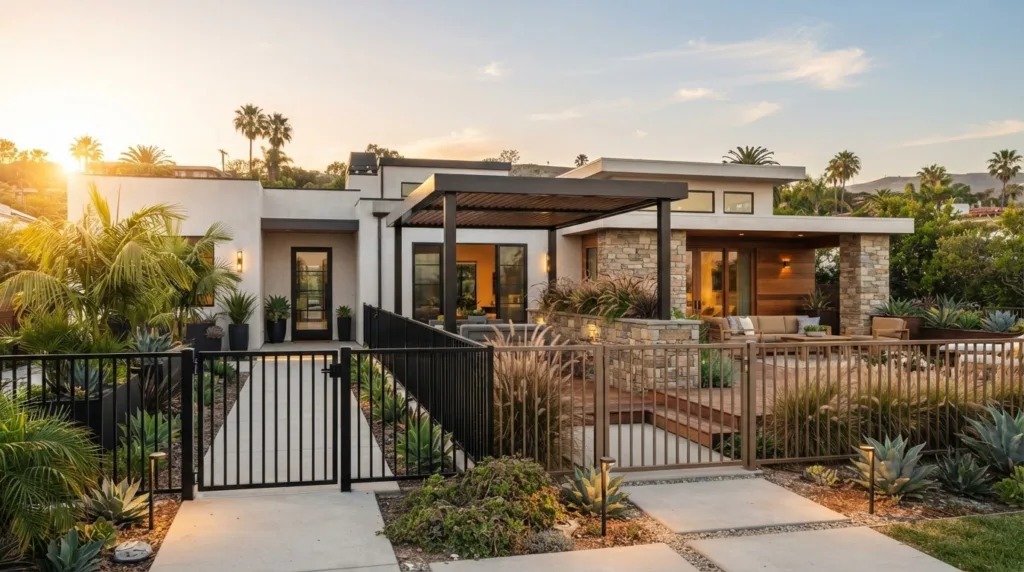
Black aluminum fencing gives a property a clear, architectural outline. Against pale stucco, cream siding, or a light garden wall, its dark lines create deliberate contrast. Around a modern Los Angeles home, black can echo window frames, metal lighting, or dark roof details. Repeating those accents helps the fence feel integrated with the architecture, not added as an afterthought.
The finish also suits traditional homes. Black complements both modern and traditional architecture, so it can frame a classic residence without overwhelming its details. For example, ornamental panels can reinforce a formal entry, while a classic picket design can define a front garden. A homeowner choosing between decorative and simpler lines can first match the fence’s visual weight to nearby railings, gates, and trim.
Black’s effect changes with the landscape. Against pale paving or low green planting, it creates a crisp boundary; beside deep foliage, it can recede and let the garden take focus. View the property from the street, patio, and main garden path. A fence that looks striking from the curb may feel subtler from a shaded seating area.
Finish quality matters as the outdoor setting changes through sun and weather. Powder coating is baked onto aluminum, creating a bond that helps resist fading, flaking, and UV damage. Black powder-coated finishes are also described as resistant to chipping and corrosion. With proper installation and minimal upkeep, powder-coated finishes can last more than 20 years. These properties help preserve the clean, consistent appearance that makes black an enduring design choice.
Black can make everyday wear less conspicuous than pale colors. Darker finishes may mask wear, while lighter finishes can show grime, sun damage, and streaks more readily. Painted timber, by comparison, can crack, peel, and fade after sun and weather exposure. Aluminum avoids routine painting, though a hard impact can dent a panel and disrupt its smooth appearance.
To assess curb appeal, compare the finish with three existing features: the home’s exterior, hardscape, and planting. A black fence beside charcoal window frames can strengthen a cohesive palette; against warm brick, it creates sharper contrast. Then choose a panel style that suits the property, from classic pickets to ornamental or modern designs. This helps balance architectural detail, landscape views, and long-term appearance.
Upfront cost and long-term value
For a black or bronze aluminum fence, the upfront price reflects more than color. Project length, panel height, gate count, site conditions, and installation complexity all shape the estimate. A straight boundary on level ground differs from a sloped yard with several corners and entry points. The final price is project-specific and provided after a quote request; these design and site details affect the cost.
Compare proposals by the work and materials included, not by color alone. Check the measured fence line, panel style, posts, gates, finish, and installation scope. A classic picket layout with one pedestrian gate, for example, differs from a longer perimeter with several access points. An itemized scope makes it easier to understand how design choices affect the initial investment and compare proposals.
Long-term value depends partly on durability and upkeep. Aluminum fences resist corrosion, while powder-coated finishes resist fading, chipping, and corrosion. Aluminum fences typically last 30 to 50 years with minimal maintenance. These figures describe potential service life, not a promise for every property; impact damage, installation, and ongoing care can affect condition.
Maintenance also shapes the effort of ownership. Occasional cleaning with soap and water removes dust and pollen; checking panels after an impact can help you spot a dent. Unlike painted timber, which can crack, peel, and fade in sun and weather, aluminum does not require the same recurring painting. Black can also conceal everyday dust better than pale finishes, helping the fence look tidy between cleanings.
Resale value is another consideration, though it shouldn’t be the only reason to choose a fence. Homeowners can often recoup 50% to 70% of an aluminum fence investment when selling their home. The fence’s condition, design, and fit with the property all contribute to its appeal. A well-chosen picket style can define a garden edge, while a coordinated gate can make the entrance feel intentional.
To assess value, weigh three factors together: the complete installed scope, the expected upkeep, and how the finish suits your home. Black and bronze both offer durable, coated finishes; the better choice is the one that complements the property and remains pleasing over time. For a project-specific estimate, request a fencing quote with your preferred color, approximate layout, and gate needs.
Elite L.A. Patios: 4K Aluminum lattice patio cover
Elite L.A. Patios can help homeowners shape a cohesive outdoor setting with a 4K Aluminum lattice patio cover. If you’re weighing black or bronze fencing, consider how the fence color will relate to the patio structure and the home’s exterior. A coordinated palette can make separate outdoor features feel intentional, while distinct finishes can define different zones.
The lattice cover offers an overhead element to consider alongside fencing, planting, and hardscape. For a more unified design, compare materials and colors from the main views of your yard, including the patio and approach from the garden. Elite L.A. Patios also offers 4K Aluminum solid twin wall, 4K Aluminum Cantilever, and 4K Aluminum insulated Solid Roof options.
Contact Elite L.A. Patios to discuss your outdoor design.
Shape a Cohesive Outdoor Design
Your fence can help define the character of the entire outdoor space. As you choose between black and bronze, consider how the boundary will relate to the patio, planting, and views you want to frame. The right finish should look deliberate from both inside the yard and the street.
The decision about black vs bronze aluminum fencing can also guide the wider design palette. For a coordinated outdoor setting, Elite L.A. Patios offers a 4K Aluminum lattice patio cover, 4K Aluminum solid twin wall, and 4K Aluminum Cantilever. These options can help shape a patio environment that feels connected to the home and its surrounding landscape.
Bring your preferred fence color and outdoor design goals into the next conversation. Contact Elite L.A. Patios to discuss your project and take the next step toward a considered, cohesive outdoor space.
Frequently Asked Questions
Is a Bronze Fence a Good Investment?
Bronze aluminum fencing can be a sound investment when its appearance suits the property and its exposure. Consider whether the color will work with future changes, such as new patio flooring or refreshed exterior paint. A finish that complements fixed features like brickwork or stone may remain cohesive through landscaping updates, making the fence feel like part of the home rather than a temporary design choice.
Want to enjoy black fencing that stays black, no matter what?
No outdoor finish can be expected to look unchanged in every condition. To maintain a black fence’s appearance, rinse off dust and pollen, use mild soap and water for grime, and avoid abrasive tools that could damage the coating. After storms or yard work, inspect areas near gates and paths for impact marks. Coating, installation, exposure, and care all affect how the color ages.
How does black aluminum fencing compare with bronze aluminum fencing in appearance?
Black reads as a defined outline, while bronze gives a softer, earthier impression. Compare both colors with the same fixed feature at home, such as a stucco wall or stone step. Then view them from the street and patio. Black may emphasize the fence line; bronze may feel more connected to natural materials nearby. Choose the look you prefer.
Do black or bronze aluminum fences fade, scratch, or show dirt more easily?
Both finishes can resist fading, chipping, and corrosion when powder-coated, but dirt visibility differs: black typically conceals dust and pollen better than bronze. A scratch or chip is different from ordinary dirt, so inspect marks closely before cleaning. Rinse loose debris first, then use soap and water with a soft cloth. Avoid abrasive scrubbing, which can affect the finish rather than remove surface grime.
What are the typical costs of black vs bronze aluminum fencing per linear foot?
There isn’t one per-foot price for every black or bronze fence project. The price is project-specific and provided after a quote request. Key factors include fence length and height, panel style, number of gates, ground conditions, and installation complexity. The selected finish may also affect the price. Estimates are easiest to compare when they describe the same layout, materials, and installation scope.
Do black and bronze aluminum fence colors have different warranties or powder-coat durability?
Color alone doesn’t establish different warranty coverage or coating durability. Elite L.A. Patios offers a limited 20-Year Manufacturer Warranty on its products; the warranty’s terms define what’s covered. Powder-coated black and bronze finishes are both described as resistant to fading, chipping, and corrosion. For any fence, keep the warranty documents with the installation details so you can refer to the applicable coverage and care requirements.
How does fence color affect heat absorption and fading in direct sunlight?
A black surface can feel warmer than bronze after direct sun exposure, particularly along an unshaded section. This describes the fence surface, not necessarily the surrounding air. In a sunny yard, consider whether people regularly touch or sit beside the fence, and assess shade at different times of day. Fading also depends on the coating and exposure; color alone doesn’t determine how a finish ages.
Which aluminum fence color works best with different home styles, siding, and landscaping?
Match the finish to your home’s existing palette and the effect you want. Black can echo dark window frames or create a crisp edge against pale siding. Bronze can coordinate with brick, stone, timber, and earthy planting. White may suit colonial, farmhouse, or cottage architecture. Compare samples beside the home’s trim and outdoor materials, then view them from the street and garden.