If you plan to replace wood fence with aluminum Orange County, start by deciding what the fence needs to do: provide privacy, define a boundary, manage access, or complement your home. The right design depends on those priorities, the site layout, and how you want to experience your outdoor space.
Replacing an old fence involves more than selecting a new material. You’ll want to consider the fence line, gates, grade changes, privacy, and local requirements. Elite L.A. Patios designs and installs custom 4K Aluminum fences, gates, and privacy walls, with options planned around your property and how you use it.
This guide compares wood and aluminum, outlines what to plan before removal, and explains how to shape a replacement design for an Orange County home. It also covers site details and local requirements to consider before moving into a custom project.
Key Takeaways
- Decide whether to repair or replace by weighing the fence’s purpose, privacy needs, appearance, and site conditions.
- Compare wood and aluminum based on the look, privacy level, and design flexibility you want.
- Plan an Orange County replacement by mapping the fence line, gates, grade changes, and views from your home.
- Prepare for a smoother project by defining the scope, documenting the site, setting priorities, and reviewing local requirements.
- Explore how custom 4K Aluminum fencing, made with 6160 T6 aircraft-alloy aluminum and a powder-coat finish, can shape the replacement design.
Should You Replace a Wood Fence with Aluminum in Orange County?
Should you keep repairing your wood fence or change its material and design? Start with what isn’t working and what you want the boundary to do. A problem limited to one section may call for a focused repair. If you want to rethink privacy, access, or the view from your home, a full replacement may make more sense.
Wood has a familiar, traditional look, while powder-coated 4K Aluminum fencing offers a different visual character. Neither material is automatically right for every property. Consider replacement when the existing fence’s layout or appearance no longer suits how you use or want to experience your outdoor space.
What is prompting the change from wood?
Identify the fence’s shortcomings before settling on a material. Is the concern limited to one damaged area, or does the whole boundary feel out of step with the home? Does it provide the privacy you want? Are the gates easy to reach and use? Does the fence look considered from the street, patio, and main windows?
Your answers help define whether the project is a repair or a redesign. If the existing layout still works, a localized fix may be enough. If you want to change the appearance, rethink gate access, or create a different sense of enclosure, replacing the fence lets you plan the full line as one coordinated feature. Walk the perimeter and note where your priorities change, such as a more open front approach and a more private backyard boundary.
When does aluminum make sense for the project?
Aluminum may suit a project when its appearance and custom design options align with your priorities. You might want a defined boundary that complements your home’s exterior, or a fence and gate designed together around the way you enter the yard. Elite L.A. Patios designs and installs custom 4K Aluminum fencing, so the replacement can be planned around the property rather than treated as a one-for-one material swap.
The 4K Aluminum line is made with 6160 T6 aircraft-alloy aluminum and a powder-coat finish. The specific layout and design determine the finished look. For a general overview of the material and its uses, see this guide to the aluminum fence. You can also explore custom 4K Aluminum fencing as you consider the direction for your project.
If you’re deciding whether to replace wood fence with aluminum Orange County, begin with the fence’s purpose, your preferred appearance, the site layout, and access needs. When those priorities point toward a new material and a coordinated redesign, aluminum is a practical direction to consider.
Wood vs. Aluminum Fencing: Compare the Materials Before Replacing
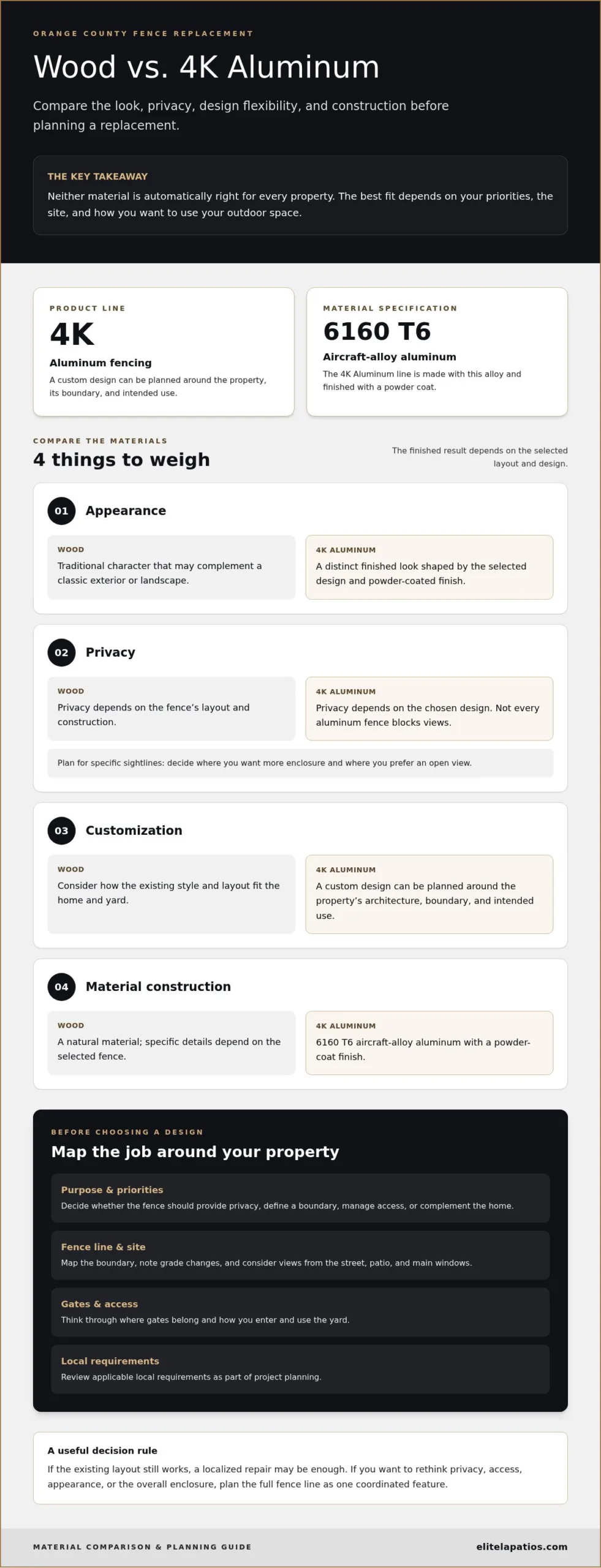
Comparing wood and aluminum means looking beyond the material itself. Consider the fence’s appearance, the privacy you want, and how it will relate to your home. Wood is a traditional choice with a familiar presence. Custom aluminum fencing offers a different design direction, with details that can be planned around the property instead of selected as a standard replacement.
Use this comparison to identify which questions matter most before deciding:
| Consideration | Wood | 4K Aluminum |
|---|---|---|
| Appearance | Traditional character that may complement a classic exterior or landscape. | A distinct finished look shaped by the selected design and powder-coated finish. |
| Privacy | The level of privacy depends on the fence’s layout and construction. | Privacy depends on the chosen design. Not every aluminum fence blocks views. |
| Customization | Consider how the existing style and layout fit the home and yard. | A custom design can be planned around the property’s architecture, boundary, and intended use. |
| Material construction | Wood is a natural material. Specific details depend on the selected fence. | The 4K Aluminum line uses 6160 T6 aircraft-alloy aluminum with a powder-coat finish. |
How do wood and aluminum differ in look and design?
Visual fit depends on the whole setting, not the fence alone. Consider the home’s exterior, nearby landscaping, and views from the street and main outdoor areas. Traditional wood may complement established architectural details, while a custom aluminum design can create a different, more tailored look. Either material should support the property’s character rather than compete with it.
Privacy is a separate design decision. Identify where you want a more enclosed boundary and where you prefer an open view. The selected configuration determines how much the fence screens, so describe specific locations and sightlines instead of assuming wood or aluminum always provides a particular level of privacy.
What does 4K Aluminum construction mean?
The 4K Aluminum line is constructed from 6160 T6 aircraft-alloy aluminum with a powder-coat finish. These specifications tell you what the product is made from and how it is finished. For project planning, separate product details from local rules. The California Department of Industrial Relations’ website disclaimer explains the limits of information on that site, not fence-specific requirements.
The best fit depends on your priorities and the property’s design. If you’re considering a custom aluminum option, explore 4K Aluminum fencing and think about how its appearance and intended use fit your replacement plan. That’s a useful starting point when you’re deciding whether to replace wood fence with aluminum Orange County.
Plan an Aluminum Fence Design Around Your Orange County Property
Begin by identifying what you need the boundary to do. Is your main priority to define the property line, screen a view, refine the home’s exterior, or manage access? Several goals may matter, but ranking them helps guide the layout and keeps appearance choices connected to how you use the space. For homeowners planning a replacement in Orange County, the property’s specific layout should lead the design.
How should you define the fence’s purpose and layout?
Walk the existing fence line and sketch it from above, marking corners, entrances, and changes in grade. Note where you want more screening and where you need a clear route through the yard. Existing gates provide a useful reference, but replacement planning is also a chance to consider whether their locations still work for your daily routine.
Think about how people move from the home to the yard, driveway, or garden. A pedestrian gate near a frequently used path may be more convenient than one placed only to match the old layout. Separate functional needs from aesthetic preferences: “easy access from the patio” describes a use, while “a clean, coordinated look” describes a visual goal. Both matter, but they guide different design decisions.
- Purpose: Identify whether boundary definition, privacy, appearance, or access is the leading priority.
- Layout: Mark the fence route, corners, grade changes, and existing gate locations.
- Movement: Note the paths people use and where a gate would make everyday access more direct.
- Views: Record which areas you want screened and which should remain visually open.
Which design details should guide the replacement?
Consider the fence as part of the home’s full exterior composition. The architecture, landscape, nearby outdoor features, and views from inside can all influence which design feels cohesive. A fence that looks appealing on its own may feel out of place if it conflicts with the home’s character or interrupts a carefully planned garden. Orange County properties vary, so let the actual site and your intended use guide the design rather than assuming one approach suits every neighborhood.
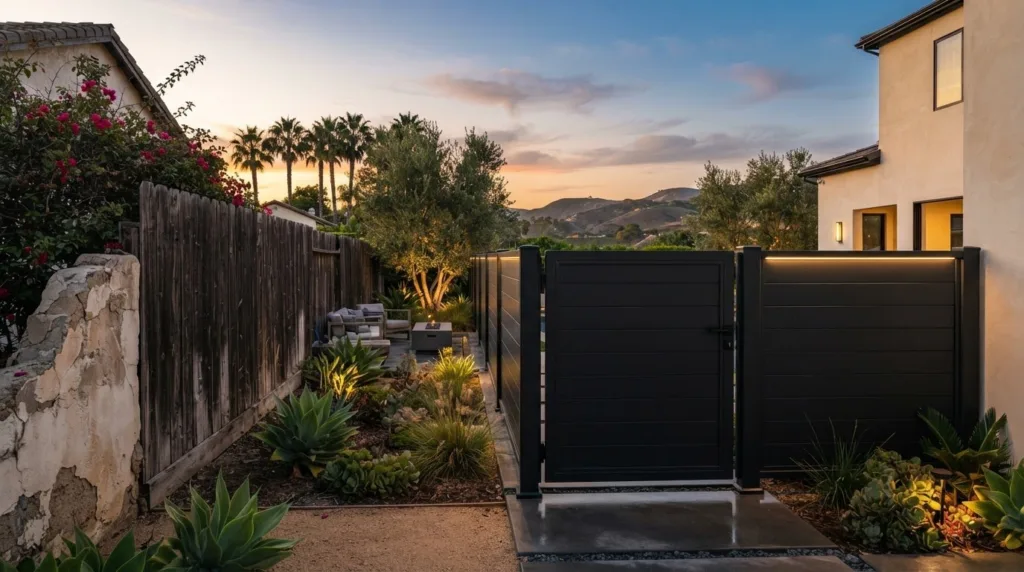
Custom 4K Aluminum fences, pedestrian gates, and artistic privacy walls can be considered together to create a coordinated boundary. A gate can complement the fence while serving a specific access point, and a privacy wall may suit an area with different screening needs. Explore 4K Aluminum fencing and gate options as you refine the design.
Before discussing the design, gather your sketch, priorities, and notes about the home’s exterior and landscape. These details help turn broad preferences into a site-specific plan, with each section of the boundary considered for its appearance and purpose.
What to Plan Before Replacing a Wood Fence in Orange County
A well-organized replacement starts before the old fence comes down. Define the project scope, document the site, set your priorities, and review the rules that apply to your property. This gives you a clear foundation for discussing the design and helps ensure practical details, such as removal and site access, are considered alongside appearance.
Which site details should you document first?
Make a simple site record. Sketch the approximate fence line, mark existing gates, and note visible grade changes. Add nearby features that could affect access to the work area, such as narrow side passages, landscaping, outdoor structures, or restricted areas. Photos from several angles can show how the fence relates to the home and yard.
Then describe what the wood fence does well and what you want the replacement to change. Perhaps the boundary works, but a gate is inconveniently placed. Maybe the layout suits the yard, while the appearance no longer feels in step with the home. Separating what you want to retain from what you want to revise makes the project scope more precise.
How should you check local requirements and project scope?
Orange County includes incorporated cities as well as unincorporated areas, and fence requirements may depend on the city, property, and project details. Identify the jurisdiction for your address, then consult that city’s or the county’s current official planning and building resources. Look for guidance relevant to fence replacement and the proposed location. Don’t assume a rule for another city, property, or project applies to yours.
Organize the project in a practical sequence:
- Define the scope. Note which fence sections are being replaced and whether the plan includes gates or privacy walls.
- Document the site. Gather your sketch, photos, gate locations, grade observations, and access constraints.
- Set priorities. Separate essential functions, such as privacy or convenient entry, from visual preferences.
- Review local requirements. Use current official city or county information for the property’s jurisdiction and project details.
Include removal, disposal, access to the work area, and project sequencing in the written scope. These are separate from decisions about the fence’s final appearance. The scope should describe what happens to the existing wood fence and how the replacement work will proceed, so everyone has a clear understanding of the planned tasks.
If you’re preparing to replace wood fence with aluminum Orange County, bringing these notes together can make the design discussion more focused. Discuss your Orange County fence replacement with Elite L.A. Patios and start shaping a project plan around your property.
How Elite L.A. Patios Approaches Custom Aluminum Fence Replacement
Replacing a wood fence gives you an opportunity to shape a boundary around how you want your property to look and function. Elite L.A. Patios designs and installs custom 4K Aluminum fencing in Orange County, planning the fence and pedestrian gates around the property’s layout and intended use. Elite L.A. Patios serves homeowners in Orange County, Los Angeles County, Ventura County, and San Diego County. Your priorities guide the design, rather than a standard product swap.
The 4K Aluminum line is made with 6160 T6 aircraft-alloy aluminum and a powder-coat finish. Products include a 20-Year Manufacturer Warranty (limited). Elite L.A. Patios is licensed, bonded, and insured, giving homeowners clear details to consider as they plan a custom fence project.
What can a custom 4K Aluminum fence project include?
A project can include custom 4K Aluminum fencing and pedestrian gates, planned around the property and how people move through it. Artistic Privacy Walls are another aluminum-based structure to consider where a distinct privacy feature fits the design. The combination depends on your priorities, whether you’re defining a perimeter, planning access, or creating a coordinated outdoor setting. Elite L.A. Patios’ outdoor structures and features can help the fence relate to other elements of the property.
As you refine your preferences, reviewing the project gallery alongside your home’s architecture and landscape can help you identify design details that feel cohesive. Use the images for inspiration, not as a template for your property. Your site and intended use remain central to the plan.
What is a practical next step for your replacement?
Summarize the existing fence and what you’d like to change. Note which sections are included, where gates are needed, which areas call for privacy, and what visual qualities should complement the home. Include observations about access or the shape of the yard that may influence the design. A concise brief gives the project discussion a clear starting point.
Financing is available through Elite L.A. Patios. With your priorities in hand, you can discuss the project scope and design direction. Plan your custom aluminum fence project with Elite L.A. Patios and take the next step toward a replacement shaped around your home.
Shape a Fence Plan That Feels Right at Home
A fence replacement is a chance to make the boundary feel more intentional, not simply to exchange one material for another. As you decide whether to replace wood fence with aluminum Orange County, turn your preferences into a concise design brief: what the fence should do, how it should relate to the home, and which parts of the existing layout you’d like to change. Clear priorities can guide a custom project from the first conversation through the design stage.
You don’t need to resolve every design detail before taking the next step. A few notes about your property, preferred look, access needs, and priorities are enough to begin a focused discussion with Elite L.A. Patios. Together, these details provide a starting point for a fence design shaped around your home and the way you use your outdoor space.
Share your fence replacement vision with Elite L.A. Patios and take the first step toward a more considered boundary for your Orange County property.
Frequently Asked Questions
Can an aluminum fence be installed on a sloped yard?
Yes. A sloped yard can be considered in a custom aluminum fence design, but the approach depends on how the grade changes along the fence line. Note where the slope begins, whether it changes gradually or sharply, and how it relates to gate locations. These details help the design account for the ground and the intended use of each section rather than assuming the yard is level.
Do I need a permit to replace a fence in Orange County?
Permit requirements depend on the property’s jurisdiction and project details, so check the current rules for your address rather than relying on a countywide assumption. Find out whether the property is within an incorporated city or an unincorporated area, then review the appropriate official planning and building resources. If the project changes the fence’s location or dimensions, include those details when reviewing the local guidance.
How long does it take to replace a wood fence with aluminum?
There isn’t one reliable timeline for every replacement. Duration depends on the project’s scope and site conditions. Replacing one section with straightforward access differs from work on a longer fence line with multiple gates or grade changes. For a project to replace wood fence with aluminum Orange County, define the sections included and document access constraints so the schedule can reflect the actual work.
Can a new aluminum fence use the same posts as my old wood fence?
Reuse depends on the existing posts’ condition, placement, spacing, and compatibility with the new fence design. A layout that worked for the wood fence may not align with the selected aluminum panels or gate positions. Include the posts in your site notes and have their suitability considered as part of the replacement plan before treating them as reusable components.
What should I plan for when removing an old wood fence?
Before removal, note anything attached to the fence, such as gates or lighting, and identify nearby landscape features and a practical route for moving materials out of the work area. Clarify in the written scope who handles removal and disposal, how access will be maintained, and how the work will be sequenced with installation. This separates fence design decisions from the practical tasks involved in clearing the site.
Can aluminum fencing provide privacy?
Yes. An aluminum fence can support a privacy-focused design, but the level of screening depends on the configuration you choose. Consider the specific views you want to block, including sightlines from neighboring areas and the outdoor spaces you use most. Some locations may call for a more enclosed feature, while others benefit from a less obstructed boundary. Plan privacy by area instead of assuming every aluminum fence screens equally.