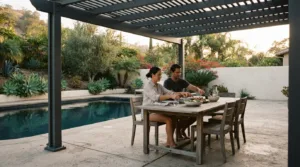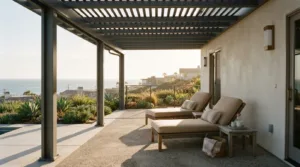
A cooler backyard begins well before the first structure is installed. Thoughtful eco-friendly backyard shade brings together material choices, precise fabrication, site-aware design, and secure installation to create comfortable outdoor living while limiting direct sun on nearby spaces.
It’s natural to want shade that feels refined, lasts, and works with the character of your home. The design matters as much as the material: the structure’s placement and coverage affect how sunlight reaches patios and windows, while durable components can help reduce replacement and maintenance needs over time. By blocking direct sunlight, well-placed shade can also help reduce reliance on air conditioning during hot weather, which may lower associated emissions.
This guide explains how shade products are fabricated, how designers plan coverage around a backyard, and what installation involves. You’ll also learn how different shade approaches suit patios, decks, and garden areas, and how to think about comfort, longevity, and energy use when shaping an outdoor retreat.
Key Takeaways
- Match the shade structure to the space: sails offer flexible coverage, while patio covers create a more integrated outdoor setting.
- Plan shade placement around sunlight, ventilation, and how you use the backyard throughout the day.
- Choose durable, lower-impact materials and secure anchoring to support longevity and reduce replacement needs.
- Strategic shading can make outdoor areas more comfortable and may help reduce air-conditioning use and related emissions.
- Explore 4K Aluminum patio covers, awnings, and other outdoor features to shape a tailored shade solution.
Outdoor roller shades, shade sails, umbrellas, gazebos, and pergolas
The most eco-friendly choices combine durable materials, targeted coverage, and natural shade. Trees provide living canopy; shade sails, roller shades, umbrellas, gazebos, and pergolas offer different levels of control. For example, a sail can cover a patio without enclosing its sides, while an outdoor roller shade can screen a sunny edge.
Shade sails are flexible membranes tensioned between anchor points. Their shapes, sizes, and colors can be tailored to patios and other outdoor spaces. Recyclable fabrics and eco-friendly hardware can reduce material waste. Secure anchoring matters because wind can stress sails and umbrellas. Routine cleaning and inspections help maintain a sail; eco-friendly shade sails can last 10 to 20 years, depending on material quality and maintenance.
For patios, a sail blocks direct sunlight while preserving airflow beneath it. That can reduce heat around the seating area and the need for artificial cooling in hot weather. Shade fabric can also protect plants from ultraviolet exposure, improve ventilation, reduce water requirements, and moderate greenhouse temperatures. Check what the fabric percentage describes: the listed percentage refers to light diffusion.
Coconut-fiber shade sails appeal to homeowners seeking a natural-looking material. Compare their intended use, weather resistance, and care needs with the conditions in your yard. A pergola creates a defined framework and can support climbing plants; a gazebo provides a roofed destination. Umbrellas suit movable, localized shade. Trees offer a living canopy, but take time to grow and cannot be repositioned.
In the Los Angeles region, native shade-tree choices include coast live oak and California sycamore. Their mature canopy size depends on growing conditions, so plan for each tree’s eventual spread and height. For drought-tolerant planted shade, California grape can climb a support, while California lilac forms a shrub canopy. Match the plant to its available space and support.
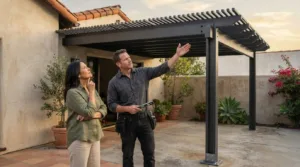
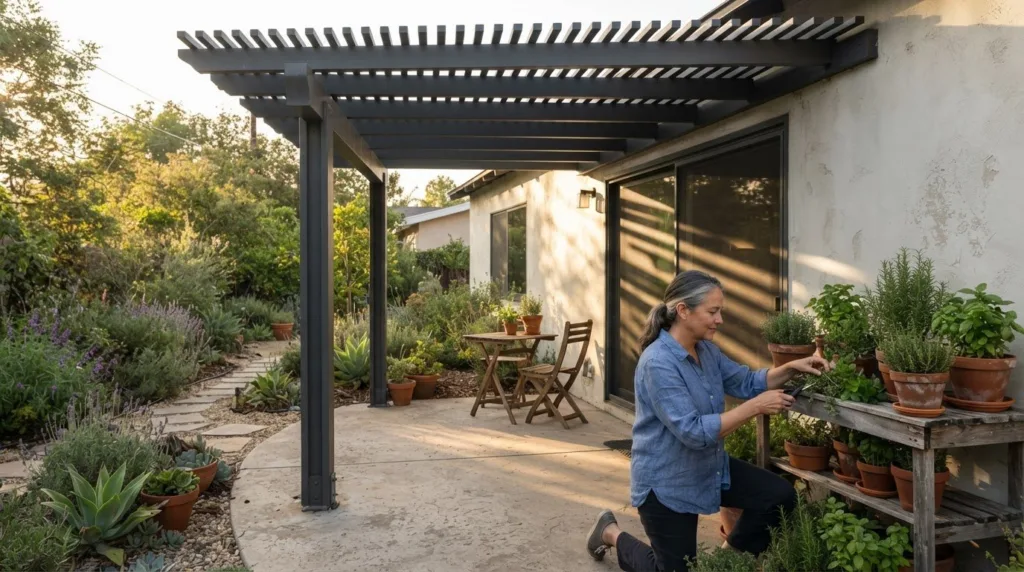
Roller shades offer adjustable screening along a patio edge, while sails suit open areas with well-positioned anchors. To choose, map the sunlit area, identify the hours needing shade, then match coverage to the space. A 4K Aluminum lattice patio cover is another option for structured patio shade, with an open lattice design.
What goes into the fabrication, shade design and installation of these structures?
A well-planned shade sail starts with the site, not the fabric. Sun direction, anchoring points, material choice, and local restrictions shape the design.
Custom Design and Sun Direction
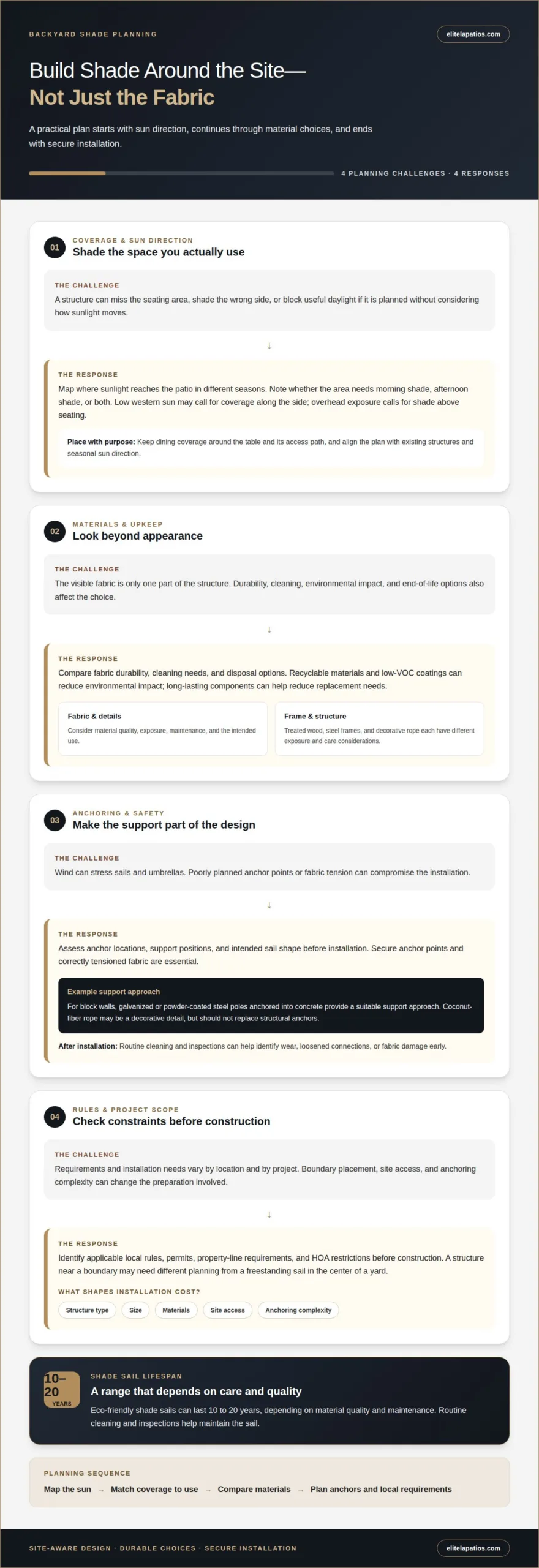
Custom shade design begins by mapping where sunlight reaches the patio during different seasons. Note which areas need cooling in the morning, afternoon, or both. A low western sun may require coverage along the patio’s side, while overhead exposure calls for shade above seating. The designer then matches sail shape and anchor positions to those conditions.
For a dining area, plan coverage around the table and its access path. Keep the design aligned with the yard’s existing structures and the direction of seasonal sunlight. That helps avoid a sail that shades the wrong area or blocks useful daylight.
Materials and Environmental Trade-Offs
Artificial shade fabrics can offer durable coverage, while material selection affects future waste and upkeep. Recyclable materials and low-VOC coatings can reduce environmental impact. Compare fabric durability, cleaning needs, and end-of-life options rather than considering appearance alone.
Treated wood can resist outdoor exposure, but its treatment and eventual disposal matter. Long-lasting steel frames can reduce replacement needs over time. Coconut-fiber rope may suit decorative details, but material choice should reflect exposure to sun, moisture, and wear. Consider the complete structure, not just its visible fabric.
Durability and Safe Installation
Safe shade sail installation depends on secure anchor points and correctly tensioned fabric. On block walls, galvanized or powder-coated steel poles anchored into concrete provide a suitable support approach. The installer assesses the wall, pole position, and intended sail shape before setting anchors. Sails and umbrellas can be vulnerable to wind, so stable support is essential.
Fabric durability depends on material quality, exposure, and maintenance. A shade sail can be tailored to its support layout, but coconut-fiber rope should not replace structural anchors. After installation, routine cleaning and inspections help identify wear, loosened connections, or fabric damage early.
Rules and Installation Costs
Permits, property-line rules, and HOA restrictions depend on the project’s location and governing requirements. Before construction, identify which local rules and community covenants apply. A structure near a boundary may need different planning from a freestanding sail in the center of a yard.
Installation cost depends on structure type, size, materials, site access, and anchoring complexity. Pergolas, shade sails, and shade trees involve different labor and preparation. The price depends on the case and is given after a quote request, based on those project factors. For a tailored patio shade plan, discuss your project.
Outdoor shade products for patios, decks, gardens, and other spaces
Plan the layout around how each outdoor space connects to the next. On a patio beside a kitchen door, leave a direct route between the entrance and dining chairs. On a deck, keep stairs and railings accessible. An eco-friendly backyard shade plan should make outdoor areas easier to use without turning paths into obstacles.
For a garden, think about views and movement as well as seating. A small table near a flower bed can create a place to pause, while a clear path lets people reach planting areas. Position structures so they don’t divide the garden into awkward sections. The result is a more deliberate arrangement, with each area serving a distinct purpose.
Outdoor dining spaces benefit from a layout that accommodates serving and seating. Leave room to pull chairs back and walk around the table. If the dining area sits beside a grill or kitchen entrance, keep that route open. These practical details help the space work smoothly during a meal, rather than making shade coverage the only design consideration.
For outdoor learning, define a sheltered area that supports the activity taking place. A reading space can use benches facing inward, while a group lesson may need open floor area and clear sightlines. Schools and childcare centers can hold more classes outdoors when proper shelter is available. Keep the activity zone distinct from nearby play areas.
In a play area, arrange seating where adults can observe children and reach the play equipment easily. Avoid placing furniture across entrances or common routes. A separate waiting spot near the play zone can help caregivers remain close without crowding the activity area. Consider how children and adults move through the space at different times.
Before selecting a structure, sketch the patio, deck, garden, dining, and play zones. Mark doors, steps, furniture, and the routes connecting them. Then identify which activity needs dedicated coverage. This simple plan helps distinguish a single shared space from several smaller destinations. An eco-friendly backyard shade design can follow the way your household actually uses the yard.
Shade sails can be tailored for residential backyards, commercial areas, and public spaces. These options can be considered alongside the activities and routes already mapped out, with the location and intended use guiding the choice.
Comparing these estimates can help narrow the options for a patio, deck, garden, or activity area while keeping the planned circulation and purpose in view.
Reducing air-conditioning use and carbon emissions
Strategic shading limits direct sunlight on patios and nearby areas. A sail above west-facing seating blocks late-day exposure. That can improve comfort outdoors and reduce heat around the space. Shade placement should follow the hours when people use each area.
Sunlight through windows can warm interior rooms, while exposed walls and patios also absorb heat. A shade structure near a sunny outdoor edge can interrupt direct exposure before it reaches those surfaces. For example, afternoon coverage beside a west-facing window may reduce solar heat entering the room. The effect depends on placement and site conditions.
Shade sails block direct sunlight over outdoor areas, helping reduce cooling needs during hot weather. Place coverage above frequently used seating rather than unused lawn. An open-sided design allows ventilation, keeping the shaded patio connected to surrounding air and garden spaces.
Trees offer a living form of shading. Their canopy can reduce ambient temperatures and improve air quality. A tree beside a paved patio, for example, shades a surface that would otherwise receive direct sun. Consider the canopy’s eventual spread when choosing its position, so shade reaches seating without crowding paths.
For a practical layout, identify the hottest outdoor areas first. Note whether morning or afternoon sunlight makes each space uncomfortable. Then place coverage over the patio, window, or paved area receiving that exposure. This targeted approach uses shading where it can make the clearest difference, rather than covering the entire yard.
Reduced air-conditioning use can lower greenhouse gas emissions indirectly. Shade limits solar heat and may reduce demand for artificial cooling. If a shaded patio also keeps nearby surfaces cooler, the surrounding area may feel more comfortable. The effect depends on placement and local conditions.
Material and structure choices also shape environmental impact over time. Recyclable materials, low-VOC coatings, and long-lasting steel frames can reduce waste and maintenance needs. For example, a durable structure designed for a frequently used patio may avoid repeated replacement of temporary shade products.
Think of the yard and home as connected spaces. Shade over a dining area improves outdoor comfort, while coverage near sun-exposed windows may reduce indoor heat gain. Match each structure to its exposure and use, then keep the shaded area open enough for airflow. This makes sunlight management part of a considered cooling strategy.
Umbrellas and cantilever shades
A patio umbrella creates focused shade over a table or seating group. Its movable canopy suits outdoor spaces where needs change during the day. For example, position it over a dining table at lunch, then shift it beside lounge chairs later. Choose a location that leaves clear paths between the house, table, and garden. This simple placement helps the shade enhance daily use without covering areas that rarely need it.
A cantilever shade places its supporting post beside, rather than within, the shaded area. That arrangement can keep the center of a seating group open. Consider a backyard conversation area: an offset support leaves room for chairs beneath the canopy. A cantilever structure can also serve a poolside lounge or a deck where a central umbrella post would interrupt furniture placement.
Wind exposure matters for both shade solutions. Secure anchoring helps protect umbrellas and cantilever shades from wind stress. Place the structure with nearby walls, fences, and open exposure in mind. An umbrella beside a sheltered wall faces different conditions than one on an open deck. Close or remove movable canopies when they aren’t in use, and inspect their supports and connections during routine care.
Material choices affect upkeep and replacement. Recyclable materials, low-VOC coatings, and long-lasting steel frames can help reduce waste and maintenance needs over time. Look at the full product, including its frame, canopy, and hardware. A stylish canopy that needs frequent replacement may create more waste than a durable shade structure maintained over time.
To select a suitable design, identify the exact area needing shade first. Measure the space available for furniture and walking routes, then consider where sunlight falls during use. A compact patio table may suit a movable umbrella, while a larger lounge area may benefit from an offset canopy. Choose coverage that fits the layout rather than forcing furniture around a support post.
A 4K Aluminum Cantilever offers a structured option for a backyard seating area. Its design can provide shade while keeping the support outside the central space. For a tailored approach to patio shade, discuss your cantilever shade project.
Elite L.A. Patios
Elite L.A. Patios is a natural next step when you want a considered shade design and professional installation. Its 4K Aluminum outdoor structures help shape covered patio areas around your home’s architecture and how you use the space. This is relevant when you’re weighing coverage, appearance, and a permanent structure rather than a movable canopy. The design can take your preferred outdoor setting and shade goals into account.
The available patio cover options include a 4K Aluminum lattice patio cover, 4K Aluminum solid twin wall, and 4K Aluminum insulated Solid Roof. A 4K Aluminum Cantilever provides another structural option. Each has a distinct form, so the choice depends on the look and coverage you want for your patio. Discuss whether you prefer an open lattice appearance, a solid roof style, or a cantilever layout. These choices help connect the structure to your intended use.
Planning starts with your priorities for the outdoor area. In a design conversation, describe where you want shade, how you use the patio, and the style you want to achieve. Existing walls, doors, and seating areas can inform how a structure fits the setting. These details help shape a design that feels integrated with the home, rather than added without regard for its surroundings.
Environmental considerations also benefit from a practical perspective. Think about how regularly you’ll use the covered area, the kind of coverage you prefer, and how the structure complements your home. Aluminum is the material used in these listed products; the available options include lattice and solid-roof designs. A carefully selected structure can help establish a comfortable outdoor space, while shade placement may contribute to reduced reliance on air conditioning during hot weather. The outcome depends on the layout and how the area is used.
Consider this service when you’re ready to move from comparing shade approaches to planning a permanent patio structure. Bring your goals for coverage, appearance, and everyday use into the conversation. Elite L.A. Patios can discuss its 4K Aluminum options and professional design and installation for your project. Contact Elite L.A. Patios to discuss your outdoor shade project.
Shape a More Thoughtful Outdoor Retreat
Your next step is to turn broad priorities into a clear design direction. Consider how you want the space to feel, which areas deserve attention, and how the structure should complement your home. A considered plan for eco-friendly backyard shade can support outdoor comfort while making energy-conscious choices part of everyday living.
Think beyond coverage alone. The right design should feel connected to your home’s architecture and the way you use your outdoor space. Elite L.A. Patios can help translate those priorities into a tailored design and professional installation. Share what matters most, whether that’s an inviting setting for family time or a more refined place to unwind.
Thoughtful shade can contribute to less reliance on air conditioning, while giving your backyard a more comfortable rhythm through warm days. The details of your space and design goals guide the conversation, helping you move from ideas toward a practical next step.
Contact Elite L.A. Patios to discuss your shade project and start shaping an outdoor retreat that feels distinctly yours.
Frequently Asked Questions
Wrapping Up – So, What’s the Best Backyard Shade Idea?
The best backyard shade is the option that fits the space, sun exposure, and how you use it. For a dining table that moves around the patio, a movable umbrella can be practical. For more structured coverage, a pergola or patio cover may suit a dedicated seating area. Consider airflow, maintenance, and how the design complements your home before choosing.
How much can backyard shade reduce patio temperatures and home cooling costs?
There isn’t a single reliable temperature or cost reduction figure for every home. Results depend on shade placement, sun exposure, surrounding surfaces, and how the house is cooled. Shading a west-facing outdoor area or nearby sunny window can limit direct sunlight and may reduce cooling demand during hot weather. Evaluate the areas receiving the most sun to guide placement.
Which sustainable materials are best for pergolas and shade sails?
For shade sails, look for recyclable fabric and eco-friendly hardware. For pergola structures, durable frames and low-VOC coatings can help reduce waste and maintenance needs over time. Compare the full assembly, including fabric, frame, and hardware, rather than selecting by appearance alone. A long-lasting material suited to local exposure can be a more considered choice than one requiring frequent replacement.