A custom fence is a design decision as much as a boundary project. Los Angeles County fence contractors help shape the result by assessing the property, discussing materials and layout, and preparing an installation plan with an itemized quote. The right approach connects privacy and security needs with the home’s architecture and the character of its outdoor spaces.
It’s natural to want a fence that feels considered, performs its purpose, and sits comfortably within your property. This guide explains how material choices and custom design influence the project, what to expect from an on-site estimate, and how craftsmanship carries through installation. You’ll also learn how service coverage and project details shape the path from initial planning to a finished fence.
Key Takeaways
- Project timing depends on the fence design, material preparation, and any required permit processing.
- Compare fence materials by the balance of privacy, appearance, upkeep, and durability that suits your property.
- An on-site estimate helps define the project scope, while an itemized quote clarifies how the work is planned.
- Careful installation and custom design help a fence fit the property’s layout and architectural character.
- Explore how Elite L.A. Patios’ 4K Aluminum outdoor features can complement a thoughtfully designed exterior.
Fence installation in Los Angeles and Orange County
Los Angeles County fence contractors handle residential and commercial projects across the region, while local project details shape each installation. Hiring typically moves from a site assessment and written scope to scheduling, fabrication when needed, and installation.
Installation Timelines and Workmanship Warranty
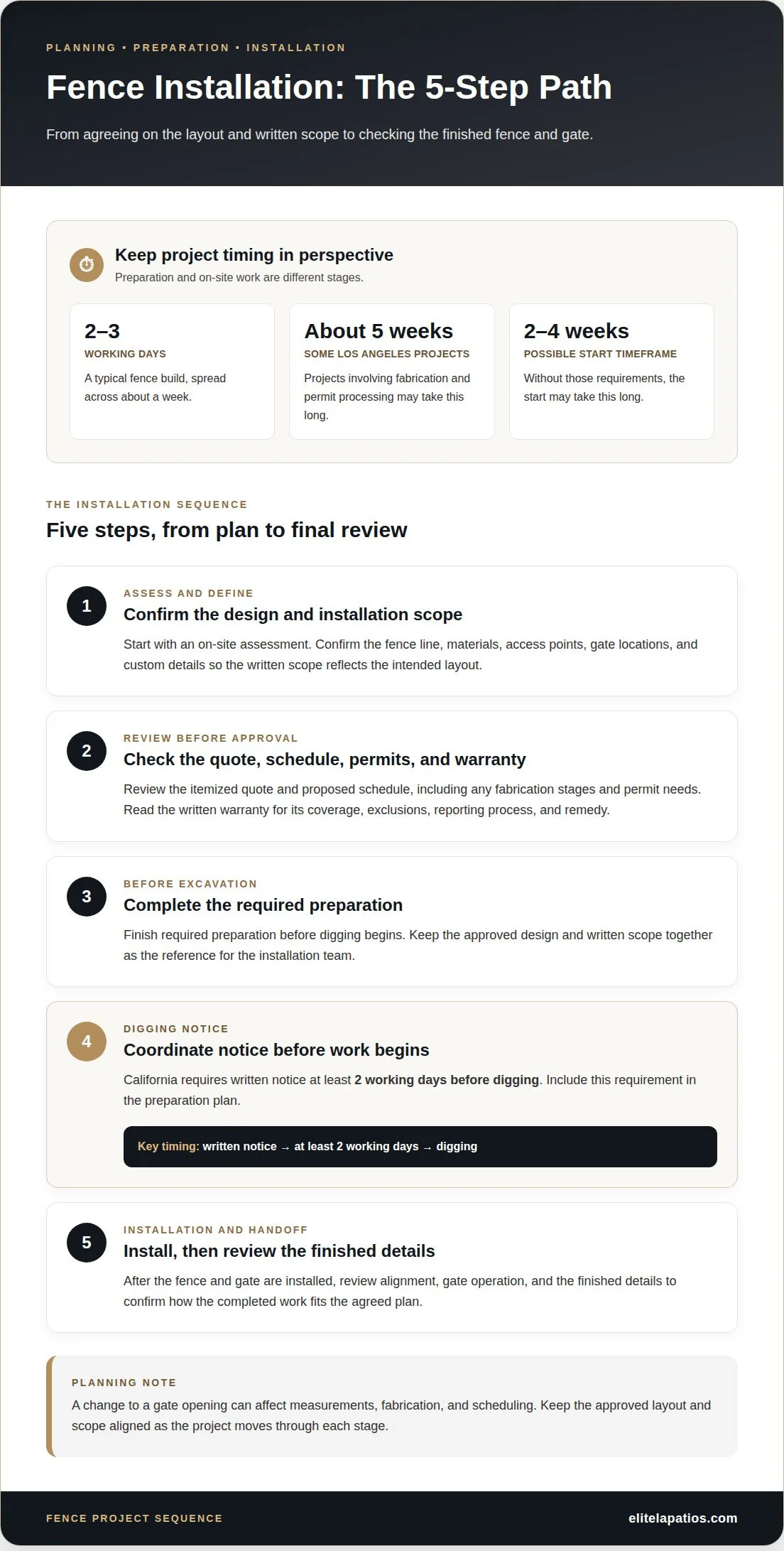
A typical fence build takes 2 to 3 working days, spread across about a week. A Los Angeles project involving fabrication and permit processing may take about 5 weeks; without those requirements, the start may take 2 to 4 weeks. These timelines describe different project stages, so a quote should distinguish preparation from on-site work.
A workmanship warranty covers installation issues, while product coverage has its own terms. Review the written warranty for what it covers, exclusions, how to report a problem, and the remedy. For example, a loose post may need a different assessment from surface wear. Read the warranty alongside the installation scope.
Custom Fence Fabrication
Custom fabrication turns measured plans into fence components designed for a specific layout. It can account for sloping ground, unusual property lines, privacy needs, and the desired finish. Accurate measurements and an approved drawing help coordinate panels, posts, and transitions before fabrication begins.
Fabrication can affect the schedule because installation waits on completed components. A project with custom work and permit processing may take about 5 weeks in Los Angeles. The project plan should show when measurements, design approval, fabrication, and installation occur, so each stage has a clear place in the timeline.
Fence and Gate Design
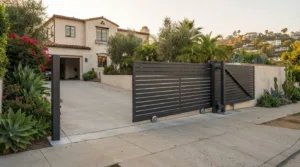
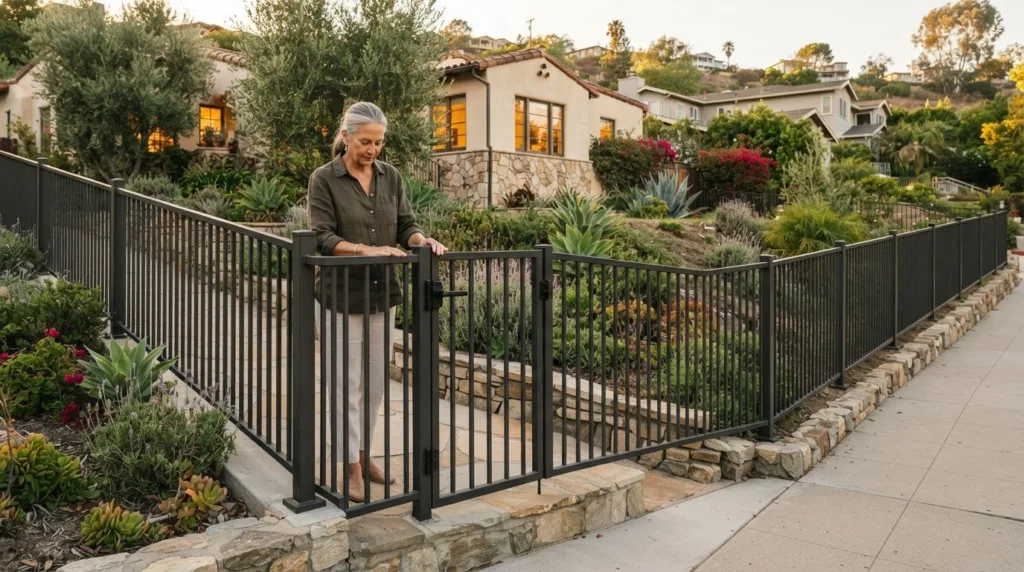
A fence and gate should be designed as one coordinated layout. Plan the fence line, access points, panel spacing, and gate operation around the available space. A custom gate should fit the opening and match the adjoining fence, rather than look like a separate addition.
During planning, map the routes people use from the street, driveway, and yard. A gate beside a driveway, for instance, serves a different purpose from a pedestrian entrance. The installation plan should turn those choices into measured openings, aligned posts, and a consistent finish.
Hiring and Installation Steps
Begin with an on-site assessment, then settle the fence line, material, gate locations, and custom details. These choices guide the written scope and quote. Before approving the project, review the proposed schedule, fabrication stages, and warranty terms so the agreement reflects the intended design.
- Confirm the proposed layout, materials, access points, and installation scope.
- Review the quote, schedule, permit needs, and warranty terms.
- Complete required preparation before excavation begins.
- Coordinate digging notice: California requires written notice at least 2 working days before digging.
- Install the fence and gate, then review alignment, operation, and finished details.
Each decision affects the next: changing a gate opening can alter measurements, fabrication, and scheduling. Keep the approved design and scope together so the installation team has a clear reference from site preparation through final review.
Chain-link, iron, wood, vinyl, and composite fencing
Fence material affects privacy, appearance, upkeep, and how the boundary fits its surroundings. Compare options against the property’s purpose, architectural style, and maintenance needs, not appearance alone.
Chain-link offers an open boundary that preserves visibility. Privacy slats can make it more screening-friendly, as shown at Arroyo Seco Tiny Homes in Los Angeles. That project included approximately 1,200 feet of galvanized chain-link fencing, 8 feet high, with hedge-style privacy slats in September 2021. It illustrates how one material can serve different needs through its finish and infill.
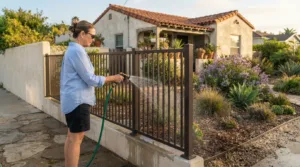
Iron creates a decorative boundary while leaving views open between the bars. It can suit a formal entrance where the pattern complements the property’s architecture. Consider how the design meets gates, changes in grade, and adjoining walls. A coordinated layout makes these transitions feel intentional.
Wood brings a natural texture and can create a more private boundary with closely spaced boards. Its appearance changes with exposure and upkeep. Wood fencing typically lasts 10-20 years with maintenance, so the finish and care plan matter over time. For example, a homeowner prioritizing a warm, solid screen may weigh that upkeep against the desired appearance.
Vinyl fencing offers a manufactured alternative to the painted or solid-panel appearance of wood. Compare panel style, color, and privacy with the home’s exterior, and consider how the finished fence will work with existing gates and landscaping. Vinyl and composite are different materials, each with its own construction and maintenance needs.
Composite fencing is described as typically lasting 25-30 years. That lifespan can help frame a longer-term comparison, but the project’s exposure and care still influence the ownership experience. Ask how the chosen panels, posts, and connections form a complete system, rather than judging a sample board alone.
Aluminum can provide a clean, structured appearance, especially where preserving views matters. Compare its open profiles with solid wood, vinyl, or composite panels. The most cost-effective choice depends on more than initial expense: consider expected upkeep, desired privacy, replacement needs, and how long the design should serve the property. No single material is the right fit for every boundary.
Start by ranking three priorities: privacy, architectural character, and maintenance. Then compare matching fence and gate designs in context. For a coordinated outdoor project, discuss your fencing plans and the materials that suit your property.
On-site estimates and itemized quotes
An on-site estimate lets the estimator assess the actual fence line, access, and project scope. A written, itemized quote then connects those observations to the proposed work.
Itemized Fence Quotes
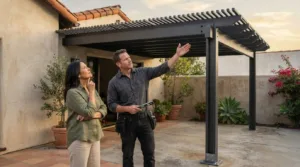
During an in-home estimate, the contractor can measure the area, inspect existing fencing, and note changes in grade or access. A narrow side yard, for example, may affect how materials reach the work area. These observations help shape a quote around the property, rather than rough dimensions alone.
A useful itemization separates materials, removal, installation, gates, and custom fabrication when they apply. It should also identify the fence layout, material, and work included. Free on-site estimates are not a universal term. The quote should state any estimate fee, workmanship warranty coverage, and financing terms if offered, rather than treating them as automatic.
Installation Costs Per Linear Foot
There is no single per-foot price for every fence in Los Angeles County. The project scope depends on material, height, design, site access, removal of an existing fence, and any gates or custom fabrication. A straight run with clear access differs from a sloped boundary with several transitions.
Fence pricing depends on the project scope, and prices are not disclosed. An itemized estimate shows how measurements, material, site conditions, and custom details shape the work. When comparing quotes, use matching specifications, including fence length, gate locations, and removal requirements.
Fence Replacement and Repair Costs
Repair and replacement work depends on the damage and scope. Replacing one damaged section is different from removing an entire fence, resetting posts, and installing new panels. A site assessment helps determine whether a localized repair or broader replacement is appropriate.
For an estimate, document the affected sections, measurements, material, and desired finish. A repair quote should identify the sections and related work included. A replacement quote should distinguish removal from installation, so you can see what the project covers before approving it.
Before accepting an estimate, compare its scope with your project priorities. Confirm that the written document reflects the chosen material, measured fence line, gate requirements, and any agreed warranty or financing terms. If a detail changes, request an updated itemization so the approved scope and final work remain aligned.
Fence contractor experience and craftsmanship
Strong fence work depends on how a contractor translates the approved design into a stable, aligned installation. For Los Angeles County fence contractors, compare project-specific reviews, relevant construction and repair experience, and the stated service area for your city.
Project feedback is most useful when it describes the result, not just a rating. Comments about straight fence lines, smooth gate operation, or a completed repair offer specific context. Look for recurring details in project accounts, such as communication about schedule changes and cleanup after installation.
Experience should match the work. Building a new boundary differs from replacing posts or repairing damaged panels. Ask how the proposed scope addresses the actual condition. A leaning section may need post work, while isolated surface damage may call for a more limited repair.
Craftsmanship shows in consistent spacing, secure connections, aligned transitions, and gates that open without scraping. During the final walkthrough, operate each gate and inspect where sections meet corners, slopes, and existing structures. These details show whether the measurements and installation plan were followed.
Company credentials and project records help clarify who is responsible for the work. Review the written contract for the business name, scope, payment schedule, warranty terms, and process for changes. If a crew member describes a different scope onsite, have the agreed change documented before work proceeds. Clear records protect both the design intent and the pricing arrangement.
Check property boundaries before placing fence posts. A fence crossing a property line can lead to a dispute or require changes after installation. Use an established boundary reference when planning the layout, and record the agreed line in the project documents. For a shared boundary, discuss the proposed placement with affected neighbors before construction.
Underground utilities are another practical consideration. Digging near buried lines can damage infrastructure and disrupt the property. Plan excavation around utility locations and complete the required pre-dig process. This matters even for a short replacement section, since a post hole can intersect a buried line.
Be cautious of estimates that rely on pressure, vague scopes, or payment requests without clear paperwork. An estimate without material descriptions, measurements, or a defined work area is incomplete. Review the written scope, confirm who will perform the work, and document any agreed changes before approving the project.
Service area matters for project coordination. Confirm that the estimate identifies the project address and city, then review the proposed schedule, warranty coverage, and repair process against your needs. Elite L.A. Patios serves homeowners in Los Angeles County, Orange County, Ventura County, and San Diego County.
The section identifies no specific companies; it points readers to contractors whose stated service area includes their city in Los Angeles County.
Custom fence design and engineering
A custom fence starts with a clear purpose, such as screening a patio or defining an entrance. Design turns that purpose into a coordinated plan for panels, posts, materials, and gates. Consider the home’s architecture, changes in grade, and existing features so the result feels intentional rather than like a standard layout placed without regard for its setting.
Start with a site plan marking the proposed fence line, access points, and visible constraints. A boundary sloping beside a garden, for example, may call for stepped panels or panels that follow the grade. This choice affects the fence’s visual rhythm and how sections meet. A scaled drawing makes the plan easier to review before fabrication.
Material influences both the design and its details. Open metal profiles can preserve views, while solid panels create a more enclosed appearance. Plan how the material meets at corners, ends, and transitions. The drawing should identify the finish and show how the fence relates to nearby walls, landscaping, and outdoor living areas.
Give gate placement its own design review. A driveway entrance and a pedestrian entry serve different movement patterns, even on the same property. Mark the opening, swing direction, adjoining panels, and approach path on the plan. This helps coordinate the gate with the fence before the layout is finalized.
Custom fabrication turns approved measurements and details into fence components. Before production, align the drawing with the panel arrangement, finish, gate dimensions, and transitions. If a site feature changes the design, revise the plan before fabrication begins. This helps keep the finished components consistent with the approved design.
Engineering coordination should clarify what the design covers and who is responsible for each decision. A contractor can document site measurements, material selections, connection details, and installation scope. Where project requirements call for specialized professional input, identify the appropriate licensed role rather than assuming a general label covers every task. Excellent craftsmanship starts with precise documents and continues through careful execution.
For a custom concept that connects fencing with the wider outdoor setting, discuss your design plans. Bring the priorities that matter most, such as privacy, an open view, or a defined entry, so the design conversation can focus on a fitting solution.
Elite L.A. Patios
Elite L.A. Patios helps homeowners bring a considered look to outdoor spaces with 4K Aluminum fencing, pedestrian gates, and patio structures. If a fence project is part of a broader exterior update, coordinating materials and design can help the boundary feel connected to the patio rather than separate from it.
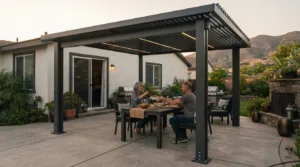
Its offerings include 4K Aluminum lattice patio covers, solid twin wall, cantilever, and insulated solid roof systems. These options suit different outdoor settings, while fencing and gates help define access and enclosure. The right starting point is a clear sense of how you want the property to look and function.
For guidance on an outdoor project that includes fencing or related structures, contact Elite L.A. Patios.
Shape an Outdoor Space That Feels Considered
A fence can do more than mark a boundary. Its design can connect privacy, access, and outdoor living while complementing the property. When considering Los Angeles County fence contractors, look at the larger setting: the strongest design choices work together. Consider the view from inside the home, how guests enter, and where you spend time outdoors.
For homeowners planning a broader outdoor update, Elite L.A. Patios offers 4K Aluminum fencing alongside patio structures, including 4K Aluminum lattice patio cover, 4K Aluminum solid twin wall, and 4K Aluminum Cantilever. These options can inform a cohesive exterior concept, with selections shaped around the home’s layout and intended use. The aim is a space that feels unified, from its boundaries to its places for relaxation.
Begin with the experience you want your outdoor space to offer, then develop a design around those priorities. Discuss your fencing and outdoor design plans with Elite L.A. Patios, and take a confident next step toward an exterior that reflects your vision.
Frequently Asked Questions
What types of fences do Los Angeles County contractors install and repair?
Contractors may install or repair chain-link, iron, wood, vinyl, composite, and aluminum fences, depending on the project. For example, a damaged chain-link section may need mesh or post repair, while a rotted wood post may require replacement. Ask the estimate to identify whether it covers a localized repair, full replacement, gates, or adjoining panels. Those different scopes affect the materials and work involved.
What permits are required to build a fence in Los Angeles County?
Permit requirements depend on the property’s jurisdiction and the proposed work. Identify the permitting authority for the address, then provide the planned fence location, design, and dimensions. New installations, replacements, and custom projects may involve different reviews. Include permit processing in the schedule when applicable, and make clear in the written scope who handles required submissions.
What are Los Angeles County fence height, setback, and material rules?
Los Angeles limits fences to 3 feet 6 inches in front yards and 6 feet in side and rear yards; fences up to 8 feet are allowed on some lots. These figures apply to Los Angeles, not necessarily every county jurisdiction. Setbacks and material requirements depend on the specific property rules. Identify the address and proposed fence location before relying on a height or design assumption.
How do I choose and verify a licensed fence contractor in California?
Ask for the contractor’s California license number and use the state’s official contractor license lookup to review the business, status, and classification. Match those details to the company named in the agreement. Also review the scope, payment terms, warranty, and insurance documentation. The contract should specify whether the work covers a gate repair or a larger fence section.
What is the average cost to replace or repair a fence in Los Angeles County?
A site assessment and itemized quote provide a project-specific estimate.