Custom colors and powder-coated finishes can give an aluminum fence a more considered, personal look, while the right design should also suit Huntington Beach’s coastal setting. An aluminum fence company in Huntington Beach can help homeowners weigh appearance alongside practical details, including how the fence meets existing walls and the height limits that may apply. Local codes commonly limit the combined height of a fence and wall topper to 6-8 feet, depending on location and setback.
It’s understandable to want a fence that complements your home without adding a demanding maintenance routine. In a coastal setting like Huntington Beach, material and finish choices matter because salt air can affect how fencing looks over time.
This guide covers practical fence design choices, wall-topper planning, routine care, and coastal durability. It also explains what to consider when planning an aluminum fence project in Huntington Beach, so you can make informed decisions about the layout and finish.
Key Takeaways
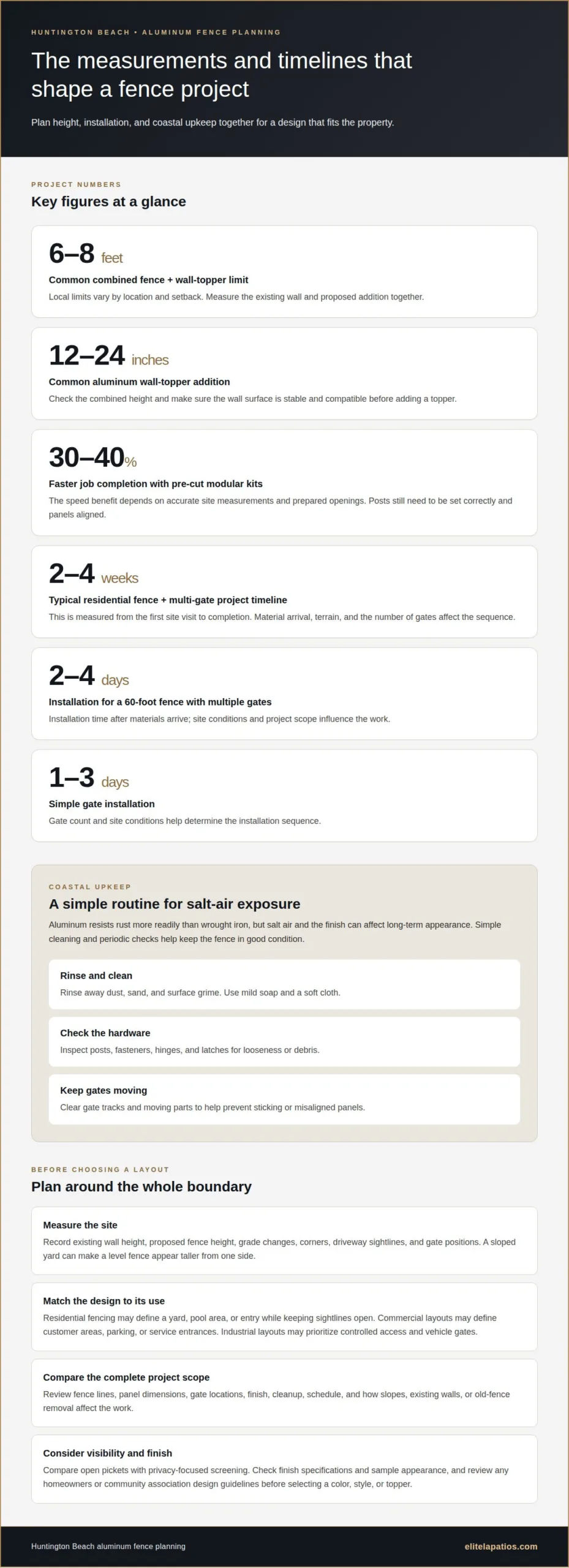
- Plan fence and wall-topper height together: local limits commonly range from 6-8 feet, depending on location and setback.
- Choose a finish that complements your home and suits the care considerations of a coastal setting.
- Understand how aluminum fencing handles exposure near the ocean and what routine upkeep can help preserve its appearance.
- Explore how residential, commercial, and industrial fencing needs can shape a project across Huntington Beach and Orange County.
- See how custom fencing can complement other aluminum outdoor features for a more cohesive property design.
Do aluminum fences need maintenance?
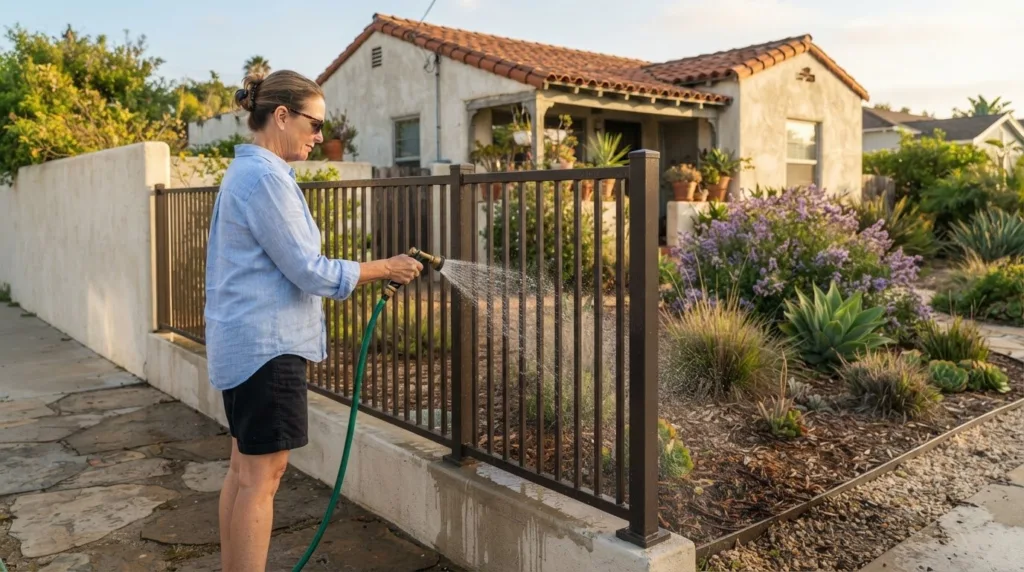
Yes, aluminum fencing benefits from simple cleaning and periodic checks. In Orange County, rinse away dust, sand, and surface grime, then use mild soap and a soft cloth. Inspect posts, fasteners, hinges, and latches for looseness or debris. Clear gate tracks and moving parts so a small obstruction doesn’t become a sticking gate or misaligned panel.
When comparing aluminum fence companies in Huntington Beach, look for clear project details and examples of completed work. Reviews can offer useful context, but also examine photos, proposed measurements, gate operation, and how the company explains the installation process.
Before choosing an aluminum fence company, review the written scope, proposed layout, gate locations, finish, cleanup, and schedule. The proposal should explain how uneven ground, existing walls, or removal of old fencing affect the work. These details make project proposals easier to compare, especially for Orange County properties with several gates or sloped boundaries.
DIY installation may reduce labor costs, but the full calculation includes tools, transport, layout, cutting, and the possibility of correcting measurement errors. Professional installation includes labor and coordination, with the scope shaped by fence length, terrain, gate count, and removal needs. Compare the complete DIY materials-and-tools total with the professional installation scope, not materials alone.
Pre-cut modular aluminum kits can help contractors finish jobs 30-40% faster. That speed depends on accurate site measurements and prepared openings; a kit won’t remove the need to set posts correctly or align each panel. For repairs, identify the fault first: a loose fastener, obstructed latch, damaged panel, or gate that drags calls for a different fix. Matching the repair to the problem avoids replacing sound sections unnecessarily.
Installation timelines depend on project scope. In Huntington Beach, a residential fence and multi-gate project typically takes 2 to 4 weeks from the first site visit to completion. Once materials arrive, installing a 60-foot fence with multiple gates often takes 2-4 days. A simple gate installation can take 1-3 days. The site visit, material arrival, terrain, and number of gates all influence the sequence.
If you’re comparing an aluminum fence company in Huntington Beach, use this practical checklist before settling on a design:
- Confirm the proposal shows fence lines, panel dimensions, and each gate’s position.
- Review how the plan handles slopes, existing walls, and access points.
- Check that the quoted work describes installation, cleanup, and any repair or removal tasks.
- Compare the stated schedule with material arrival and the number of gates.
How tall can fences and wall toppers be in Huntington Beach?
In Huntington Beach, most local codes limit combined fence and wall-topper height to 6-8 feet, depending on location and setback. Aluminum wall toppers commonly add 12-24 inches to an existing wall. Measure the wall and proposed topper together, rather than planning each element separately. A fence that fits a side yard may not suit a front setback or a different property location.
Start with the site conditions. Record the existing wall height, proposed fence height, and changes in grade along the boundary. For example, a sloped yard can make a level fence appear taller from one side. Mark corners, driveway sightlines, pedestrian gates, and transitions to neighboring walls. This information helps define the layout before materials are selected.
Different properties call for different fencing priorities. Residential aluminum fencing often defines a yard, pool area, or entry while keeping sightlines open. Commercial properties may need a clear boundary around customer areas, parking, or service entrances. Industrial sites may prioritize controlled access and a layout that works with vehicle gates. In each case, height planning should account for the full boundary, access points, and how the fence meets existing structures.
Aluminum is a practical coastal option because it resists rust more readily than wrought iron. That matters near Huntington Beach, where salt air reaches outdoor metalwork. Even so, site conditions and finish influence long-term appearance. Choose a design that is straightforward to rinse and inspect. A wall topper also needs a stable, compatible wall surface, since added height won’t repair cracks or movement in the wall.
Material and design choices shape the final look. Compare open pickets with privacy-focused screening, then consider how posts, rails, gates, and wall transitions work together. The right configuration depends on visibility, access, and the existing boundary, not only the fence’s height. An aluminum system can serve residential, commercial, or industrial settings, but the layout should reflect its specific use.
If your home is governed by a homeowners or community association, review its design guidelines before selecting a color, style, or topper. Prepare a simple plan showing the boundary, wall height, proposed addition, and gate positions. Keep the design consistent across the visible fence run, including corners and transitions, so reviewers can assess the finished appearance.
For a precise layout, bring the wall measurements, grade changes, and gate locations together in one plan. Discuss your fence project layout as you consider how aluminum fencing can fit the property.
Powder-coated finishes and custom designs
Custom color and coating choices shape an aluminum fence’s character and outdoor performance. Local companies can offer varied styles, colors, and design adjustments; compare finish specifications and sample appearance before settling on a cohesive look.
Powder-Coated Finish Options
Powder coating creates a finished surface over aluminum, while epoxy powder-coated finishes are one option to evaluate for a specific application. Compare the stated coating standard and warranty terms, rather than judging finish quality by color alone.
Color can look different on a screen than across a full fence in outdoor light. Compare samples beside your home’s exterior, trim, and nearby hardscape. A dark finish may contrast crisply with pale stucco, while a lighter tone can blend with a bright façade. Check the finish in shade and direct sunlight before deciding.
Fence Styles and Custom Designs
Custom design choices can include panel proportions, rail placement, picket spacing, gate details, and corner transitions. Ask to see how these elements will align across the full boundary. For example, a gate interrupting a repeating panel pattern can look intentional when its posts and rails match the adjoining sections.
Bring a site sketch that marks the property line, entry points, existing walls, and changes in grade. These details help plan panel widths and identify where a custom section may be needed. For a unified appearance, use the same color and finish across fence panels, posts, and gates, then review the design from both the street and yard.
Finish selection is also a practical maintenance decision. The reported AAMA 2604 performance period is up to 15 years, not a promise that every fence will look unchanged throughout that time. Sun exposure, salt air, cleaning, and surface wear influence appearance. Rinse the fence periodically, then inspect corners, gate edges, and areas near sprinklers for grime or coating damage.
Before approving a custom order, make sure the written proposal identifies the finish standard, color, panel design, and gate treatment. Review any warranty language for the covered finish, exclusions, and care requirements. A fence contractor should be able to explain how the selected coating and design relate to your property’s conditions. Keeping these decisions in writing helps prevent mismatched colors or unexpected design changes during installation.
For a refined result, coordinate the finish and design before fabrication. A consistent palette, clearly mapped panels, and matching gates give the property visual order while keeping upkeep in mind.
Coastal corrosion and weather resistance
Huntington Beach’s coastal air makes material selection important for fence durability. Aluminum is more rust-resistant than wrought iron, but that doesn’t make it immune to corrosion or finish wear. Salt deposits, moisture, and sun exposure can affect exposed surfaces over time. Inspect the finish, joints, fasteners, and gate hardware, not just the panels.
Coastal conditions affect details that are easy to overlook. Salt and grime can collect where rails meet posts, around hinges, and along the bottom of panels. After windy weather, rinse these areas with clean water and check for scratches or chipped coating. Address damaged spots promptly because exposed metal can weather differently from the surrounding finish.
Give hardware its own inspection. Check hinges, latches, screws, and brackets for looseness, deposits, or visible deterioration. Where different metals meet, review how those connections are protected. A gate exposed to ocean air, for example, may need closer attention around moving parts and fasteners than a sheltered fence section.
Powder-coated aluminum may be worth considering for coastal conditions. The coating also forms a visible protective layer, so scratches and chips matter. Avoid abrasive pads and harsh cleaning products that can damage the finish. For routine cleaning, use water and a soft cloth, and follow the coating maker’s care guidance for stubborn marks.
Exposure can vary across a single property. A fence beside an open driveway may receive more wind-blown salt than one behind a wall or planted border. Sun exposure can also differ between a south-facing run and a shaded side yard. Note these conditions when planning the finish and layout, and use them to guide future inspections.
Choose an aluminum fence company that can explain how its materials and finish suit your site. Review written details about the coating, hardware, cleaning recommendations, and warranty coverage, including any required care steps. Clear information helps you compare proposals and understand what can affect long-term performance.
For routine care, rinse exposed sections, inspect joints and gate hardware, and address finish damage promptly. Keep dated photos of visible changes, especially after severe weather. Comparing the same post, hinge, or panel over time can help you spot changes early. These simple steps support long-term upkeep without treating any aluminum fence as maintenance-free.
Service area including Huntington Beach
Huntington Beach properties call for planning that reflects the site, not a generic outdoor layout. Coastal exposure, lot shape, access, and nearby homes can all influence fence placement and design. Start by mapping the boundary, entrances, existing walls, and areas where privacy or security matters most.
Local conditions vary from one property to another. A home closer to the coast may face more salt exposure than a sheltered inland yard, while a corner lot can have different visibility needs. Mark which fence runs face the street, neighboring properties, or open outdoor space. A simple site map gives the project a clearer foundation.
Huntington Beach homeowners can make planning more efficient by preparing a few details before discussing the project:
- Sketch the property edges and mark gates, walls, slopes, and access points.
- Photograph the fence line from both sides, including corners and transitions.
- Note where coastal wind, salt, or direct sun reaches the outdoor area.
- Gather any HOA design requirements that affect visible fencing.
These details help shape a layout around the property rather than simply following its longest boundary. A narrow side passage, for example, may need a gate positioned for convenient access, while a front fence may need to preserve clear views. Security also depends on practical placement: the design should work with entrances, not obstruct them.
Plan the site visit and installation sequence around access conditions. A tight driveway, shared passage, or landscaping beside the fence line can affect how materials reach the work area. Identify constraints early and keep the intended route clear. Huntington Beach streets and lots vary, so a property-specific plan is more useful than assuming neighboring homes have the same needs.
If a community association governs your property, include its design rules and approval steps in the project calendar. Share a consistent drawing that shows the fence line, gate positions, and visible finish. This is especially useful when the work faces a shared drive or street. Clear documentation helps everyone review the same design.
The key is to define the site before choosing the final configuration. A boundary sketch, access notes, coastal exposure details, and association guidelines give the project discussion practical direction. They also help separate essential requirements from preferences, such as a specific gate location or a more open appearance.
To discuss how your Huntington Beach property can shape an outdoor project, share your project details.
Elite L.A. Patios: 4K Aluminum lattice patio cover
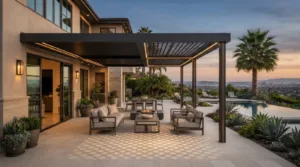
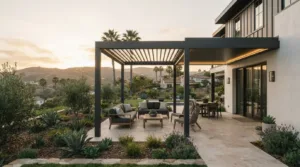
Elite L.A. Patios is a natural next step when you’re planning a refined outdoor space alongside your fencing decisions. Their premium aluminum lattice patio covers can help shape a cohesive setting, while solid twin wall, cantilever, and insulated solid roof systems offer additional shelter options. Consider how the structure’s placement, finish, and relationship to the fence will affect the overall design of your yard.
Bring your priorities together before planning: note the areas you want covered, how you use the outdoor space, and which existing features should guide the design. That gives the project a clear starting point and helps you consider the patio cover as part of the larger property layout.
Contact Elite L.A. Patios to discuss your outdoor project.
Shape an Outdoor Space That Feels Complete
A fence can define the edge of a property, while a thoughtfully planned patio structure can shape how the outdoor space is used. If your plans extend beyond fencing, consider how a covered area could complement the home’s layout and create a more cohesive setting. Elite L.A. Patios offers a 4K Aluminum lattice patio cover, 4K Aluminum solid twin wall, and 4K Aluminum Cantilever.
As you consider an aluminum fence company in Huntington Beach, keep the larger property vision in view. Think about how the fence, entry points, and outdoor living areas should relate, then use those priorities to guide your next conversation. A clear design direction can help connect practical boundaries with the atmosphere you want at home.
Contact Elite L.A. Patios to discuss your outdoor project and take a considered next step toward a space that feels distinctly yours.
Frequently Asked Questions
Are custom colors or finishes available?
Yes, custom color choices can be part of an aluminum fence design. Think about whether you want the fence to blend quietly into the property or make a deliberate visual statement. A restrained palette can keep attention on landscaping, while a contrasting tone can define an entry. Set the color direction early so it informs the overall design rather than becoming an afterthought.
Why is aluminum better than steel or vinyl near the coast?
There isn’t one best material for every coastal property. Aluminum offers a crisp metal appearance, vinyl can create a more continuous visual boundary, and steel suits designs that call for a heavier metal look. Compare privacy, visual weight, style, and site conditions. The right choice fits both the property’s practical needs and its architectural character.
Which aluminum fence companies serve Huntington Beach, California?
Elite L.A. Patios serves Orange County and installs 4K Aluminum Fencing and 4K Aluminum Pedestrian Gates. For homeowners considering an aluminum fence company in Huntington Beach, the useful first step is to define the project scope: note the boundary, access points, and how the fence should relate to the home. Those details help make a project conversation specific and productive.
How much does aluminum fence installation cost per linear foot in Huntington Beach?
There isn’t one per-foot figure that applies to every installation. The design, site access, and installation scope shape the estimate, so describe the property, identify the fence run, and explain the intended layout when requesting a quote. A project-specific estimate is more useful than a general rate.
Do Huntington Beach aluminum fence companies provide free estimates and warranties?
Elite L.A. Patios offers a free in-home estimate and lists a Limited 20 Year Manufacturer Warranty. During the estimate, homeowners can discuss the project’s intended layout and relevant outdoor features. Review the warranty document for its exact terms, including coverage conditions and care requirements. Keep it with the project paperwork, so the product information remains accessible after installation.
What permits or city rules apply to residential fence installation in Huntington Beach?
Permit requirements and city rules depend on the proposed fence and its location on the property. Before installation, prepare a plan showing the intended boundary, gates, and how the design relates to existing site features. If a homeowners association governs the property, include its architectural review process as a separate planning step. This helps distinguish municipal requirements from community design preferences.
What are Huntington Beach’s fence height and setback requirements?
Height and placement requirements depend on the specific property location and fence configuration. Identify the yard area, boundary, and nearby driveway or street, then evaluate the proposed placement against the applicable rules. For a wall-and-fence design, show both elements together in the project drawing. That gives reviewers a clear picture of the proposed profile instead of treating the wall and fence as unrelated features.
How do aluminum fences compare with vinyl, wood, and wrought iron for coastal homes?
Each material creates a different architectural effect. Aluminum suits a defined, open metal profile; vinyl can create a more solid boundary; wood brings a natural appearance; and wrought iron has a traditional metal character. Compare samples or design references with your home’s exterior, then consider how much visibility or privacy the boundary should provide. The best fit balances the desired look with how you use the property.