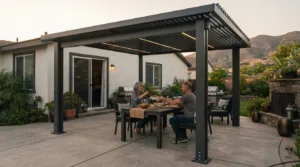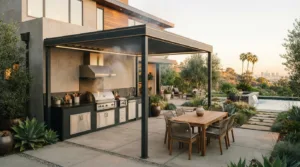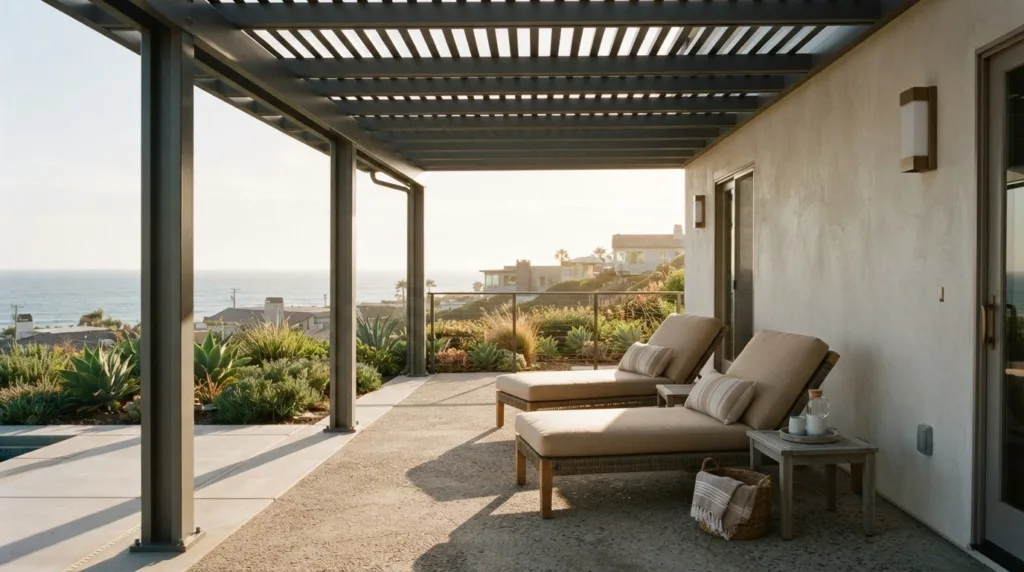
Coastal patios often need glare control more than heavy heat blocking: afternoon sun can feel harsh even when the air is mild. The best shade solutions for Southern California depend on where sunlight reaches your patio, how much filtered light you want, and whether you need fixed or adjustable coverage. Dappled shade breaks up sunlight through an overhead filter; bright shade stays well-lit but out of direct sun.
It’s understandable to want relief from glare without losing the coastal breeze or an open view. This guide explains how patio orientation shapes shade needs, how coastal conditions affect your choice, and how permanent structures compare with flexible options. It also covers why HOA rules matter, so you can balance comfort, appearance, and practical constraints.
Key Takeaways
- Map when direct sun reaches your patio before choosing coverage; afternoon exposure can call for a different approach than morning light.
- For coastal patios, weigh glare alongside airflow and views when considering shade options.
- Factor HOA approval and local requirements into your plans before settling on a permanent structure.
- Compare fixed and adjustable systems by how much coverage you want, when you need it, and whether you want the shade to retract.
- Use the differences between sails, pergolas, awnings, and umbrellas to narrow your options for UV protection and heat reduction.
1. Choosing shade based on room orientation
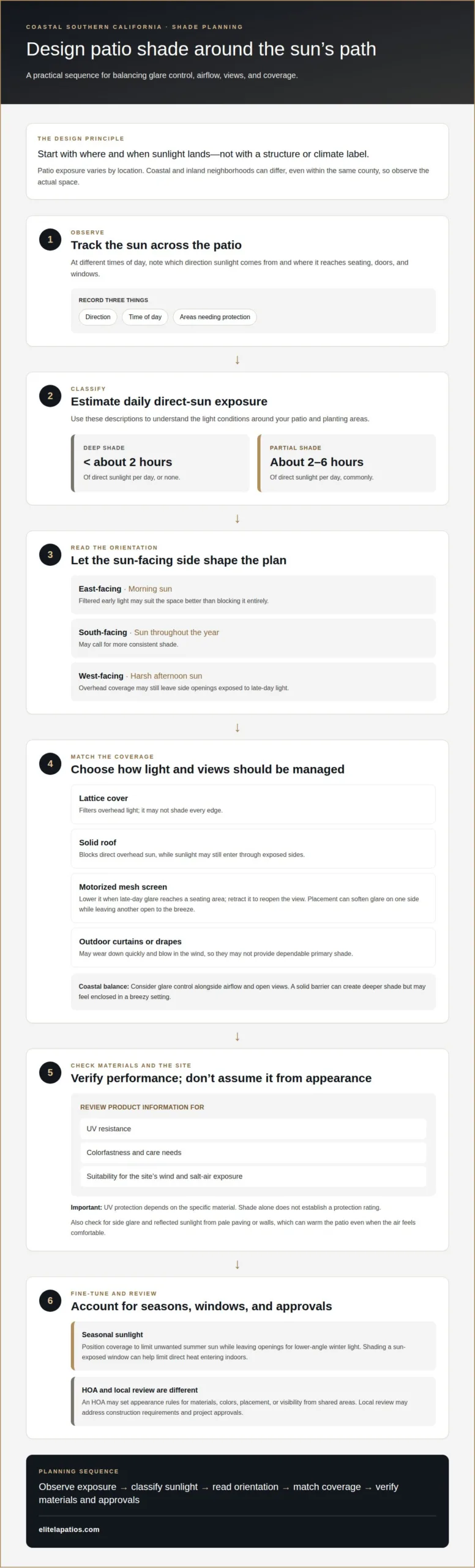
Start by noting which direction your patio faces and when direct sunlight reaches its seating, doors, and windows. West-facing rooms can get harsh afternoon sun, so overhead coverage may leave side openings exposed. South-facing spaces receive sun throughout the year and may need more consistent shade. East-facing patios often get morning sun, making filtered early light preferable to blocking the whole space.
Observe the patio at different times and mark where the sun falls. Deep shade receives less than about two hours of direct sunlight per day, or none. Partial shade commonly receives about two to six hours. These distinctions help when planning a garden: a fern in deep shade has different needs from a flowering container plant that benefits from brighter conditions.
How much shade coverage and UV protection do different structures provide? Coverage depends on the structure’s footprint, orientation, material, and exposure to sunlight from the sides. A lattice cover filters overhead light, while a solid roof blocks direct sun above; neither necessarily shades every edge. UV protection depends on the specific material, so shade alone doesn’t establish a protection rating.
How can homeowners choose shade that still allows winter sun and supports energy efficiency? Position coverage to limit unwanted summer sun while leaving openings for lower-angle winter light. A fixed roof can block overhead rays but still let sunlight through exposed sides, so the location of nearby windows and seating matters. Shading a sun-exposed window can also help limit direct heat entering indoors.
Conditions vary across Los Angeles County, Orange County, Ventura County, and San Diego County. Coastal and inland neighborhoods can experience different sun intensity and duration, so use your patio’s actual exposure rather than assuming conditions are uniform across a county. Hard surfaces matter, too: sunlight reflected from pale paving or walls can warm the patio even when the air feels comfortable.
Plants and furnishings can reveal where coverage is needed. If afternoon light fades leaves or falls on a television and seating area, consider overhead shade and the direction of side glare. Plants can soften an exposed edge, but they take time to grow and won’t provide full coverage right away. Evergreen choices add structure through the seasons, while placement should suit the available light.
Use three observations to refine the design: which direction sunlight enters, when it reaches the patio, and which areas need protection. For example, an east-facing breakfast spot may need filtered morning light, while a west-facing lounge may need shade extending toward the late-day sun. Then consider how the structure affects indoor daylight, garden plants, and patio use across the seasons.
2. Coastal Southern California shade needs
Along the coast, afternoon glare can disrupt outdoor dining before temperatures feel hot. In San Diego, Newport Beach, and Encinitas, mild air doesn’t stop direct sun from making a patio uncomfortable. The best shade solutions for Southern California coastal homes balance glare control with airflow and open views. A solid barrier creates deeper shade but may feel enclosed in a breezy setting.
Choose fabrics and materials by documented performance, not appearance alone. Review product information for UV resistance, colorfastness, care needs, and suitability for the site’s wind and salt-air exposure. This makes it easier to compare options without assuming all outdoor fabrics perform alike. The best shade solutions for Southern California should suit your patio’s conditions and the coverage you want.
Coastal, inland, and desert settings call for different priorities. Coastal patios often need glare control while retaining breezes and views; inland and desert areas experience more intense and longer-lasting sun than coastal areas. This can influence whether filtered shade is enough or broader coverage is preferable. Consider your patio’s actual exposure rather than choosing a structure based on climate labels alone.
Motorized mesh screens can suit coastal homes where adjustable light and airflow matter. Lower a screen when late-day glare reaches a seating area, then retract it to reopen the view. This flexibility helps a patio serve different purposes throughout the year. Placement matters: screening the sun-facing opening can soften glare while leaving another side open to the breeze.
Wind should also inform the design. Outdoor curtains and drapes can wear down quickly and blow in the wind, so they may not provide dependable primary shade. A fitted screen or overhead structure creates a more controlled setting. Consider where it will be mounted and how much of the opening needs coverage, while preserving the coastal outlook you want.
Place plants carefully near coastal shade structures. Hot afternoon light can scorch leaves, even when the coastal climate feels mild. Position sensitive foliage where a roof edge or screen filters late-day sun, and choose plants suited to the available light and watering conditions. Evergreens provide structure through winter, while seasonal flowers bring color in spring. Keep containers clear of screen tracks and moving parts.
Assess the patio in use: note where glare lands, which direction the breeze enters, and when you want an unobstructed view. For a coastal dining area, adjustable mesh may soften late-day brightness without closing the space. A more exposed lounge may benefit from overhead coverage and protection on its sun-facing side. To discuss a layout suited to your patio, share your shade priorities.
3. HOA approvals and local code requirements
Before choosing a patio cover, distinguish community design review from local building review. An HOA may set appearance rules for materials, colors, placement, or visibility from shared areas. Local review may address construction requirements and approvals for a particular project. These reviews serve different purposes, so satisfying one doesn’t automatically satisfy the other.
Start with the HOA’s governing documents and architectural-review process. Look for provisions about patio structures, shade sails, awnings, exterior finishes, and changes visible from neighboring homes. A proposed cover beside a bright garden might need a different color or placement from one tucked behind a wall. If rules require an application, prepare a clear plan showing the structure’s location, height, finish, and relationship to the home.
Then identify the city or county responsible for the property. Requirements vary across Southern California jurisdictions, and the structure’s design affects which rules apply. A freestanding shade sail, an attached patio cover, and a retractable awning have different support and attachment conditions. Describe the project accurately when discussing applicable review with the local building department. Don’t assume an existing patio or prior approval covers a new structure.
What wind loads and anchoring are needed for shade sails and patio covers in Southern California? They depend on site wind exposure, structure dimensions and form, and the strength of supporting surfaces. The design must account for forces transferred through posts, brackets, or other anchors into the underlying structure, following requirements that apply to that location and project.
For an HOA submission, a concise package makes the proposal easier to assess. Include a site sketch, the proposed position, finish samples or color descriptions, and views showing how the cover appears from nearby spaces. For example, a filtered shade panel over garden seating may preserve daylight better than a fully opaque roof. Show how the design relates to nearby flowers, fences, and shared sightlines.
Local review also benefits from project details, not just a product name. Identify whether the cover attaches to the house, stands on posts, or uses existing supports. The building department can then assess relevant construction and anchoring questions. Keep HOA and local approval records together, including any written conditions, so the installed design matches the reviewed proposal.
Plan the sequence before ordering materials or scheduling construction: review community documents, prepare the design information, and establish which local approvals apply. If a reviewer requests a change, adjust placement, finish, or structure details before work begins. This approach can prevent a mismatch between a filtered garden design and neighborhood expectations. To discuss a patio layout, share your project details.
4. Permanent versus flexible shade systems
A permanent roof creates a defined outdoor room, while a flexible system adapts to changing sunlight. Choose based on whether your patio needs consistent coverage or adjustable exposure. A west-facing dining area used every afternoon may benefit from fixed overhead shade. A multipurpose space that shifts from morning coffee to evening entertaining may need retractable coverage instead.
Permanent structures provide a steady design anchor for furniture, lighting, and the surrounding landscape. Their footprint determines which areas stay shaded, so arrange seating and walkways accordingly. A solid roof creates deeper overhead shade, while a lattice roof lets filtered light through. That distinction affects the garden’s feel and the light reaching nearby containers.
Flexible shade systems give homeowners more control throughout the day. Motorized patio screens can provide shade, wind protection, and insect control, then retract out of sight when not in use. They’re useful where an open view matters at some times but protection is welcome during strong sun or breezes. Retracting the screen also leaves the patio visually open as conditions change.
Existing California rooms may offer another option. Motorized patio screens and roller shutters can be retrofitted to most existing California room structures with minimal modification. This can suit homeowners who want to adapt a covered patio instead of replacing its main structure. The right fit depends on the existing openings, attachment points, and where sun or wind enters.
Consider how shade affects plants before finalizing the layout. A permanent roof can create a lasting shade garden beneath it, but may limit sunlight for flowers that need brighter conditions. Flexible screens let in more sunlight when retracted, giving nearby plants changing light through the seasons. Keep containers clear of screen tracks and allow enough room for foliage without blocking operation.
Think beyond midday comfort. A fixed roof remains in place during winter, even when lower-angle sun would be welcome indoors or on the patio. Retractable screens can open the space when sunlight is desirable, then close as exposure changes. For a beautiful, balanced landscape, combine a defined overhead structure with adjustable side coverage where the patio needs it.
Use three questions to guide your decision: should the shade stay in place, should it retract, and which areas need coverage? A permanent system suits homeowners who value a consistent outdoor setting. Flexible screens suit changing needs and views. Some patios benefit from both, with a fixed roof above and retractable screens along exposed sides. Matching each element to its role makes the space more functional.
5. How do patio shade sails, pergolas, awnings, and umbrellas compare for UV protection and heat reduction?
Each option shades a different footprint, so compare coverage before appearance. UV protection depends on the material, its condition, and how much sunlight reaches around its edges. Heat relief depends on blocking direct sun from people and surfaces. No shade type provides a specific level of UV protection unless its material documentation supports that claim.
A shade sail stretches fabric between anchor points to create a broad overhead canopy without a solid roof. Its angled shape can cast a distinctive shadow, but sunlight may enter beneath its edges as the sun moves. For a seating area exposed from one direction, orient the sail to block that path. Before choosing fabric, check its UV performance, colorfastness, and care guidance.
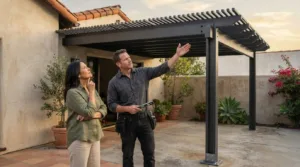
A pergola uses an open framework, often with slats or lattice overhead. It can provide filtered light and define an outdoor setting, but open gaps let direct sun through. The size and spacing of its overhead elements affect the shadow, as does the sun’s angle. A lattice design suits homeowners who want partial coverage and an airy feel rather than full overhead blockage.
An awning projects from a wall to shade the patio or windows below. Its position can make it especially useful where sunlight enters through a particular opening. A retractable awning extends for shade and draws back when sunlight is welcome. For UV performance, review the fabric’s documented protection; for heat management, consider whether the awning shades the glass before sunlight enters indoors.
An umbrella provides localized, movable shade over a table or lounge chair. It adapts as sunlight shifts, but covers only the area beneath its canopy. As the sun changes, the shade may move away from the target, so you may need to reposition it. An umbrella suits a small seating zone, while a sail, pergola, or awning can cover a broader patio area.
For a practical comparison, mark the seating, doors, and windows that need shade. Then decide whether you want filtered daylight, wider fixed coverage, or a movable canopy. Compare the material’s UV documentation separately from the structure’s footprint. For example, an open pergola can soften direct overhead exposure while still admitting sunlight; a solid awning can shade a particular window more fully.
Choose according to the area you need protected and the shade pattern you prefer. If you’re weighing a lattice cover against an awning, discuss your patio shade design.
Choose fabric with documented UV protection and colorfastness, and follow its care guidance when selecting and maintaining it.
Elite L.A. Patios
Elite L.A. Patios helps homeowners turn sun exposure and patio use into a considered shade plan. When choosing between filtered light and fuller overhead coverage, the right structure depends on how you want the space to feel throughout the day. The available 4K Aluminum options include lattice and solid-roof designs, allowing the design to respond to different shade preferences.
A lattice patio cover can suit homeowners who want filtered overhead light, while solid-roof options provide a more continuous overhead barrier. Cantilever designs offer another layout possibility where open space beneath the structure matters. These options give Southern California homeowners a way to align patio coverage with their outdoor living priorities.
For guidance on a shade plan suited to your patio, get in touch and contact Elite L.A. Patios.
Shape a patio around the way you live
Your patio can become a more intentional extension of home when shade supports how you want to use the space. Think about what you want to make room for: an open-air dinner, a quiet reading corner, or a place to welcome friends. That vision turns the best shade solutions for Southern California into a personal design decision, not just a response to bright sun.
With Elite L.A. Patios, the next step is to connect your preferred atmosphere with an appropriate structure. Its options include a 4K Aluminum lattice patio cover, 4K Aluminum solid twin wall, and 4K Aluminum Cantilever. Each offers a different design direction for shaping outdoor living, so the conversation can begin with your priorities and the way your patio meets your home.
Bring your ideas, intended use, and preferred look into the planning conversation. Start a patio design conversation with Elite L.A. Patios, and take a considered step toward an outdoor space that feels distinctly yours.
Frequently Asked Questions
What is dappled or bright shade?
Dappled shade breaks sunlight into shifting patches, like light passing through a tree canopy or open lattice. Bright shade describes an area that remains well-lit but receives no direct sun. For a patio reading nook, dappled light creates changing patterns, while bright shade provides steadier indirect daylight. Either can preserve an open feel, but neither guarantees a particular level of UV protection.
What is full or deep shade?
Full or deep shade receives less than about two hours of direct sun daily, or none. A covered corner behind a solid roof can create this condition, especially when nearby walls block side light. It can suit a resting area or plants that struggle in intense sun. Before placing containers there, consider that less direct light changes which flowers and foliage will thrive.
What is partial shade?
Partial shade generally means about two to six hours of direct sun daily. Timing matters as much as the total: gentle morning light differs from strong afternoon exposure. A patio that gets sun early and shade later can work well for seating and selected plants. Observe where sunlight falls through the day before deciding whether a particular corner suits flowers.
What shade solutions work best for Southern California’s hot, sunny, and coastal climates?
The right choice depends on local exposure and whether you prioritize airflow, filtered daylight, or fuller coverage. Coastal patios often benefit from adjustable mesh that preserves breezes and views while softening glare. Inland and desert locations with longer, stronger sun can call for broader overhead coverage. A lattice cover filters light, while a solid roof blocks more direct overhead sun; side exposure still matters.
What permits and building-code rules apply to patio covers, pergolas, and awnings in Southern California cities?
Permit and code requirements depend on the city or county, the structure, and how it attaches to the home. A freestanding pergola, attached cover, and retractable awning involve different construction details. In Los Angeles, for example, the local building department’s requirements apply to the property and project. Describe the design, placement, supports, and attachment method when determining which review applies.
Do HOA rules or California fire-safety requirements restrict outdoor shade structures and fabrics?
HOA rules can govern visible features such as placement, color, materials, and appearance. Fire-safety requirements depend on the property’s location and applicable local rules; don’t assume one fabric or structure rule applies across every California community. Before selecting materials, consider both the community’s architectural standards and the site’s fire-safety requirements. A clear plan helps show the proposed structure and finish.