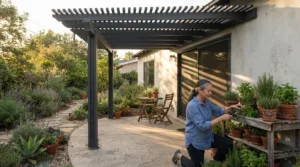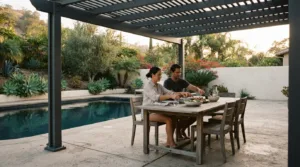
The most budget-friendly way to make your patio more private is often to use what you can add without rebuilding: potted plants, climbing vines on a trellis, or outdoor curtains. The right choice for how to make my patio more private depends on whether you want a leafy screen, flexible coverage, or a more structured boundary.
Privacy doesn’t have to come at the expense of light, airflow, or an open-air feel. Medium-height planters can soften a railing, while a trellis with vines adds greenery and screens selected sightlines. Draw curtains for seclusion, then move them aside when you want the patio to feel more open.
This guide compares budget-friendly plants, hedges, curtains, fabrics, and trellises, with practical pointers for choosing an option that suits your layout. You’ll also see when a more permanent feature, such as a privacy wall or patio cover, may better complement your home and create a composed, comfortable retreat.
Key Takeaways
- Compare living screens with fences, and consider how upkeep, coverage, and local requirements affect your choice.
- Combine evergreen plants for year-round screening with deciduous varieties for seasonal shade and changing foliage.
- Use outdoor curtains with a pergola for flexible privacy you can open or draw closed as needed.
- Choose fabric screens or trellises to control specific sightlines while preserving light and openness.
- Consider a 4K Aluminum lattice patio cover when you want a more structured way to shape and enhance your outdoor space.
What is the most budget-friendly way to make a patio more private?
When deciding how to make your patio more private, a focused screen can be more practical than enclosing the entire outdoor area. Potted bamboo or climbing plants bring greenery to a specific boundary. A fence creates a more continuous visual barrier, but requires more materials and installation. Compare the view you want to block, the space available, and the upkeep you prefer.
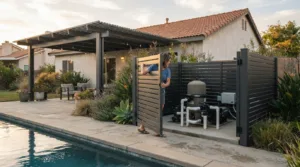
Bamboo fencing paired with planter boxes combines a defined boundary with greenery at its base. Position boxes to interrupt views into a dining or seating area rather than covering every edge. Chain-link privacy slats can screen an existing fence, while panels or fence kits create a more uniform boundary. An open trellis with climbing plants provides a softer screen that keeps more of the view visible.
Before installing a fence, check your city or HOA’s height and permit requirements. Rules vary by location, so review them before choosing panels or setting posts. For a planted edge, curve the layout around the patio to define a more intimate space. Mulch around new plants to help retain moisture, and water them regularly until established.
The question of how to make my patio more private often comes down to matching the screen to its purpose. Choose height and material according to the sightline you want to block, then consider desired openness and maintenance. For screens, fences, and curtains, price depends on materials, coverage, and installation needs; the cost is provided after a quote request.
Wind and weather can strain a broad screen, particularly if it is unsupported. Secure freestanding screens in stable planters or attach them to a suitable fixed structure with outdoor hardware. Fasten slats or panels firmly to a fence, and inspect attachments after harsh weather. A well-positioned screen adds privacy while keeping the patio open to light and airflow.
For an inexpensive apartment option, medium-height potted plants along a balcony railing can provide privacy. Placing privacy screens closer to a home can also make a backyard look bigger than positioning them on the property line.
Tall planters, hedges, and privacy plants
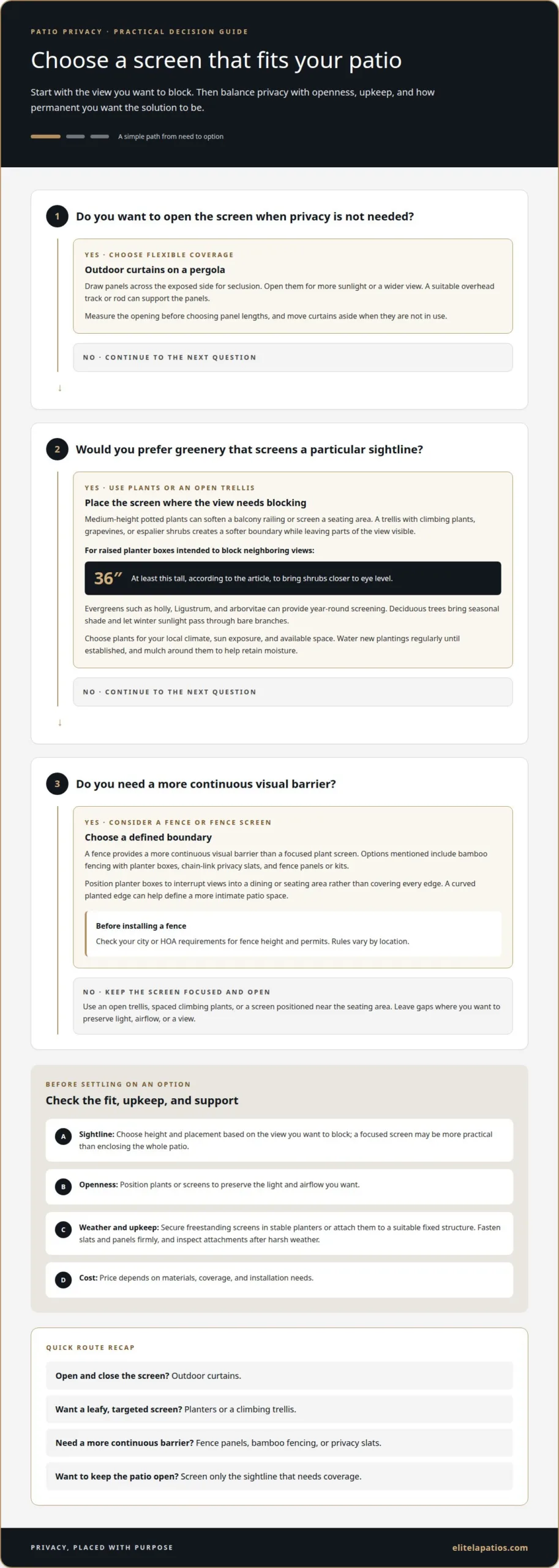
Tall planters place leafy cover precisely where neighbors overlook a seating area or dining table. Raised planter boxes intended to block views from neighboring patios should be at least 36 inches tall. That height brings shrubs closer to eye level without creating a continuous fence along the whole boundary. A custom arrangement can also curve around the patio edge, defining a more intimate outdoor space.
For year-round screening, choose evergreens that retain their leaves through winter. Holly, Ligustrum, and arborvitae can form dense natural partitions along exposed edges. Combine them with deciduous trees for seasonal contrast: leafy summer branches provide shade, while winter sunlight passes through bare branches. Changing foliage adds visual interest instead of leaving the patio with one uniform green backdrop.
Vertical trellises create privacy without requiring a solid wall. Train climbing vines, grapevines, or espalier shrubs across a trellis to soften an exposed boundary. A tall trellis beside a garage can screen a particular sightline, while a leafy canopy overhead helps shield patios overlooked from taller buildings. Leave open sections between plants where you want to preserve a view or airflow.
Layering adds depth. Set ornamental grasses or smaller shrubs in front of taller evergreen plants, keeping the tallest foliage toward the back. This stepped arrangement gives the screen a composed appearance and avoids hiding every part of the garden. Trim landscape screens as needed to manage growth and maintain coverage. Water young plantings regularly until established, and mulch around them to retain moisture.
For faster coverage, bamboo and Ligustrum are options for living screens, while holly and other evergreen shrubs provide lasting foliage. The best choice depends on local climate, sun exposure, and planting space. Select plants suited to those conditions, and allow room for their mature spread around paths and patio furniture.
To preserve sunlight and airflow, position plants along a specific sightline rather than enclosing the entire patio. Combine a narrow trellis with spaced climbing plants, or use a low evergreen hedge beneath a more open canopy. These arrangements screen selected views while letting daylight and breezes move through the seating area.
A thoughtful planting plan can balance privacy, light, and greenery. Discuss a tailored patio layout for your outdoor space.
Outdoor curtains and leaf curtains
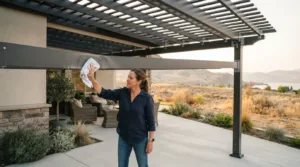
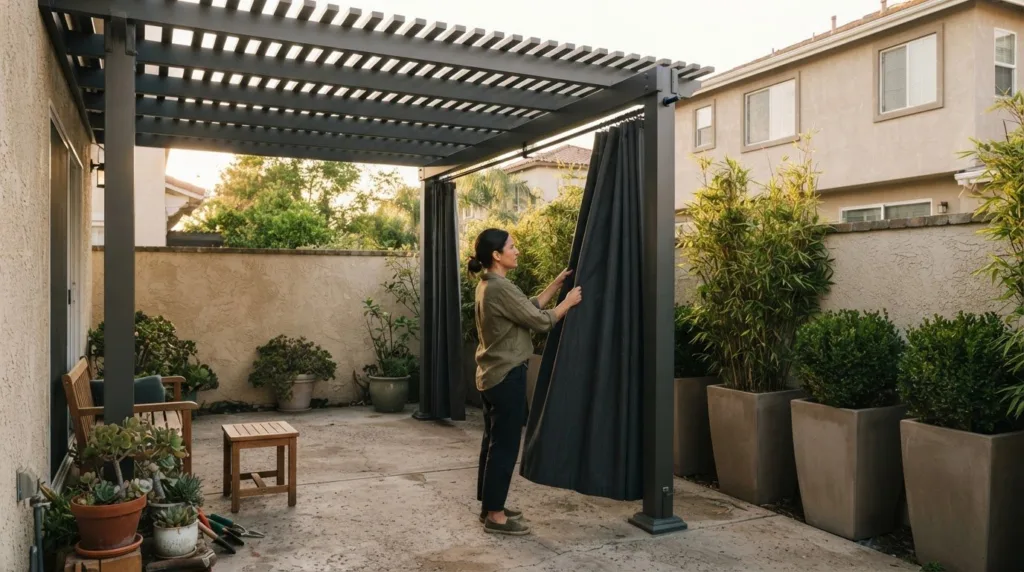
Outdoor curtains create a flexible privacy barrier along an exposed patio edge. On a pergola, hang panels from a suitable overhead track or rod, then draw them across the side facing neighboring windows. Open them when you want more sunlight or a wider view. This adjustable arrangement suits outdoor spaces used for both relaxing and shared meals.
For a refined look, choose curtain panels that complement the pergola and surrounding furnishings. Neutral fabric can soften a timber structure, while a deeper shade gives a dining area a more defined boundary. Measure the opening before choosing panel lengths, and allow enough fabric to gather neatly at the sides. Move curtains aside when they’re not in use.
Leafy screens offer a greener alternative. Train climbing plants across a narrow support beside the pergola, or suspend planters near the seating area. A vine-covered panel can obscure a direct view while leaving gaps for light and airflow. Position greenery where it blocks a neighbor’s line of sight, not across every open side.
Renters can add patio privacy without permanent changes by using freestanding curtain frames, weighted bases, or movable planters that support a temporary screen. Arrange the setup around a seating nook, then shift or remove it as needed. For an existing pergola, removable curtain hardware provides adaptable coverage without changing the patio’s permanent structure.
Consider wind exposure before hanging curtains. A broad, closed panel can move in a breeze, so secure the top attachment and use tiebacks to hold fabric open when appropriate. Keep hems clear of walkways and furniture legs. In a sheltered corner, curtains can define a secluded retreat; on an exposed edge, shorter panels or a partial screen may be easier to manage.
For a balanced layout, use curtains on the side needing the most coverage and leave other pergola openings clear. Pairing one fabric panel with a leafy screen adds texture without enclosing the entire patio. This layered approach creates privacy while preserving the open-air character and connection to the garden.
Affordable fabric and trellis options
A fabric screen can block a neighbor’s direct view without enclosing the entire backyard. Standard screens with an openness value of 5% to 12% can block views into a patio during the day. This measured openness leaves small gaps in the material, so the screen feels less solid than a closed panel. Choose a section that covers the exposed seating area rather than stretching fabric across every boundary.
Placement matters as much as material. Identify the window or neighboring patio with a direct view of your chairs, then position the fabric between that sightline and the seating area. A screen beside a dining table adds privacy where it matters while leaving the garden’s open view intact. This improves comfort without making the whole outdoor space feel enclosed.
A trellis offers a more architectural option. Set one beside a patio table or along the edge facing a neighboring property. A trellis with an open middle provides partial privacy while preserving views between properties. Add climbing vines for a softer appearance, or leave the frame bare for a lighter visual boundary. The open pattern also lets daylight pass through.
Look upward if nearby buildings overlook your patio. An overhead trellis can help block views from taller buildings, especially above an exposed seating nook. Position it over the area where privacy matters most rather than covering the whole yard. Climbing plants can gradually soften the frame and create a leafy canopy. Keep the rest of the backyard open to preserve a sense of space.
Fabric and trellis can work together, too. Attach a fabric panel to one side of a freestanding trellis, leaving the center open for light and a garden view. This creates a more defined screen than an open trellis alone, without closing off every angle. For example, place the panel behind lounge chairs and train a vine along the adjacent frame. The combination adds texture and creates a calm retreat.
For a polished result, coordinate fabric color with nearby cushions, planters, or patio furniture. Secure the screen to a stable support and keep loose edges from catching on furniture or walkways. A carefully placed panel can provide focused daytime privacy, while an open trellis preserves airflow and visual connection. These adaptable options make adding privacy feel intentional, not like an afterthought.
Arborvitae, boxwood, holly, and bamboo
Arborvitae, boxwood, holly, and bamboo create distinct living dividers. Choose based on the view, available ground, and style you want. Arborvitae forms a taller screen, while boxwood suits a lower, shaped patio edge. Holly offers evergreen foliage, and bamboo brings a strong vertical presence. Match each plant to the space and the level of screening needed.
For year-round cover, evergreen holly and arborvitae retain foliage through winter. They can screen an outdoor dining area or frame an entertainment space. Place them along exposed edges, then leave openings toward garden views. This creates a green backdrop without enclosing every side. Evergreen shrubs also pair well with seasonal plants that change the patio’s appearance throughout the year.
Deciduous trees bring summer shade, then admit more sunlight after their leaves fall. Pair one with evergreen shrubs to balance seasonal comfort and privacy. For example, place a deciduous tree near a lounge chair, with holly behind it. The evergreen layer maintains screening as the tree changes. This combination adds varied foliage and texture instead of one uniform hedge.
Bamboo works as a planted barrier or visual accent beside a patio. Use it where a vertical screen suits the design and available ground. A row can define one boundary, while a cluster near a dining nook blocks a direct view. Keep the planting clear of paths and patio furniture. This reduces direct sightlines without crowding the whole yard.
Boxwood suits a tailored look around patios and garden borders. Its compact form can define a seating area without creating a tall, solid divider. Combine it with arborvitae behind the seating zone for layered coverage. The lower shrubs soften the base, while taller foliage screens views beyond. This arrangement also separates the patio from lawn or planting beds.
Before installing a living screen, note where neighbors’ windows and usual sightlines fall. Then choose evergreens for lasting coverage, or mix in deciduous trees for seasonal light and shade. Consider each plant’s mature size and leave room for growth around walkways. A vertical trellis with climbing plants can complement bamboo or shrubs where a lighter screen suits the space.
For a more structured approach to patio privacy, discuss your outdoor layout.
Elite L.A. Patios: 4K Aluminum lattice patio cover
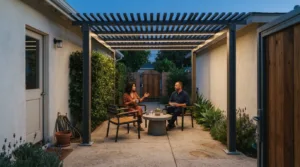
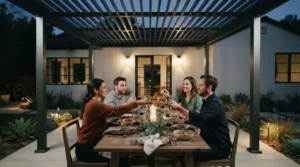
Elite L.A. Patios offers a 4K Aluminum lattice patio cover as a considered next step when movable screens or plantings don’t address your patio’s needs. It creates a defined overhead structure for outdoor living, with a lattice design rather than a solid roof. Consider it when you want a more permanent architectural element above your seating or dining area.
A lattice cover can help shape the patio and give it a distinct sense of place. The open lattice pattern differs from fabric curtains, which can be drawn aside, and planted screens, which grow over time. Think about the views that matter most: overhead coverage may help with an exposed patio, while a direct side view may still need a separate privacy solution.
That distinction helps you choose your next step. If neighbors overlook the patio from above, an overhead structure may suit the layout better than a low planter. If the main concern is a side boundary, focus on that sightline and consider how the cover will work with existing screens or landscaping. The right arrangement depends on your home’s architecture and how you use the space.
Elite L.A. Patios designs and installs premium 4K Aluminum outdoor structures. The lattice patio cover is one option; other available roof styles include a 4K Aluminum solid twin wall, a 4K Aluminum Cantilever, and a 4K Aluminum insulated Solid Roof. Each is a distinct structure, so the best fit depends on the patio design and the kind of overhead environment you want.
Before settling on a design, consider the patio’s proportions, existing boundaries, and furniture placement. A dining table, lounge area, and walkway may each call for a different level of openness. A custom lattice cover can form the overhead framework, while plants, curtains, or separate screens address specific sightlines. This layered approach keeps privacy decisions connected to how you actually use the patio.
For homeowners ready to explore a more permanent overhead feature, a tailored design conversation can help clarify how a lattice cover fits the space. Contact Elite L.A. Patios to discuss your patio project.
Shape a more private patio
Deciding how to make your patio more private starts with how you want to use the space. Picture a quiet morning coffee, an intimate dinner, or a shaded place to unwind. Then consider which views you want to soften and how much openness you want to preserve. That vision can guide your next design choice, whether you’re refining a small seating area or reimagining the patio as an extension of your home.
For a lasting architectural element, Elite L.A. Patios offers 4K Aluminum lattice patio covers, 4K Aluminum solid twin wall, and 4K Aluminum Cantilever structures. Each creates a different overhead setting, allowing the patio’s design to complement your home and outdoor routine. The most fitting direction depends on your layout, the atmosphere you want, and how the space connects to your garden.
A considered design can make privacy feel like part of the overall experience, not an afterthought. Contact Elite L.A. Patios to discuss your patio and explore a thoughtful next step toward a more comfortable outdoor retreat.
Frequently Asked Questions
What are the best ways to make a patio more private?
The best approach depends on where the unwanted view comes from and how permanent you want the solution to be. Observe the patio from your usual seats, then identify whether exposure comes from the side, above, or both. A targeted screen can address a side view; overhead coverage may suit an overlooked seating zone. Combining approaches can preserve openness elsewhere.
What are the pros and cons of privacy screens, fences, plants, and pergolas?
Privacy screens offer focused coverage, but need secure placement. Fences create a defined boundary, though they can make a small patio feel enclosed. Plants soften the setting and add greenery, but need care as they grow. Pergolas provide overhead structure and can support curtains, yet don’t automatically block every side view. Consider upkeep, flexibility, and the specific sightlines before choosing.
Do local zoning rules or HOA guidelines limit patio fences and privacy screens?
They can. Fence height and permit requirements may depend on local regulations, while an HOA may have separate design guidelines. Before installing a fence or fixed screen, review the rules for your address and property. This is especially relevant across Los Angeles County, Orange County, Ventura County, and San Diego County, where requirements can differ by city and community. Don’t assume one area’s rules apply elsewhere.
What fast-growing plants work best for patio privacy in different climates?
Bamboo and Ligustrum are options for faster coverage. Choose plants suited to your local climate, sun exposure, and available planting space.
How do I install a freestanding patio privacy screen step by step?
Position the screen between the exposed sightline and the seating area. Secure it in stable planters or weighted bases, or attach it to a suitable fixed structure with outdoor hardware. Inspect attachments after harsh weather.