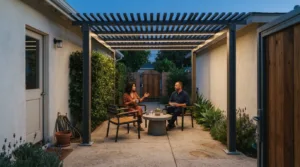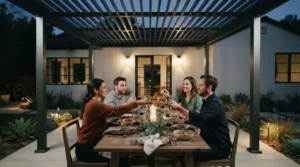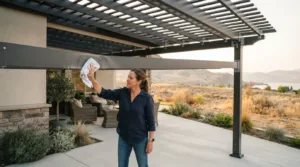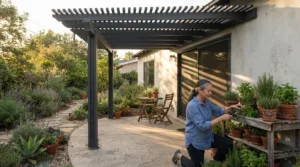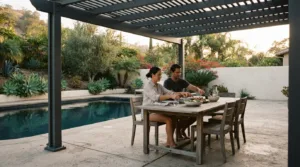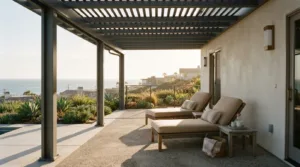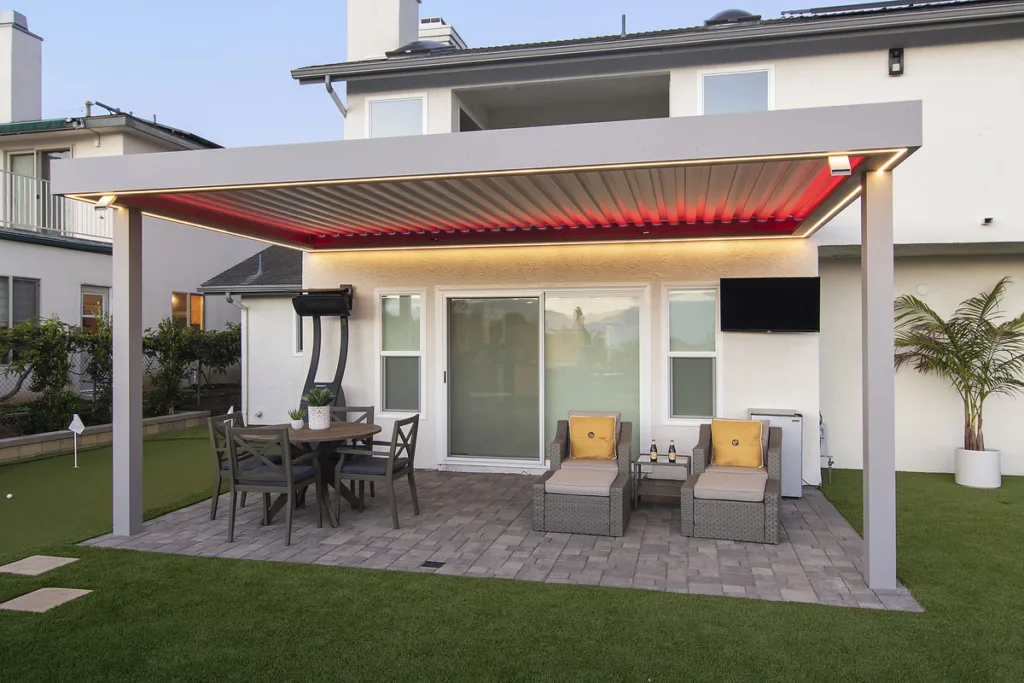
When it comes to finding a wind-resistant patio cover Thousand Oaks homeowners can actually depend on, the material and construction method matter far more than aesthetics alone. Every fall and winter, Santa Ana conditions push through the mountain passes and canyon gaps that frame the Conejo Valley, and anything in your backyard that wasn’t built for it starts to show the strain. Patio furniture moves. Umbrellas flip. Lightweight shade structures rattle at their connections. And if you have a wood or low-grade aluminum patio cover, you start wondering how much more it can take.
At Elite L.A. Patios, we build exclusively with 4K Aluminum, and for Thousand Oaks homeowners, that matters. A properly engineered aluminum structure isn’t going to flex, work loose at the base, or leave you doing repairs after every significant wind event. It’s built to stay put, season after season.
What Santa Ana Winds Actually Do to Outdoor Structures
Santa Ana winds are a well-documented weather pattern that affects most of Southern California, but Ventura County consistently sees some of the strongest and most sustained events. These winds originate inland and move west through mountain passes, gaining speed as the terrain compresses and channels them. The Conejo Valley, with its geography and elevation changes, sits directly in that path.
The damage to patio covers isn’t always dramatic and sudden. More often, it’s cumulative. Every wind event puts lateral pressure on the frame, uplift force under the roof panels, and stress on the connections between posts, beams, and footings. A structure that survives the first season may be loosening fasteners during the second and failing a connection in the third. The wind-resistant patio cover Thousand Oaks properties need isn’t just one that looks sturdy — it’s one engineered to handle repeated load cycles over years.
Why Wood and Lightweight Patio Covers Struggle in Wind
Wood is a natural mover. It expands and contracts with temperature changes, absorbs moisture, and dries out under the Southern California sun. That constant movement works against fasteners and hardware. Over time, bolts loosen, post bases shift slightly, and gaps open up in joints that were once tight. When a wind event applies real force to a structure in this condition, the results range from noisy rattling to outright failure.
Open-frame wood lattice covers are especially vulnerable because the rafter pattern acts like a sail — catching wind load across a wide surface area rather than allowing air to pass through cleanly. The larger the cover, the more force it needs to resist.
Vinyl and lower-gauge aluminum products have their own limitations. Vinyl becomes brittle under prolonged sun exposure. Thinner aluminum extrusions flex under load, and anything that flexes repeatedly will eventually fail at its weakest point — usually a connection or a corner. If you’re looking for a wind-resistant patio cover Thousand Oaks weather can’t wear down over time, the material you start with makes all the difference.
The Wind-Resistant Patio Cover Thousand Oaks Homes Need: What 4K Aluminum Gets Right
The 4K Aluminum product line is engineered for the conditions Southern California actually delivers. Several things set it apart when it comes to wind performance.
Extruded Construction vs. Roll-Formed Aluminum
Not all aluminum is the same. Many lower-cost patio cover kits use roll-formed aluminum — material bent into shape from flat stock. It looks like aluminum and functions reasonably well in mild conditions, but roll-formed profiles flex under sustained load in a way that extruded aluminum doesn’t.
4K Aluminum components are extruded — formed under pressure into dense, consistent profiles with tight tolerances throughout. That difference in rigidity is what gives the finished structure its stability when wind is pushing on it from the side or lifting from below.
Engineered Anchoring to Concrete Footings
The connection between the patio cover and the ground is where most wind failures happen. Surface-mounted post hardware bolted to a slab can work in some applications, but for a permanent structure on a wind-exposed lot, concrete footings are the right answer. Posts need to be anchored with hardware rated for uplift and lateral load, embedded in poured concrete at the right depth.
When we install in Thousand Oaks, that anchoring is part of the job — not an afterthought. Posts are set into footings that transfer force down into the ground, not across the surface of your patio slab.
Structural Attachment to the Home
For an attached patio cover, the ledger connection to the house is equally critical. The ledger needs to be fastened into the wall’s structural framing — not into stucco or surface sheathing that can pull away. When this is done correctly, the patio cover becomes part of the building’s structure, sharing load with the house during a high-wind event instead of fighting against it.
Louvered Roofs: A Smart Option for Exposed Lots
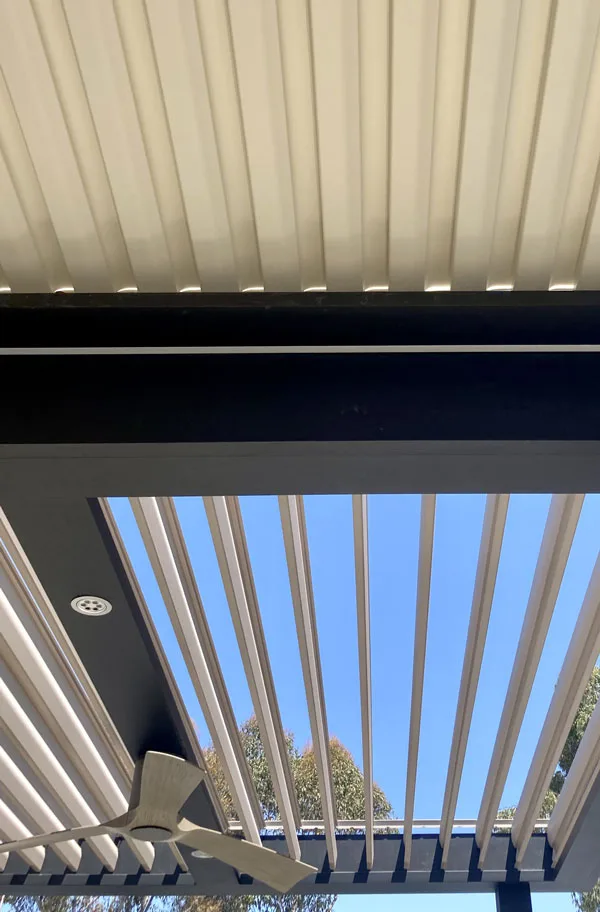 If your Thousand Oaks property is especially exposed — a hillside lot, an open rear yard facing the mountains, or a wide backyard with no windbreak — a louvered roof system is worth a close look. Our motorized louvered pergolas open and close on demand. When a serious wind event is building, you can open the louvers and dramatically reduce the surface area the wind pushes against. When conditions are calm, you close them for full shade and waterproof coverage, with drainage channeled to integrated gutters and downspouts.
This adaptability makes a louvered roof one of the most practical wind-resistant patio cover choices Thousand Oaks homeowners can make, particularly on properties where seasonal gusts are part of everyday life. Optional LED lighting, fans, and infrared heaters round it out into a fully usable outdoor room year-round.
Questions to Ask Before You Hire a Patio Cover Contractor
If you’re evaluating contractors in the Conejo Valley, these are the right questions to bring to the conversation:
- Is the structure designed to meet local wind load requirements? California building codes set wind load standards based on location and structure type. Ask whether the design is engineered to meet those requirements, and whether permits will be pulled. We always recommend confirming permit requirements with your local building department.
- How will the posts be anchored? Ask about footings specifically — whether they’ll be poured, how deep, and what hardware will be used. For a permanent structure on a wind-exposed lot, you want concrete footings.
- What’s the wall gauge of the aluminum? Heavier extrusions perform better under sustained load. Ask to see specs or a sample, not just photos of finished projects.
- How does the ledger attach to the house? The contractor should be able to tell you exactly where and how the fasteners go into your wall framing. A vague answer is worth following up on.
Frequently Asked Questions
Do aluminum patio covers hold up to Santa Ana winds?
Yes — when they’re properly engineered and installed. The key factors are material quality, anchoring method, and the connection to the home. 4K Aluminum’s extruded construction and engineered installation process make it the wind-resistant patio cover Thousand Oaks properties need to handle seasonal conditions reliably.
Is a louvered roof a good choice for a windy backyard?
It can be an excellent choice. Motorized louvered roofs give you the option to open the louvers during high-wind periods, significantly reducing wind resistance on the structure. When conditions are calm, you close them for full shade and waterproof coverage. For exposed lots in Thousand Oaks and the Conejo Valley, that flexibility is a real advantage.
Do I need a permit for a patio cover in Thousand Oaks?
Most permanent patio covers require a permit in Thousand Oaks, as they do throughout Ventura County. We recommend confirming the specific requirements directly with the City of Thousand Oaks Building & Safety division before work begins. A permitted installation means the structure has been reviewed for safety and code compliance — which matters for both your protection and your homeowner’s insurance.
Can a 4K Aluminum patio cover be installed on a hillside lot?
Yes. Hillside lots in Thousand Oaks present their own engineering considerations — slope, soil conditions, and increased wind exposure — but they’re not unusual for us. The anchoring and footing approach is adapted to the site, and 4K Aluminum works well in these settings because of its strength-to-weight ratio. We assess each property individually during the in-home estimate.
Conclusion
Wind season in Thousand Oaks is a known quantity. It comes every year, and your outdoor structures either handle it or they don’t. A wind-resistant patio cover Thousand Oaks homeowners can trust starts with the right material, the right engineering, and an installation team that understands what local conditions actually demand.
If you’re ready to look at options for your home, we’d be glad to come out and take a look. Call us at (877) 400-PATIO or request your free in-home estimate online. We’ll walk through the design options with you and make sure whatever we build is right for your property.