The best backyard shade ideas for summer heat in Los Angeles depend on how you use your patio, where the sun falls, and whether you want fixed or flexible coverage. Five options stand out: outdoor curtains, shade from trees and tall plants, covered patio structures, movable shade, and solutions chosen around your daily routine. These backyard shade ideas for summer heat in Los Angeles can help you weigh coverage, privacy, and flexibility for your space.
Direct afternoon sun can make a beautiful patio less inviting, while a solution for a dining area may not suit a quiet corner or open lawn. Curtains can soften low-angle sunlight and add privacy; plants bring natural shade; covered structures create a defined outdoor room; and movable options let you adjust coverage as the day changes. Compare backyard shade ideas for summer heat in Los Angeles by considering your patio’s sun exposure, how you use it, and the atmosphere you want to create.
Key Takeaways
- Match shade to the patio’s strongest sun exposure and the way you use the space, whether for dining, relaxing, or entertaining.
- Use curtains or movable shade to soften low-angle sunlight and add flexibility without committing to a permanent cover.
- Consider trees and tall plants for a natural, cooling layer, while allowing for their growth and ongoing care.
- Compare open and covered structures based on how much sun and overhead protection your patio needs.
- Explore 4K Aluminum patio cover options when you want a more permanent shade solution designed around your outdoor space.
1. Outdoor curtains for shade and privacy
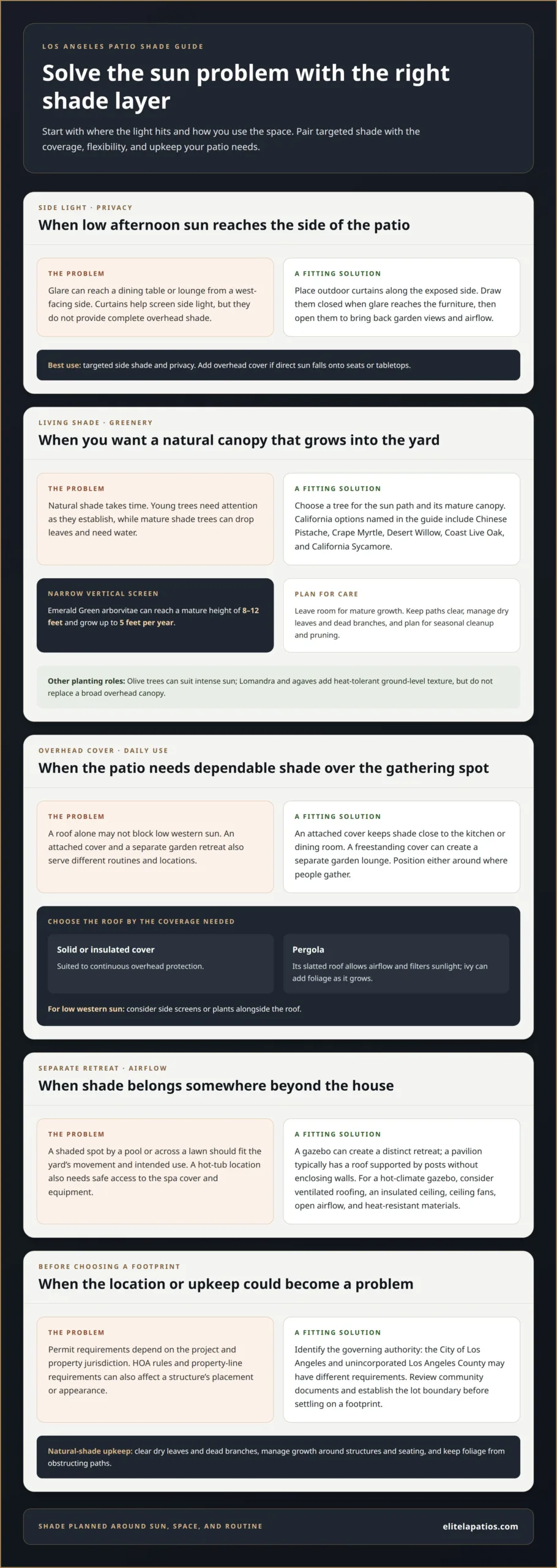
Outdoor curtains soften direct sun and create a more private setting around a Los Angeles patio. On a covered structure, panels along the west-facing side can screen low afternoon light. Draw them closed when glare reaches a dining table, then open them to restore garden views and airflow. Their most useful role is targeted side shade, not a complete overhead shield.
Choose curtains according to the area’s purpose and sun exposure. A lounge beside the house may benefit from panels that screen late-day glare, while an open dining space may also need shade above the table. Position the shaded zone over the furniture people use most, such as a fixed bench or dining set. Curtains soften side light, but overhead cover addresses sunlight falling directly onto seats and tabletops.
Ivy trained across a pergola creates a leafy canopy and brings greenery into the garden. Guide its growth along the structure so vines don’t block paths or moving curtain panels. Living cover develops over time, so it suits homeowners who enjoy tending plants and can wait for foliage to fill in. The shade and appearance will change with the plant’s growth and seasonal condition.
A gazebo creates a distinct shaded retreat away from the house, perhaps beside a pool or across a lawn. For hot-weather comfort, prioritize open airflow and a roof suited to the site. A pavilion, by contrast, typically uses a roof supported by posts without enclosing walls. Either structure can anchor seating, but its footprint and position should reflect how people move through the yard.
Permit requirements for pergolas, awnings, and other shade structures depend on the project and property jurisdiction. The City of Los Angeles and unincorporated Los Angeles County may have different requirements, so identify the governing authority before construction.
HOA rules may address a structure’s placement or appearance, while property-line requirements can affect its location. Review the community’s governing documents and establish the lot boundary before choosing a footprint.
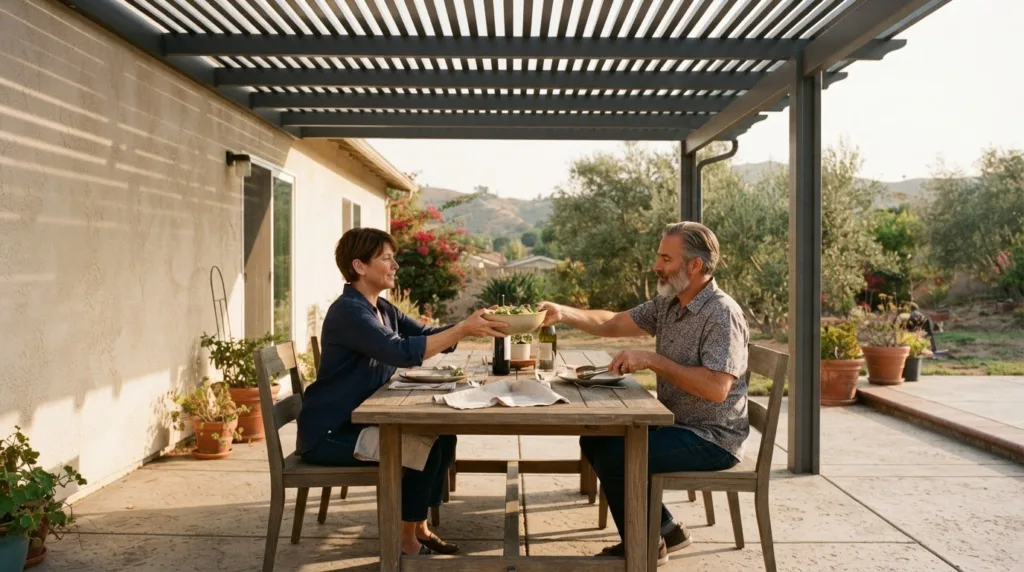
Outdoor curtains can provide some shade when sunlight comes in at sunrise or sunset. Their adjustable placement helps screen direct light while preserving the option to open the space again. Ivy can weave through a pergola for an organic look. A pergola’s slatted roof allows airflow and filters sunlight; ivy adds foliage as it grows. Choose between a living layer and a built structure, or combine them for shade that balances filtered light with greenery.
A freestanding gazebo can create a fully shaded retreat elsewhere in a yard, such as by a pool or on a lawn. For a gazebo near or over a hot tub, allow ventilation and safe access to the spa cover and equipment. A gazebo designed for hot climates can include ventilated roofing, an insulated ceiling, ceiling fans, open airflow, and heat-resistant materials. Consider these features alongside the location and intended use of the retreat, whether it is near the spa or farther across the yard. Safe access to the spa cover and equipment remains important when the gazebo is placed over the hot tub.
2. Trees and tall plants for natural shade
A mature tree can shade a dining area, soften the yard’s hard surfaces, and make outdoor seating more inviting. California homeowners can consider Chinese Pistache, Crape Myrtle, Desert Willow, Coast Live Oak, and California Sycamore for backyard shade. Trace where afternoon sun falls, then consider the tree’s mature canopy and distance from patios, paths, and buildings. A well-placed tree can complement a pergola or gazebo without making the garden feel enclosed.
For a narrower screen, Emerald Green arborvitae offers vertical foliage. It can reach a mature height of 8 to 12 feet and grow up to 5 feet per year. That growth makes placement important: allow room for its full height, and avoid crowding windows or access routes. Olive trees can also suit yards with intense sun, while Lomandra and agaves add heat-tolerant planting at ground level. These plants bring texture, but they don’t replace a broad overhead canopy.
Natural shade takes time. Young trees need attention as they establish, and mature shade trees may drop leaves and require water. Plan for seasonal cleanup beneath branches, especially around seating and walkways. Keep foliage from obstructing paths, and prune dead or crowded growth as part of routine upkeep. If you want coverage sooner, combine a new tree with a patio cover or other built shade.
Plant selection can also shape the yard’s comfort. Tree shade reduces direct sun on paving and seating, while lower plants soften hot, exposed edges. A Palo Verde adds height to a dry stream bed, pairing an airy tree form with a drought-conscious landscape. For a patio used at midday, place the tree where its canopy can shade the seating area; for outdoor dining, consider the sun’s path during mealtimes.
Maintenance and fire exposure deserve attention in Los Angeles yards. Clear dry leaves and dead branches from beneath trees, and manage plant growth around structures and seating. Dry vegetation can add fuel, so routine cleanup matters; water needs and pruning vary by plant and site. Natural shade works best as a planned layer, not a reason to let dense growth accumulate beside the house or patio.
3. Covered patio extensions and partially enclosed decks
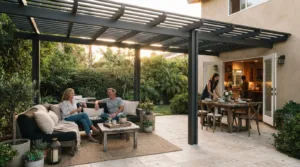
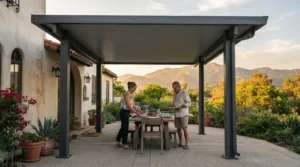
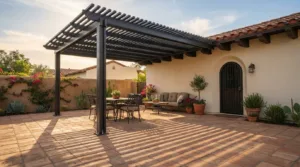
An attached patio cover extends the home’s outdoor living area and keeps shade close to the kitchen or dining room. A freestanding cover creates a separate destination, such as a garden lounge. Decide where people gather, then position the structure to shade that activity. In Los Angeles, a roof alone may not block low western sun, so side screens or plants can help address afternoon exposure.
Solid and insulated covers suit homeowners seeking continuous overhead protection. A solid roof blocks direct sunlight and keeps rain from falling through; insulated panels can reduce radiant heat beneath the cover. An open structure offers a different feel, with filtered light and airflow. Match the roof style to how the patio functions: a shaded outdoor kitchen needs more consistent cover than a deck used occasionally for morning coffee.
Aluminum is one material option for a contemporary patio structure. Corrugated aluminum can also be installed over an existing wood frame, creating a roof over an outdoor area. Reed mats offer a lighter treatment: attach them to an open structure with sturdy ties to filter sunlight. These coverings differ in appearance and how much light passes through, so consider the furniture below and whether the space needs full shade or softer daylight.
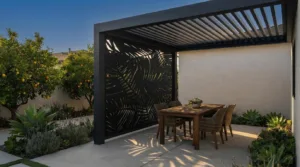
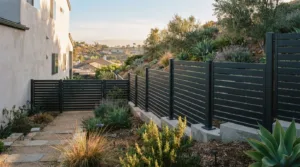
Partially enclosed decks combine overhead cover with a protected edge. A fixed screen can soften side glare, while open sides preserve airflow and garden views. Attached and freestanding designs both need a plan for rainwater drainage. For example, a cover over a dining table should direct runoff away from chairs, walkways, and doorways. Plants near the perimeter can add visual privacy without turning the deck into a closed room.
Costs for shade sails, pergolas, patio umbrellas, and retractable awnings depend on size, materials, mounting, and installation complexity. Their coverage differs: an umbrella shades a focused seating area, a sail spans an open zone, a pergola defines a fixed outdoor room, and a retractable awning opens or closes coverage on demand. For more complete overhead shade, solid or insulated patio covers provide a continuous roof. Choose based on the area to cover and how much flexibility you want.
4. Temporary shade sails and moveable cabanas
Shade sails add a light architectural element while filtering sun over a patio or garden. In California, they can cover a seating nook without enclosing the space, preserving airflow and open views. Their flexible placement suits landscaping layouts where fixed roof structures would interrupt planting beds or pathways. A triangular sail can create a focused patch of shade; overlapping sails can cover a broader outdoor area.
For afternoon sun in Los Angeles, position the sail to shade the seating area from the west, where low sunlight can reach beneath overhead cover. Track the sun across the space, then align the sail’s coverage with the hours people use the patio. An overhead sail may not block glare from low angles, so a west-side screen or carefully placed freestanding cabana can supplement it.
Strong attachment points and precise tension matter. Secure each corner to suitable structural supports, and keep the fabric taut to reduce sagging and flapping. A loose sail can collect debris or strain its attachment points. Consider the site’s wind exposure before choosing a location, and take the sail down when conditions or its installation call for it. Keep edges clear of branches and walking routes.
Fabric choice affects comfort and weather performance. Outdoor shade fabric should offer UV resistance for regular sun exposure. Some waterproof sails also resist rain, but a shade sail may provide no rain protection. Check the intended use against the fabric’s stated properties, and don’t assume every sail offers the same coverage. The weave, shape, and angle all influence where shade falls.
A moveable cabana or freestanding shade unit can create a retreat beside a pool, lawn, or changing seating arrangement. Before placing one, map its footprint against doors, paths, and nearby landscaping. A cabana works well when the shaded destination changes; a sail suits a defined seating zone with reliable anchor points. For a temporary setup, consider how the structure will be secured, accessed, and stored when it isn’t in use. The best choice follows the patio’s layout and the sun’s direction, not appearance alone.
Retractable cable shades can be pulled out for protection from midday sun and tucked away when needed. A triangular fabric sun shade can provide temporary coverage and is simple to install. Overhead shade may not fully address glare from low-angle morning and late-afternoon sun, so consider how these conditions affect the seating area.
Shade sails provide airflow and can be positioned flexibly to shade backyard areas. They require strong attachment points and precise tension to avoid sagging, wind flapping, and debris collection. Professional installation of backyard shade structures helps ensure wind resistance, structural stability, drainage performance, durability, and safety compliance.
5. Choosing shade based on how the patio is used
Start with the activity, not the structure. A Los Angeles dining area needs dependable shade over the table and chairs, while a reading chair may need coverage only during afternoon sun. Mark where furniture sits and notice when direct sunlight reaches it. This helps distinguish a need for broad overhead protection from one focused patch of shade. These backyard shade ideas for summer heat in Los Angeles work best when they respond to how the patio is actually used.
For outdoor dining, place an umbrella so its shade extends beyond the chairs when people pull them out. That keeps diners covered as they move around the table. Curtains can screen glare from a west-facing edge, especially when the roof already shades the tabletop. If the dining area also serves as a sunny morning spot, a retractable option gives you more control over changing light.
A patio used for lounging throughout the day benefits from adjustable coverage. Retractable shade can open when you want sunlight and close when the seating area heats up. For a compact courtyard with one main lounge, an umbrella offers targeted coverage without shading the entire space. Position it around the chairs, walking routes, and direction of the sun.
Living shade suits homeowners who want greenery integrated into the garden. A tree near a seating area can eventually cast a broad canopy, while smaller plants soften exposed patio edges. Since living shade takes time to grow, combine it with a temporary option if the area needs protection now. This pairing also lets you adjust seating as the garden develops.
Think about heat as well as sunlight. A more comfortable patio may need shade over paving and furniture, plus open airflow rather than enclosed sides. For a family gathering, broad overhead cover can keep a table and nearby seating together in one shaded zone. For a quiet corner used briefly, movable shade may be more practical than covering unused patio space.
Before settling on a design, map three details: the main activity, the hours the area is used, and the sunlight reaching it. A west-facing dining table may call for overhead shade plus curtains, while a flexible lounge may suit retractable coverage. For backyard shade ideas for summer heat in Los Angeles, focus on shading the places people occupy without limiting how the rest of the patio functions.
Elite L.A. Patios
Elite L.A. Patios offers a practical next step when temporary shade no longer suits your patio. Its design and installation work centers on 4K Aluminum outdoor structures, including several patio cover options. The right choice depends on where afternoon sun falls, which areas you use most, and whether you prefer filtered or more complete overhead coverage. These details help connect a shade solution to the way your Los Angeles home functions.
A 4K Aluminum lattice patio cover can suit a space where filtered light and an open feel matter. For more continuous overhead coverage, the 4K Aluminum solid twin wall and 4K Aluminum insulated Solid Roof are options to consider. The insulated solid roof can help reduce radiant heat transfer, making it relevant when direct sun over a dining area or lounge is the central concern. Each option addresses a different preference for coverage and outdoor ambiance.
The 4K Aluminum Cantilever offers another form of patio cover for homeowners considering how a structure will fit their outdoor layout. Placement matters: a cover should relate to the home, furniture, access paths, and the sun’s direction. For example, a dining table exposed to afternoon sun calls for a different coverage plan than a smaller seating area used mainly in the morning. Considering these patterns helps keep the design purposeful.
Elite L.A. Patios specializes in designing and installing these 4K Aluminum structures for Los Angeles homeowners. The process connects the patio’s intended use with a suitable cover type and placement. A lattice option may fit a preference for filtered shade; a solid roof option may better address a desire for more complete overhead cover. The decision is about how the patio should feel and function, not simply adding a roof.
If a permanent 4K Aluminum cover aligns with your plans, contact Elite L.A. Patios to discuss your patio and the shade you want to create.
Frequently Asked Questions
What are the best backyard shade options for Los Angeles summer heat?
The best option depends on your patio’s sun exposure and how you use it. A solid or insulated cover suits a dining area needing consistent overhead shade; a lattice cover provides a more open feel. Awnings can extend shade over a defined area, while trees add a living layer over time. Across Los Angeles County, Orange County, Ventura County, and San Diego County, orient coverage around the hours your patio is occupied.
Which shade materials block the most UV while allowing airflow?
UV-resistant shade fabric can provide sun protection while its open installation allows air to circulate. Shade sails are one option for an exposed seating area, but fabric construction and weave affect how much sun passes through. For a permanent structure, an open lattice roof balances shade with an airy feel. Look for stated UV protection when selecting fabric, and assess coverage at the hours you use the space most.
How much cooler can a shaded backyard or patio get during a Los Angeles heat wave?
There isn’t one dependable temperature drop for every shaded patio. The result depends on direct sun, paving, airflow, the size of the shaded area, and whether walls trap warmth. Shade can reduce direct solar heating on people, furniture, and hard surfaces, but it doesn’t make outdoor air behave like indoor air conditioning. Compare comfort in the actual seating area, not just a thermometer placed elsewhere in the yard.
How can homeowners anchor shade structures safely against Santa Ana winds?
Use attachment points suited to the structure, and keep shade sails properly tensioned to limit sagging and flapping. Before installing a sail, consider the wind exposure of its location and the strength of each support. For movable umbrellas, secure the base and close or store the umbrella during strong winds. A permanent structure should have supports and installation appropriate to its design and site conditions, rather than improvised tie-downs.