The longest-lasting fence isn’t always the one that looks best on day one; material choice shapes both its lifespan and upkeep. High-quality vinyl fencing can last 50 years or more, while cedar fencing typically lasts around 20 to 30 years. Comparing low maintenance fence options means weighing durability, privacy, appearance, and the work needed to keep each material looking its best.
A secluded yard need not mean years of sanding, staining, or painting. When comparing low maintenance fence options, look for a design that suits your home and outdoor space while keeping routine care manageable.
This guide explains how long common fence materials can last, which choices suit different privacy and maintenance needs, and what drives installation costs. You’ll also see how wood-like finishes can bring warmth to a fence design, alongside the trade-offs that matter when choosing a lasting boundary for your home.
Key Takeaways
- Compare fencing materials by upkeep, durability, and the finish you want, not appearance alone.
- Match fence height and design to the privacy needs of your yard or commercial property.
- Understand which project details influence installation costs before settling on a design.
- Consider lattice-top designs when you want a balance of privacy, light, and airflow.
- Explore wood-like finishes to bring a warmer, natural character to a lower-maintenance fence.
1. Can alternative fencing materials match wood’s appearance?
Yes. Wood-grain vinyl fence panels can echo the warmth and texture of painted or stained wood, without the same recurring finish work. High-quality vinyl fencing can last 50 years or more, while vinyl fences generally need occasional washing rather than sanding, staining, or painting. For homeowners comparing low maintenance fence options, that trade-off can make vinyl a practical alternative.
A wood-like look depends on a panel’s profile, color, and texture. Warm brown with a visible grain can suggest cedar, while smooth white panels create a cleaner, more contemporary appearance. Compare samples beside your home’s siding, trim, and garden. Sunlight and shade can make the same color look quite different.
Cleaning is straightforward: rinse vinyl panels with a hose to clear ordinary dust and debris, then gently scrub stubborn marks with a soft-bristled brush. One cleaning approach for UltraBlend PVC uses a 30% vinegar solution, left on for ten minutes before gentle scrubbing. Avoid assuming every vinyl product uses that method; follow the care directions for the specific material and finish.
Color also changes the character of a boundary. Black vinyl-coated chain link offers a darker, less visually prominent look than bright galvanized mesh, while colored coatings can coordinate with exterior details. It remains a chain-link design, rather than a solid privacy panel, so the open mesh still allows views through. Chain link can also sag and is relatively easy to cut or climb, which matters when privacy and security are priorities.
Vinyl, aluminum, and steel create different looks. Vinyl suits solid, wood-inspired panels; aluminum offers a lighter ornamental profile; steel provides a defined metal appearance and can have a protective powder coating to help guard against rust. Compare the structure as well as the finish: decorative metal does not screen views like closely spaced solid panels.
Cost varies with material, height, panel design, gates, site access, and installation work. A fence project’s price depends on the specific case and is provided after a quote request, with those factors shaping the estimate. Check whether your priority is the grain-like appearance of vinyl, the open detail of coated chain link, or the refined lines of metal. That comparison helps you balance curb appeal, privacy, and future upkeep before selecting a style.
2. What Qualifies as a Low-Maintenance Privacy Fence?
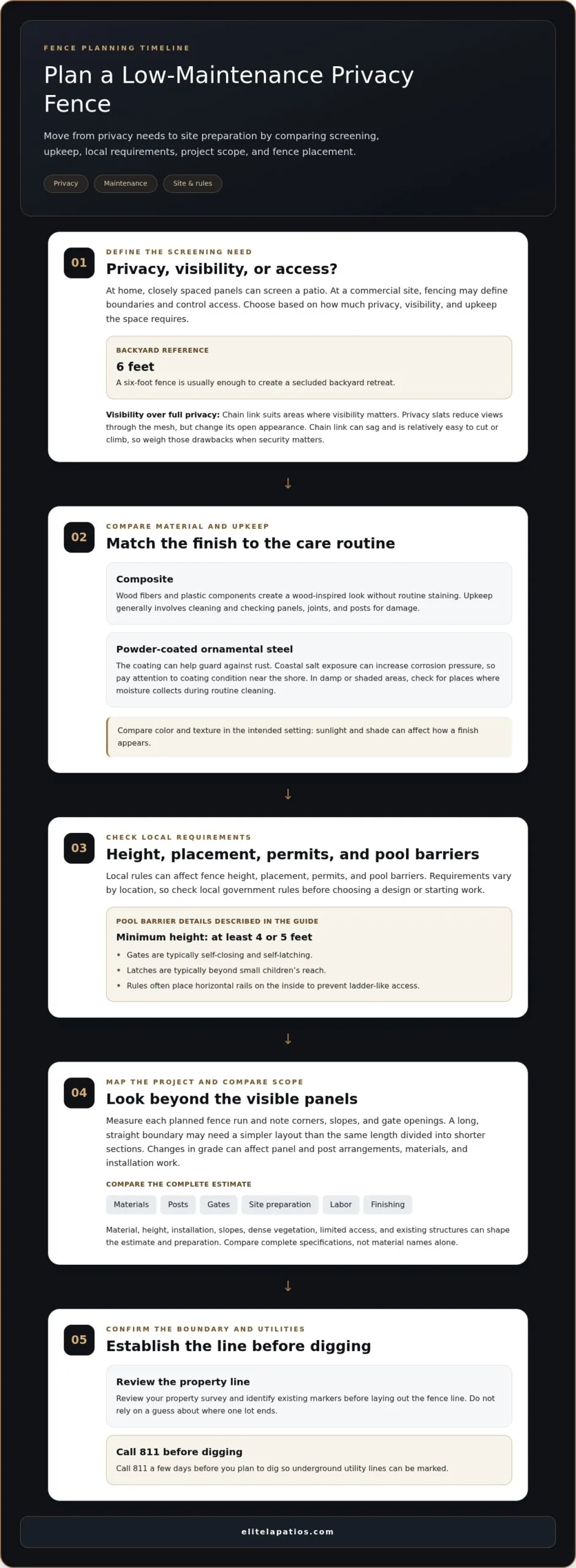
A low-maintenance privacy fence limits recurring work while meeting a property’s screening and security needs. At home, closely spaced panels can screen a patio; around a commercial site, fencing may define boundaries and control access. The right solution depends on how much privacy, visibility, and upkeep the space requires. A six-foot fence is usually enough to create a secluded backyard retreat.
Chain link suits boundaries where visibility matters more than complete privacy, such as commercial areas, service yards, or residential spaces that do not need a solid barrier. It can sag and is relatively easy to cut or climb, so weigh these drawbacks if security is a priority. Privacy slats reduce views through the mesh but change its open appearance.
Composite fencing is another solid-panel option. Its wood fibers and plastic components create a wood-inspired look without the routine staining associated with wood. Upkeep generally involves cleaning and checking panels, joints, and posts for damage. Compare color and texture in the intended setting, since sun and shade can affect how a finish appears.
Powder-coated ornamental steel combines defined metal lines with a coating that can help guard against rust. Coastal salt exposure can increase corrosion pressure, so pay attention to the coating’s condition near the shore. In damp or shaded areas, check for spots where moisture collects during routine cleaning.
Local rules can affect fence height, placement, permits, and pool barriers. Pool fencing rules commonly require a minimum height of at least four or five feet; gates are typically self-closing and self-latching, with latches beyond small children’s reach. Rules often place horizontal rails on the inside to prevent ladder-like access. Requirements vary by location, so check local government rules before choosing a design or starting work.
Before digging, call 811 a few days before you plan to dig so underground utility lines can be marked. To establish the boundary, review your property survey and identify existing markers before laying out the fence line; a fence should not rely on a guess about where one lot ends. For a tailored residential privacy design, discuss your fence project.
3. Fence installation costs
A fence estimate reflects more than the visible panels. Homeowners should compare the full scope: materials, posts, gates, site preparation, labor, and finishing. Privacy fence costs in the United States generally vary with material, height, and installation. A cedar privacy design and a metal fence with a powder coating involve different materials and construction steps, so their estimates won’t be interchangeable.
Start by measuring each planned fence run and noting corners, slopes, and gate openings. A long, straight boundary may need a simpler layout than the same length divided into shorter sections around a garden or building. Changes in grade can also affect panel and post arrangements, materials, and installation work.
Material and appearance also shape the estimate. Solid privacy panels differ from open chain link, and aluminum and steel have distinct profiles and finishes. A wood-grain surface, colored coating, or decorative top can require additional design and finishing work. Compare complete specifications, not material names alone, to ensure the estimate reflects the fence you want.
Site conditions affect preparation and installation. Sloped ground, dense vegetation, limited access, and existing structures can complicate delivery of materials and placement of posts. Removing an old fence may also add labor and disposal work. Before requesting estimates, note the fence route, desired privacy, gate locations, and visible obstacles.
Professional installation helps ensure that posts, panels, and rails are properly aligned and supported, including where the terrain changes. Ask for an itemized scope identifying the material, fence length, gates, site preparation, removal work, and finishing. These details make it easier to compare estimates for the same work.
The price depends on the specific project and is provided after a quote request; material, height, total length, gates, access, terrain, and preparation shape the estimate. For example, a flat, unobstructed boundary with no old fence to remove presents a different installation scope from a sloped yard with several gates. Compare those factors alongside the finished appearance and expected upkeep. This gives homeowners a practical basis for balancing initial installation work with long-term value.
4. Decorative lattice-top fences
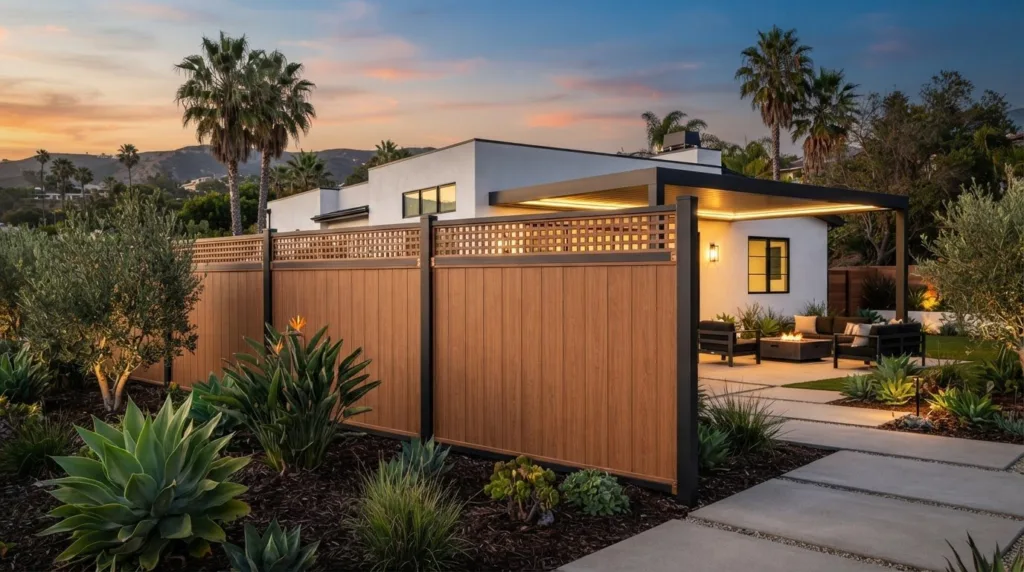
A lattice-top fence pairs a solid lower section with an open decorative panel above. The lower boards screen a patio or garden, while lattice allows light and air through. This semi-private design suits homeowners who want an enclosed boundary with a visually lighter top. It can frame a seating area without making every section appear solid.
Choose a lattice pattern that suits your home’s exterior. A square grid gives a crisp, structured finish, while diagonal lattice has a more traditional garden feel. A picket fence has spaced vertical boards instead, creating a distinct profile and allowing more visibility. Compare patterns with your exterior trim, planting, and patio views before deciding.
Spacing determines the balance between screening and openness. Semi-private designs let light and air through while retaining some privacy. View the fence from places where screening matters, such as a kitchen window, deck, or side yard. A pattern that looks closed from the street may appear more open from a raised patio.
Material affects both appearance and upkeep. Wood lattice can be stained to coordinate with a deck or garden structure, but traditional cedar fencing needs staining every 2 years. Vinyl lattice can offer a wood-inspired appearance without that recurring staining task. Metal designs provide another visual direction, with slim lines that contrast against broad boards. Compare the complete fence, including its posts, lower panels, and lattice finish.
Let the fence line guide the design. Along a side yard, a solid lower section can screen everyday activity while lattice above keeps the boundary feeling lighter. Near a garden, a repeating grid can echo trellises or pergola details. On sloped ground, plan how each section meets the changing grade so the top line and panel transitions look intentional.
Plan for practical access to both sides of the fence where possible, so cleaning and inspection are straightforward. Remove leaves caught in lattice openings and check boards, joints, and posts during routine outdoor upkeep. These simple checks can help you spot loose sections or surface changes before they affect the fence’s appearance or function.
5. Low-maintenance fence materials
Among low-maintenance fence options, the best fit depends on weather exposure, desired aesthetic, and tolerance for routine care. Vinyl, aluminum, composite, and steel each reduce certain maintenance tasks, but no material is maintenance-free. High-quality vinyl fencing can last 50 years or more, while cedar typically lasts around 20 to 30 years and needs staining every 2 years.
Vinyl generally needs occasional washing rather than routine painting or staining, though it is less sturdy than steel. Aluminum is lightweight, durable, and low maintenance. Composite offers a wood-like appearance but still needs cleaning and periodic inspection. Steel can provide lasting strength, and a reliable powder coating helps protect it against rust.
Rot, pests, and changing weather affect materials differently. Vinyl and metal don’t provide the wood fibers that can attract pests or decay, while untreated wood can be vulnerable to moisture and insects. A protective finish helps steel resist rust, but coastal air and persistent dampness make periodic coating checks prudent. For galvanized chain link, the silvery finish can last up to two decades.
Steel-reinforced fencing typically lasts over 20 years, compared with 8 to 12 years for wood fencing. Those figures make material choice especially relevant for a backyard boundary that’s exposed to rain, sun, or ground moisture. A durable fence should also have sound posts and connections; weak installation can undermine even an attractive material.
Choose a material that suits the setting and the look you want. Vinyl can provide backyard privacy with washing instead of staining; aluminum creates a lighter ornamental boundary, while steel emphasizes a stronger metal profile. Composite offers a wood-inspired appearance with less finish upkeep. Compare samples outdoors beside your landscaping and exterior materials.
Make the decision with a simple care check: list the tasks you’re willing to do, inspect the site’s weather exposure, and compare materials against those conditions. For example, a shaded, damp fence line calls for attention to moisture and coating condition, while a sunny area may make fading or surface appearance more noticeable. Choose materials that resist cracking, warping, or rotting, and factor in cleaning, inspection, and any finish care over time.
For a tailored discussion of a lasting fence design, talk through your project.
Elite L.A. Patios: 4K Aluminum lattice patio cover
Elite L.A. Patios helps homeowners in Los Angeles County, Orange County, Ventura County, and San Diego County shape more considered outdoor spaces. A 4K Aluminum lattice patio cover creates a defined overhead feature, while solid twin wall, cantilever, and insulated solid roof options offer alternative cover styles. Each reflects the brand promise: “ALL Custom, ALL 4K Aluminum, ALL the Time!”
Consider how the patio cover, fence line, and home’s architecture work together, especially when planning a backyard refresh. This can help create a cohesive setting for relaxation and entertaining. Contact Elite L.A. Patios to discuss your outdoor design.
Shape an outdoor space that feels considered
A fence does more than mark a property line. It affects how your outdoor space feels, how you use it, and how much routine care it needs. When comparing low maintenance fence options, consider how each design will complement your home, connect with outdoor living areas, and suit your priorities over time.
A thoughtful next step is to set out what matters most: privacy, a natural-looking finish, an open profile, or a coordinated setting for relaxation and entertaining. That clarity can help turn a broad set of choices into a design direction that feels personal and enduring. For a conversation about your outdoor project, contact Elite L.A. Patios. Explore the possibilities at your own pace and create an exterior that feels distinctly yours.
Frequently Asked Questions
How Long Will Your Fence Last?
Material, installation quality, weather exposure, and ongoing care all affect a fence’s service life. High-quality vinyl fencing can last 50 years or more, while the same material may need washing to remove dirt and surface marks. For a useful comparison, look beyond the expected lifespan: consider whether posts, gates, and panels can be maintained consistently in your yard’s conditions.
What Qualifies as a Low-Maintenance Privacy Fence?
A low-maintenance privacy fence screens the property without demanding frequent repairs or surface refinishing. Solid vinyl panels, for example, can provide a visual barrier with routine cleaning rather than repeated painting. Check the whole system, not just the panels: posts, gates, and joints also affect upkeep. For a backyard, consider whether the design keeps sightlines private while leaving practical access for cleaning.
Can alternative fencing materials match wood’s appearance?
Yes. Wood-grain vinyl panels can suggest the color and texture of natural boards, while aluminum and steel create a more tailored, architectural look. Match the finish to your home’s siding, trim, and outdoor materials. View samples in morning and afternoon light to see how the color changes before settling on a design.
What Will Maintenance Really Cost You?
Maintenance expense depends on the material and the tasks it needs over time, including cleaning, repairs, and refinishing. Wood can require recurring staining, while vinyl generally needs washing; metal may need attention if its protective coating is damaged. Compare the work required over the fence’s life, rather than judging cost by one cleaning or repair. Include labor and replacement parts in your personal estimate.
What is the cheapest alternative to a wood fence?
Chain link is often a budget-conscious alternative when a solid privacy screen isn’t essential. Its open structure can suit a side boundary or a utility area where visibility matters. The trade-off is limited screening, and chain link can sag or be relatively easy to cut or climb. Consider privacy slats if you want less visibility, but they change the fence’s open appearance.
Which alternative works best for privacy fencing?
Closely spaced, solid panels provide strong visual screening. Vinyl is an option for homeowners seeking privacy without routine painting, while wood-grain finishes create a warmer look. Consider placement as well: a side-yard boundary may need consistent screening, while a garden edge could use a partially open design that preserves light and airflow.
What are the lowest-maintenance fence materials for residential yards?
Vinyl and aluminum are options for homeowners seeking less routine upkeep. Vinyl usually needs occasional washing, while aluminum is lightweight, durable, and low maintenance. Steel with a powder coating can help resist rust, though the coating still needs attention if damaged. Consider damp ground, coastal exposure, sun, and nearby plants when choosing a fence finish.
What does a low-maintenance fence cost per linear foot, including installation?
Installation cost depends on the fence material, height, total length, gates, site access, terrain, and preparation work. A straight run on accessible ground has a different scope from a sloped boundary with vegetation or an existing fence to remove. Because 4K Aluminum fencing is a project-specific product, its price depends on the case and is given after a quote request, based on those project details.