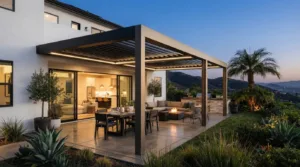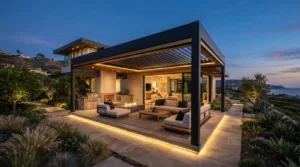
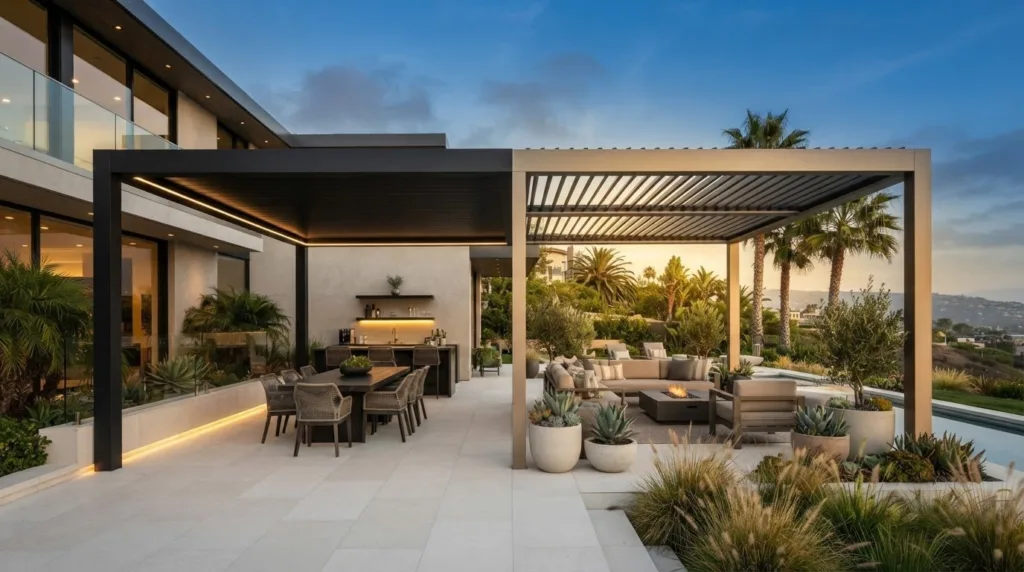
Could the patio cover that offers the most shade also make your outdoor space feel too enclosed? The benefits of a solid roof vs lattice come down to a daily balance: a solid roof provides a more continuous overhead covering, while a lattice cover leaves openings for daylight and views of the sky. Both can be appealing choices, but the right one depends on how you want to use and experience your patio.
If you’re weighing filtered daylight against a more visually defined covered area, start by thinking about when you use the space and what you want overhead. A solid roof may suit outdoor dining or lounging if you prefer a continuous roof surface; lattice may appeal if you value an open-sky feel. This guide compares the everyday trade-offs in shade, daylight, and design, then offers practical ways to assess your patio. You’ll also find questions to discuss with a local professional, including how an aluminum lattice cover or solid-roof system could fit your home.
Key Takeaways
- The benefits of a solid roof vs lattice depend on how each structure affects overhead coverage, daylight, and the patio’s overall feel.
- Consider your patio’s orientation and how nearby windows and rooms affect the light you want to preserve or filter.
- Match the design to how you use the space, from dining and lounging to enjoying an open-sky atmosphere.
- Compare each option’s proportions and visual character with your home’s architecture.
- Elite L.A. Patios offers 4K Aluminum lattice and solid-roof options to discuss in relation to your site and priorities.
Benefits of a Solid Roof vs. Lattice: What Changes on Your Patio?
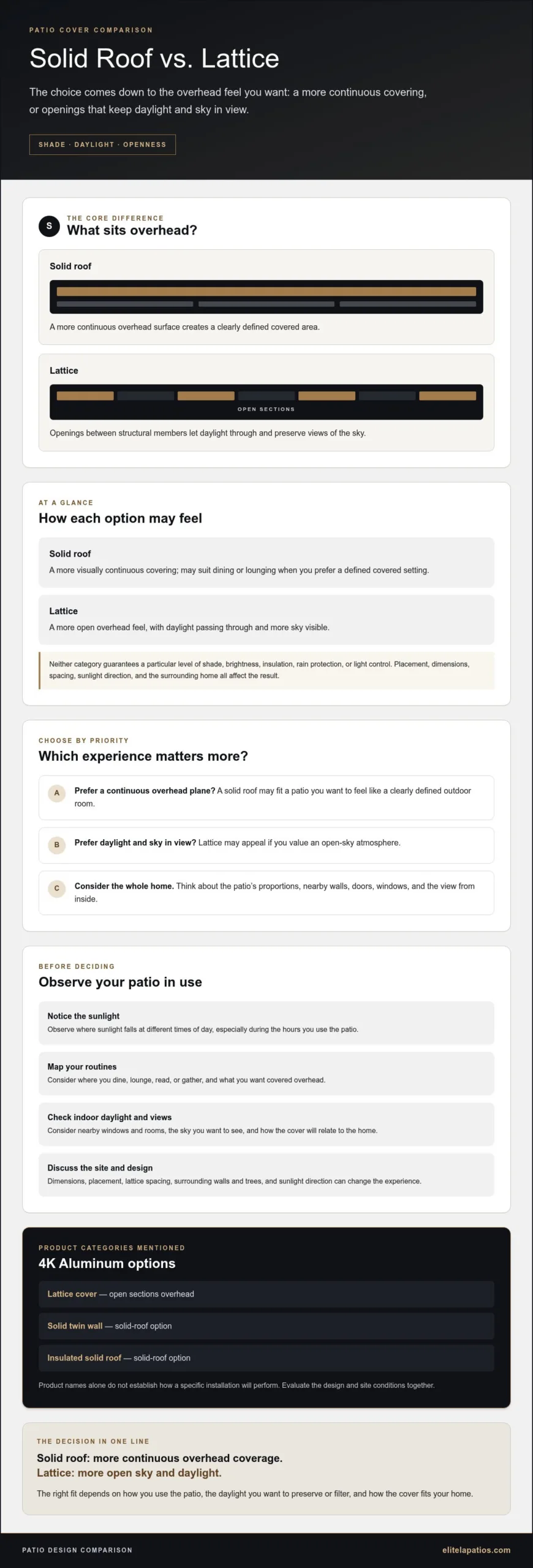
The main difference is the overhead structure. A solid patio roof forms a more continuous surface above the space. A lattice cover has open sections between its structural members, preserving views of the sky and letting daylight pass through. That distinction shapes the patio’s visual character, but it does not determine exactly how bright or shaded every part of the space will feel.
How does a solid patio roof differ from lattice?
Think of a solid roof as a defined overhead plane and lattice as an open framework. The Lattice Patio Covers category includes pergolas, a useful reference for understanding an open structure with gaps overhead. Solid aluminum options include solid twin wall and insulated solid roof systems. These names identify product types; they do not guarantee a particular level of insulation, rain protection, or light control.
Placement and design matter. The dimensions and spacing of a lattice structure affect how much sky is visible, while the size and position of a solid roof determine which parts of the patio sit beneath its continuous covering. Nearby walls, trees, and the direction of sunlight can also change the experience. Two covers in the same broad category may not create identical conditions.
Which patio priorities should guide the comparison?
Start with the feeling you want overhead. Would you prefer more sky in view and daylight passing through, or a more visually continuous covering? Then consider how that preference fits your routine. A patio used for morning coffee may have different daylight priorities from a space used for evening meals or daytime lounging.
Observe the patio at different times of day, rather than relying on one quick look. Note where sunlight falls, which doors and windows face the space, and whether you want to preserve an open view from inside the home. These observations help turn a general preference into a design brief that a local professional can assess against your property.
A solid roof creates a more continuous overhead covering; lattice leaves openings that preserve views of the sky and let daylight through. That structural difference is the starting point for weighing the benefits of a solid roof vs lattice. The right fit depends on the design, placement, and conditions of your property, as well as the balance of shade, daylight, and openness you want.
Solid Roof Patio Covers: When More Overhead Coverage Fits
A more continuous overhead surface may suit homeowners who want the patio to feel like a clearly defined outdoor room. It gives dining or lounge furniture a distinct place beneath the roof and can make the covered area feel visually connected to the home. Whether that arrangement feels right depends on your property, the roof’s placement, and how sunlight reaches the patio.
What benefits might a solid roof offer for everyday patio use?
Picture the routines you want to enjoy outdoors: a meal at a table, a quiet place to read, or a seating area for conversation. If you prefer a defined covered setting for those activities, a solid roof may be worth considering. The CDC includes seeking shade among its sun-safety recommendations, but the amount and timing of shade at your home depend on the structure’s location and the sun’s direction.
Before choosing, note where direct sunlight falls during the hours you use the patio. Identify the seating or dining areas you use most, then consider whether the proposed roof would cover those parts of the space. These observations are more useful than assuming a particular result from the roof category alone.
Could a solid roof make the patio feel too enclosed?
It may feel more defined than an open lattice design, especially if the patio is compact or surrounded by walls. Proportions matter: a broad roof over a small area can create a different impression from a cover with generous open sides. Consider how much sky you want to see and how the covered space relates to nearby windows and doors.
Think about indoor daylight, too. If a room beside the patio relies on light from that direction, discuss its windows and your daylight preferences during design planning. An open side or carefully considered placement may help preserve a sense of connection with the outdoors, though the result depends on the home and layout.
To compare product categories, explore the 4K Aluminum product line, which includes lattice covers as well as solid twin wall and insulated solid roof options. Product names alone do not establish how a specific installation will perform, so discuss the design and site conditions before deciding.
The benefits of a solid roof vs lattice are easiest to assess alongside your routines, sunlight exposure, and preferred sense of openness. If you’re weighing those priorities for your property, you can discuss your patio design priorities with Elite L.A. Patios.
Lattice Patio Covers: How Open Design Changes Light and Ambience
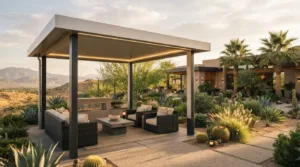
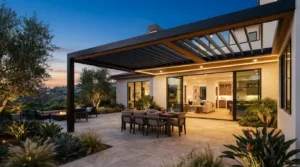
A lattice cover leaves openings between its structural members, so more of the sky remains visible from below. Daylight can pass through those gaps, creating a patterned, filtered-light effect that shifts with the sun’s position. This is a design characteristic, not a promise of a particular level of shade or comfort.
A lattice cover frames the sky with an open structure, while a solid roof forms a more continuous overhead surface. That difference influences the patio’s visual character. Lattice can feel lighter and more connected to the open air; a solid cover creates a more defined ceiling overhead. For general project context, the International Code Council’s patio-cover code reference is worth reviewing alongside requirements from the relevant local jurisdiction.
When might lattice suit your patio and outdoor routine?
Lattice may appeal if you enjoy seeing more sky or want daylight to remain part of the patio experience. Consider where you place a dining table, lounge chairs, or other frequently used furniture. The pattern of light may matter differently over a seating area than over a walkway, and the sun’s direction can change how the same structure feels throughout the day.
Assess your actual site instead of relying on a general rule about which cover suits a particular climate or activity. Observe the patio at the times you expect to use it, note nearby walls and windows, and decide whether open-sky views matter from the main seating areas. These observations offer a practical starting point for design decisions.
What should a solid-versus-lattice comparison include?
Compare the qualities you can evaluate visually and structurally, then weigh the trade-offs against the atmosphere you want to create. Neither design is an overall winner; the better fit depends on your priorities and property.
| Consideration | Lattice | Solid roof |
|---|---|---|
| Openness | More sky remains visible through the gaps. | The overhead surface appears more continuous. |
| Daylight | Light passes through the open structure; its effect varies with placement and sun direction. | The roof creates a more defined overhead plane; consider how its position relates to adjacent rooms. |
| Atmosphere | Can suit an open, airy visual impression. | Can create a more visually contained patio setting. |
| Trade-off | Less continuous overhead coverage. | Less open-sky exposure beneath the roof. |
Use a simple checklist before discussing designs: record the daylight you want, how much sky you want to see, where furniture will sit, and when you expect to use the patio. This makes the comparison more specific to your home and helps clarify which qualities matter most.
How to Choose Between Solid and Lattice for Your Home
Start with your patio, not a regional rule of thumb. Homes across Los Angeles County, Orange County, Ventura County, and San Diego County vary in orientation, surrounding structures, window placement, and outdoor routines. The same cover design can feel different from one property to another. Use these steps to define your priorities before comparing options.
- Set your shade and daylight priorities. Decide whether you want a more continuous overhead covering or prefer daylight and open-sky views through a lattice structure. If both matter, identify which priority is most important over the areas you use most.
- Track when and how you use the patio. Note whether the space is mainly for morning coffee, daytime lounging, family meals, or evening gatherings. Observe where sunlight falls during those hours rather than judging the site at just one time of day.
- Consider orientation and nearby rooms. Record which direction the patio faces, where adjacent windows and doors are, and whether a proposed roof could affect the light entering an indoor room. Share those details during a design discussion.
- Relate the cover to the home. Compare its proportions and visual lines with the existing architecture, as well as the placement of outdoor seating and dining areas. Consider how the design will look from inside the home and across the patio.
- Confirm project-specific details. Ask about the proposed material, configuration, and specifications, and check applicable requirements with your city or county before work begins. Requirements can depend on the project and its location.
Which questions help clarify your coverage priorities?
How often does your household use the patio, and at what times? Do you value open-sky views more than a broader overhead surface? Would filtered daylight suit the activities planned beneath the cover? Photos taken from the patio and adjacent rooms can help communicate the current light, layout, and sightlines. Pair them with a short list of priorities so the design discussion can focus on your home rather than general assumptions.
How can you compare designs at your property?
Review each proposed structure against the home’s proportions and the locations of your main seating areas. Ask what the material and configuration mean for the specific design, and request clarification on any project specifications you need to understand. The benefits of a solid roof vs lattice become easier to weigh when you compare plans against the same priorities: shade, daylight, views, and everyday use.
Elite L.A. Patios offers 4K Aluminum lattice and solid-roof options to consider in relation to your site. Discuss your patio priorities with Elite L.A. Patios as you narrow down the design that suits your home.
Explore Solid and Lattice Patio Covers with Elite L.A. Patios
The right cover depends on the light your patio receives, how much overhead coverage you prefer, and how you plan to use the space. Lattice may suit homeowners who value an open-sky feel, while a solid roof may better match a preference for a more visually defined covered area. The benefits of a solid roof vs lattice are personal and site-specific, so let your daily routine and home’s layout guide the decision.
Elite L.A. Patios designs and installs 4K Aluminum lattice patio covers and solid-roof options, including solid twin wall and insulated solid roof systems. The company serves Los Angeles County, Orange County, Ventura County, and San Diego County. Explore the 4K Aluminum product line to review relevant categories as you consider which approach may suit your property.
What can homeowners discuss during a project consultation?
Bring your priorities into the conversation. Describe where you’d like more coverage, where you want to preserve openness, and how you use the patio throughout the day. Photos of the space, nearby windows, and seating or dining areas can help make those preferences clear.
You can also ask about the roof category and proposed configuration, how the design relates to the site layout, and whether integrated LED lighting suits the way you plan to use the patio. Request clarification on product details and specifications that matter to your project. Before work begins, confirm applicable project requirements with the relevant city or county, since these depend on the property and project.
How can you take the next step with confidence?
Review the product categories, then compare them with your notes about shade, daylight, and everyday use. The company’s gallery can offer visual inspiration for outdoor structures; treat images as examples of appearance, not confirmation of a particular roof specification. Ask which details apply to the design being considered for your home.
A considered conversation can help you explore how a lattice or solid-roof option might fit your property and priorities. Discuss your patio project with Elite L.A. Patios and explore the approach that feels right for your home.
Choose the Patio Cover That Fits Your Everyday Life
The benefits of a solid roof vs lattice come down to how you want to balance overhead coverage, daylight, and open-sky views. A solid roof creates a more continuous covered setting, while lattice keeps openings in the structure for a more open visual feel. Your patio’s orientation, nearby rooms, and daily routines can help reveal which design feels right for your home.
Elite L.A. Patios installs 4K Aluminum lattice covers and solid-roof systems, giving homeowners two distinct approaches to consider. The company serves Los Angeles County, Orange County, Ventura County, and San Diego County. Before choosing, think through where you want shade, how you use the patio, and how the structure should complement your home.
Share those priorities with a local professional and explore the options for your property. Discuss your patio cover options with Elite L.A. Patios to take the next step toward a design that fits your outdoor space.
Frequently Asked Questions
What is the main benefit of a solid patio roof?
A solid roof creates a more continuous overhead covering than lattice, which may suit homeowners who want more shade and a clearly defined covered area. The experience depends on the design and property, so do not assume every solid roof offers the same light, weather, or insulation performance. Ask about the proposed configuration and project-specific specifications before deciding whether it aligns with your expectations.
Does a lattice patio cover let more light through?
Yes. Lattice has openings in its roof structure, allowing daylight and open-sky visibility that a continuous solid roof does not provide in the same way. The amount of light reaching your patio depends on the design, its orientation, and surroundings such as nearby walls or trees. Consider how the space looks at the times you’ll use it, and discuss your actual layout with an installer rather than relying on a universal estimate.
Which is better, a solid roof or lattice patio cover?
Neither option is best for every home. A solid roof may suit priorities centered on more continuous overhead coverage, while lattice may appeal if you value openness and daylight. The benefits of a solid roof vs lattice depend on your patio’s orientation, household routines, and preferred atmosphere. Compare the specific designs for your property, and weigh their trade-offs without treating either style as a universal winner.
Can a solid patio roof make an outdoor space feel dark?
It can change how daylight reaches the patio and nearby areas compared with an open lattice design, but the effect varies with the roof configuration, layout, and surroundings. Consider the patio’s relationship to adjacent indoor rooms and where natural light matters most. Share those priorities during design planning, and ask how the proposed structure may affect your specific space rather than relying on a blanket promise.
Is lattice a good choice for a sunny Southern California patio?
Lattice may suit homeowners who prefer an open appearance and daylight coming through the roof structure, but local conditions alone do not determine the right design. For homes in Los Angeles County, Orange County, Ventura County, and San Diego County, consider the patio’s orientation, preferred shade, and daily use. Compare the actual site with a solid-roof option before choosing, since sunlight and surroundings vary from property to property.
Can you add lighting to a solid or lattice patio cover?
Integrated LED lighting is among Elite L.A. Patios’ outdoor structure offerings, but confirm its availability and compatibility for the specific design you’re considering. Ask how lighting could fit the proposed configuration and where fixtures might be placed to support your intended use, such as evening dining or relaxing. Do not assume every roof type or project includes lighting as standard; verify the details with the installer.
How do I choose between a solid and lattice patio cover?
Start by deciding how much shade, daylight, and open-sky visibility you prefer. Then consider the patio’s orientation, nearby rooms, furniture layout, and the activities you enjoy there. Compare the proposed designs and ask the installer to clarify materials, configurations, and relevant specifications. Before work begins, check applicable project requirements with your city or county, as details can vary by location and project.