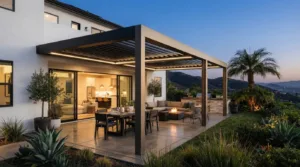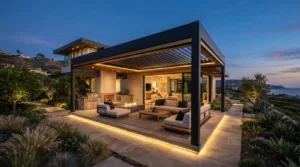
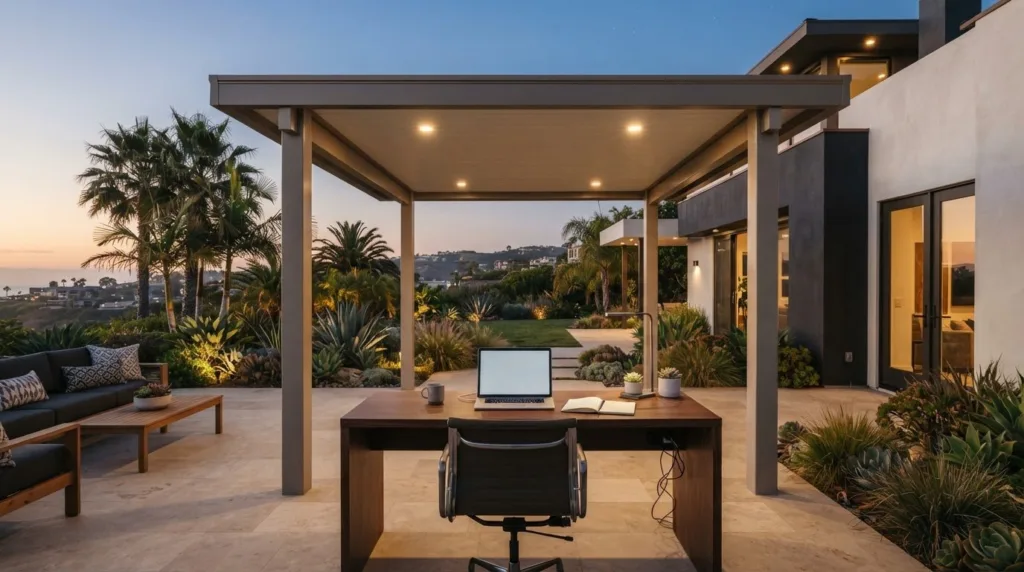
A roof alone doesn’t make an outdoor office productive. An insulated aluminum patio cover can provide overhead shelter, but the workspace also needs a practical layout, comfortable light, and room for everyday use. Before choosing a design, consider where direct sun falls, how you’ll manage screen glare, and what you need close at hand while you work.
With a thoughtful plan, your patio can feel like a purposeful extension of your home rather than a desk placed outside. This guide explains what an insulated aluminum patio cover may offer, what it won’t turn your patio into, and how to plan around your work habits and Southern California setting.
You’ll find practical ways to balance daylight and shade, arrange furniture, and think through power and connectivity. We’ll also cover questions to raise about site suitability, professional installation, and local permitting, since requirements can vary by municipality. Use these points to prepare for a project discussion about your priorities and property.
Key Takeaways
- Start with your work habits, then measure usable patio space and note doors, walkways, and existing furniture.
- Compare an insulated aluminum patio cover with a lattice roof or an uncovered patio for overhead coverage, daylight, and workspace suitability.
- Plan task lighting, screen-glare control, privacy, power, and access as separate parts of the setup.
- Discuss roof style and workspace priorities with a qualified professional, and confirm permitting requirements with your local municipality.
- Ask whether an insulated solid roof and integrated LED lighting from Elite L.A. Patios may suit your project, with options confirmed for your site.
What an Insulated Aluminum Patio Cover Can Bring to an Outdoor Workspace
Begin with a practical question: what conditions do you want the roof to help manage? An insulated aluminum patio cover is a roof structure designed to shelter an outdoor area. Construction can vary, so ask about the materials and assembly of the specific system you’re considering rather than assuming every insulated roof is the same.
Insulation generally slows heat transfer through a building element. As explained in this overview of building insulation, that principle doesn’t guarantee a particular temperature beneath a patio cover. Sun exposure, airflow, nearby walls, furnishings, and the roof’s documented specifications all influence how the space feels. A covered patio remains an outdoor area, not a promise of indoor conditions or year-round comfort.
How an insulated roof fits an outdoor work routine
A sheltered patio may suit focused laptop work, reading, or occasional video calls, especially if you want a separate work zone near home. Before settling on a layout, consider how often you’ll work outside, how long a typical session lasts, and what equipment you’ll use. A laptop and notebook have different space and power needs from a monitor, desk lamp, or other devices.
Plan beyond the desk. Leave a clear route between the home and work area, and decide where furniture can sit without blocking doors or paths. Southern California sun exposure varies by site and time of day, so observe where direct light falls before positioning your screen and chair. Comfort also depends on ventilation, furnishings, and the confirmed details of the roof system.
Insulated patio cover or open lattice for work?
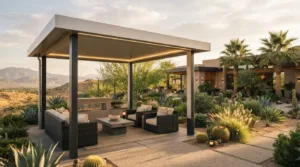
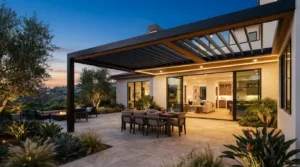
A solid roof provides continuous overhead coverage, while an aluminum lattice has openings that allow daylight through. That distinction affects both the work surface and the feel of the patio. A solid roof may suit someone who prioritizes overhead shelter; lattice may appeal to someone who wants more filtered natural light. Neither format is right for every project, and actual shade and weather protection depend on the design and site.
Consider whether daylight on your desk matters more than continuous coverage, and whether glare changes as the sun moves. Compare those priorities with your patio’s orientation and the hours you expect to work. To review the available categories without assuming unverified performance details, see the 4K Aluminum product line. Your wider patio plan should also account for how the work zone relates to dining, circulation, and outdoor relaxation.
Plan the Workspace Before Choosing Your Insulated Aluminum Patio Cover
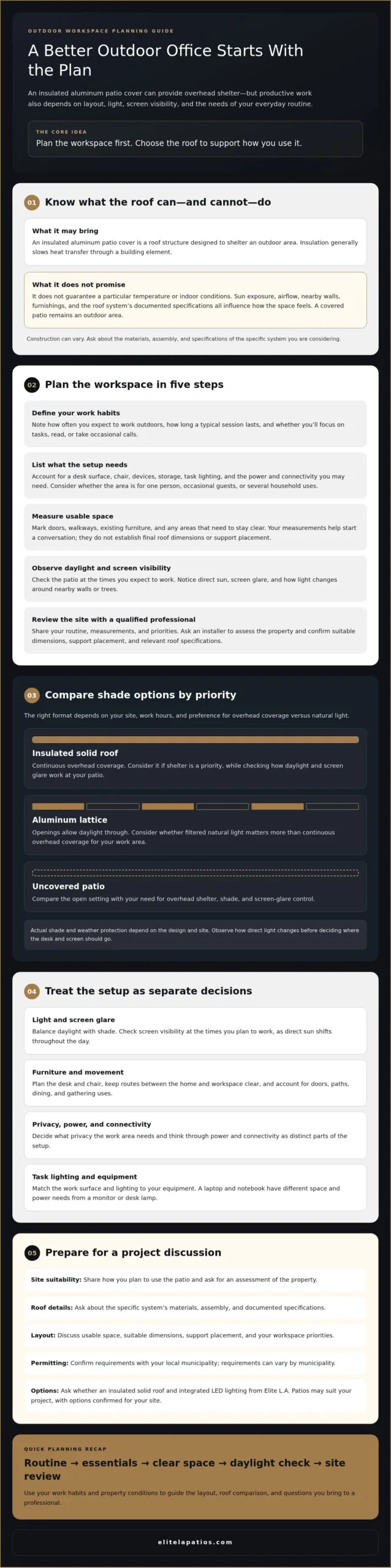
Start with the work, not the roof. A clear plan helps you estimate usable space, identify where shade matters, and give an installer useful information to assess the site. Use this sequence to prepare a project brief:
- Define your work habits. Note how often you expect to work outdoors, how long a typical session lasts, and whether you’ll use the area for focused tasks, reading, or occasional calls.
- List your essentials. Account for a desk surface, chair, devices, storage, and clear circulation between the house and patio. Decide whether the space is for one person, occasional guests, or several household uses.
- Measure the usable area. Record the space available for furniture, then mark doors, paths, existing furniture, and areas that must stay open. These measurements help start a discussion but don’t establish final roof dimensions or support placement.
- Observe light and screen visibility. Check the patio at the times you expect to work. Look for screen glare, shifting direct sun, and changes caused by nearby walls or trees.
- Discuss the site with an installer. Share your measurements, routine, and priorities. Ask the installer to assess the property and confirm suitable dimensions, support placement, and relevant roof specifications.
Planning checklist: Map your routine, list furniture and equipment, measure clear space, check daylight during work hours, and review the site with an installer.
Map work habits, furniture, and movement
Sketch the desk and chair before choosing a roof. Include your route to the workspace, and leave room to move around furniture without blocking doors or everyday paths. If the patio also serves as a dining or gathering area, decide whether the desk can stay in place or needs to share the space. Natural light may also shape the experience; the health and productivity benefits of daylight are one reason to consider light alongside screen glare.
Choose the right balance of coverage and daylight
Patio orientation, nearby walls, trees, and changing sun angles all affect the light reaching a work surface. A solid roof provides continuous overhead coverage but may change how much daylight reaches the patio. Assess the actual site rather than assuming how bright or shaded it will feel. You can compare relevant aluminum structure options in the 4K Aluminum product line.
For a project-specific conversation, share your intended layout and priorities with Elite L.A. Patios. A patio project discussion can help identify which site details need review.
Compare Insulated Aluminum Patio Covers with Other Workspace Shade Options
Choosing a roof style means weighing overhead coverage against how open and bright you want the workspace to feel. An insulated aluminum patio cover, an aluminum lattice cover, and an uncovered patio offer different starting points. The right fit depends on your home, work routine, site conditions, and preferences, not on a universal ranking.
| Option | Overhead coverage | Daylight | Potential workspace fit |
|---|---|---|---|
| Insulated solid roof | Continuous roof coverage overhead | May reduce direct overhead daylight compared with an open structure; the effect depends on the site | Worth considering if a more sheltered-feeling work area is a priority |
| Aluminum lattice cover | Openings in the roof allow some sky exposure | More daylight can pass through the openings | May suit a workspace where filtered light and a more open feel matter |
| Uncovered patio | No overhead roof coverage | Open sky provides the most direct exposure to changing daylight | May suit occasional outdoor use when openness matters more than overhead shelter |
The central trade-off is straightforward: continuous overhead coverage means less open-sky exposure directly above, while lattice and uncovered layouts maintain a more open relationship with daylight. Actual light and comfort still depend on orientation, surrounding structures, trees, furnishings, and the roof’s documented specifications.
When an insulated solid roof may suit the workspace
A solid roof may appeal if you want a more sheltered-feeling place for regular desk work, reading, or calls. That design intent should not be taken as a promise about temperature, noise, or protection in every weather condition. Ask Elite L.A. Patios to confirm the available product specifications and whether the proposed design fits your patio, work routine, and site conditions.
When lattice or open-air layouts may fit better
Lattice and uncovered patios keep more of the sky visible and allow different amounts of daylight into the work zone. That openness may appeal if natural light and an airy setting matter more to you than continuous overhead coverage. Before choosing a style, consider your work hours, screen glare, and preferred level of shelter. You can browse the project gallery for visual examples; images may show different structure types, so don’t assume every example features an insulated roof.
Design for Light, Privacy, Power, and Local Project Requirements
A productive outdoor office depends on more than its roof. Plan task lighting, screen glare, privacy, and power as separate decisions, then consider how each works with the patio layout. An insulated aluminum patio cover can provide the basis for a defined workspace, but its suitability and project details need to be assessed for your site.
Plan lighting, glare control, and privacy
Daylight may be enough for some daytime tasks, while reading documents or working later may call for dedicated task lighting. Consider both uses before deciding where the desk and lights should go. Elite L.A. Patios lists integrated LED lighting among its offerings; ask which options, if any, suit your project and how they could be positioned.
Screen glare is a separate issue. Observe the work area during the hours you expect to use it, and consider whether angling or moving the desk could keep direct light off the display. Check sightlines from neighboring windows and nearby outdoor areas as well. Furniture placement, existing walls, and the proposed structure can all affect privacy. Explore the company’s aluminum patio cover services to review related options.
Plan power and access early
List the devices you expect to use, such as a laptop, monitor, or task light, and note where you’d prefer the work surface to sit. Discuss electrical needs and safe routing with a licensed electrical professional; don’t assume an indoor outlet can serve an outdoor setup as planned. Keep routes between the home and workspace clear, and check that furniture or equipment won’t obstruct doors and everyday movement.
Prepare questions about installation and approvals
Before finalizing the design, ask how usable patio dimensions, attachment conditions, and existing structures affect the proposed roof and support placement. Confirm who will assess those details and which product specifications apply. Elite L.A. Patios serves homeowners in Los Angeles County, Orange County, Ventura County, and San Diego County, but those service areas do not share a single permitting jurisdiction.
Permit and zoning requirements can vary by property address. Check with the city or county authority responsible for your location before proceeding, and ask which project documents or approvals may be needed. A site discussion can help align your workspace plan, structure, and local requirements. Discuss your patio project with Elite L.A. Patios as you prepare questions for that conversation.
Explore an Insulated Aluminum Patio Cover with Elite L.A. Patios
A well-planned outdoor workspace starts with a clear idea of how you’ll use it and what your patio can accommodate. Elite L.A. Patios designs and installs aluminum outdoor structures, including insulated solid roofs, for homeowners in Los Angeles County, Orange County, Ventura County, and San Diego County. A project discussion can help you explain your priorities and identify details that need a closer look at your property.
An insulated aluminum patio cover may be worth exploring if you want a defined work area beneath a solid roof. The right choice depends on your needs and the site, so confirm product specifications and project suitability rather than assuming particular dimensions or performance.
What to bring to a patio-cover consultation
Explain how you expect to work outdoors: whether you’ll use the space daily or occasionally, what furniture and equipment you need, and how much overhead coverage you want. Site photos and approximate measurements can make your priorities easier to discuss, but they are not a substitute for a project-specific assessment.
Prepare questions that clarify the project scope before you move forward:
- Which insulated solid-roof options may suit the patio, and what specifications should you review?
- How do the site, existing structures, and attachment conditions affect the proposed design and installation scope?
- What integrated LED lighting options may be available for the project?
- Which local authority should you contact to confirm permits and other applicable approvals for your property address?
A simple sketch can also help. Mark the planned desk location, furniture, doors, and paths to give the discussion a practical starting point, without treating a preliminary drawing as a final design.
Move from an idea to a site-specific plan
A professional discussion can help clarify which design options are worth considering and what information is still needed to assess the project. Review the 4K Aluminum product line for relevant product information, then confirm applicable details for your site. Product specifications, installation scope, and local approval requirements should be checked rather than assumed.
With photos, measurements, and questions in hand, you’ll be better prepared to weigh the options. If your property is in Elite L.A. Patios’ service area, you can contact Elite L.A. Patios to discuss your patio project and the workspace you have in mind.
Shape an Outdoor Workspace Around the Way You Work
A productive patio workspace begins with choices that suit your routine. Measure the usable area, consider how daylight and privacy affect your desk, and weigh continuous roof coverage against a more open feel. An insulated aluminum patio cover may be worth exploring when overhead shelter is a priority, but confirm product specifications, site conditions, and local approvals before finalizing plans.
Elite L.A. Patios designs and professionally installs aluminum outdoor structures, including insulated solid-roof systems and integrated LED lighting. Its service area includes Los Angeles County, Orange County, Ventura County, and San Diego County. A project discussion can help you bring your priorities together and identify details that need site-specific review.
Gather photos, approximate measurements, and questions about the structure, installation scope, lighting, and permitting. Then discuss your outdoor workspace with Elite L.A. Patios. A considered plan can help make your patio a more purposeful place to focus, read, or step away from the indoor routine.
Frequently Asked Questions
How do you create a functional outdoor workspace under an insulated aluminum patio cover?
List your work essentials, measure the usable patio area, and observe how sunlight moves across it. Plan the desk, chair, circulation, lighting, privacy, and power around your routine. A laptop setup, for example, may need a different arrangement from a desk with a monitor and task light. Ask a qualified installer to review the site, and confirm product specifications and local requirements rather than assuming every covered patio offers the same comfort or functionality.
Does an insulated aluminum patio cover keep an outdoor workspace cool?
It may create a different overhead environment from an open lattice cover, but don’t assume a particular temperature reduction. Actual comfort depends on the roof’s documented specifications, sun exposure, airflow, nearby walls, furnishings, and time of day. Ask the installer about the specific system being considered. Shade, ventilation, and choosing work hours that suit the conditions can also affect how comfortable the workspace feels.
Is an insulated patio cover better than a lattice cover for working outside?
Neither option is automatically better. The right choice depends on your priorities and site. A solid roof offers continuous overhead coverage, while a lattice cover leaves openings and maintains a more open relationship with daylight and sky. Consider how much coverage you want, whether brightness or screen glare is a concern, and how the patio is oriented. A professional can review suitable options and relevant specifications for your home.
Can you add lighting to an insulated aluminum patio cover?
Integrated LED lighting is among Elite L.A. Patios’ listed offerings, but confirm the configuration for your specific project rather than assuming it comes with every structure. Consider daytime task lighting separately from evening illumination, and decide where light would be useful for a desk or reading area. Discuss electrical needs and safe routing with an appropriately qualified professional as part of the design conversation.
Do I need a permit for an insulated aluminum patio cover in Southern California?
Permit requirements depend on the property’s jurisdiction and project details, so there isn’t one answer for every home in Los Angeles County, Orange County, Ventura County, or San Diego County. Before work begins, check with the building department or other authority responsible for your property address. An installer may help identify project information to ask about, but verify current permitting and zoning requirements directly with the relevant local authority.
What should I consider before installing a patio cover for an outdoor office?
Consider how often you’ll work outside, the space available for furniture, daylight and screen glare, privacy, device power, and clear access to the home. Note nearby walls and trees, along with the patio’s sun exposure. Then discuss suitable roof options, documented product specifications, and installation scope with qualified professionals. Elite L.A. Patios designs and installs aluminum outdoor structures in Los Angeles County, Orange County, Ventura County, and San Diego County, where local requirements should be checked by property address.