The longest-lasting fence isn’t automatically the right fit for your property. If you’re asking what the most durable fence material is, wrought iron has one of the longest estimated lifespans at 50-100+ years, while aluminum can last 40-70 years and galvanized steel 50-75 years.
Longevity matters, but so do maintenance, privacy, and how a fence handles local conditions. The most durable fence material depends on what you need the fence to do, since strength and lifespan come with different upkeep and appearance trade-offs.
This comparison considers aluminum, chain link, steel, wrought iron, wood, vinyl, composite, and other options by estimated lifespan, maintenance, privacy, and cost. Use these factors to compare fence types for your property in Los Angeles County, Orange County, Ventura County, or San Diego County.
Key Takeaways
- Judge a fence by more than lifespan: visibility, privacy, upkeep, and exposure to weather all affect how well it suits your property.
- Aluminum offers an open, low-maintenance boundary, while chain link prioritizes practical coverage and can be fitted with privacy slats.
- Protective coatings help metal fences resist corrosion, while wood needs routine staining or sealing to guard against wear.
- Vinyl and composite can reduce ongoing maintenance, but their appearance and privacy differ from open metal designs.
- Use the comparison to identify which trade-offs matter most before choosing a material for your property.
Is aluminum fencing a durable choice?
Aluminum is a durable, low-maintenance option, with an estimated lifespan of 40-70 years. Its open design suits properties where visibility matters more than full privacy.
Durability, Visibility, and Pool Use
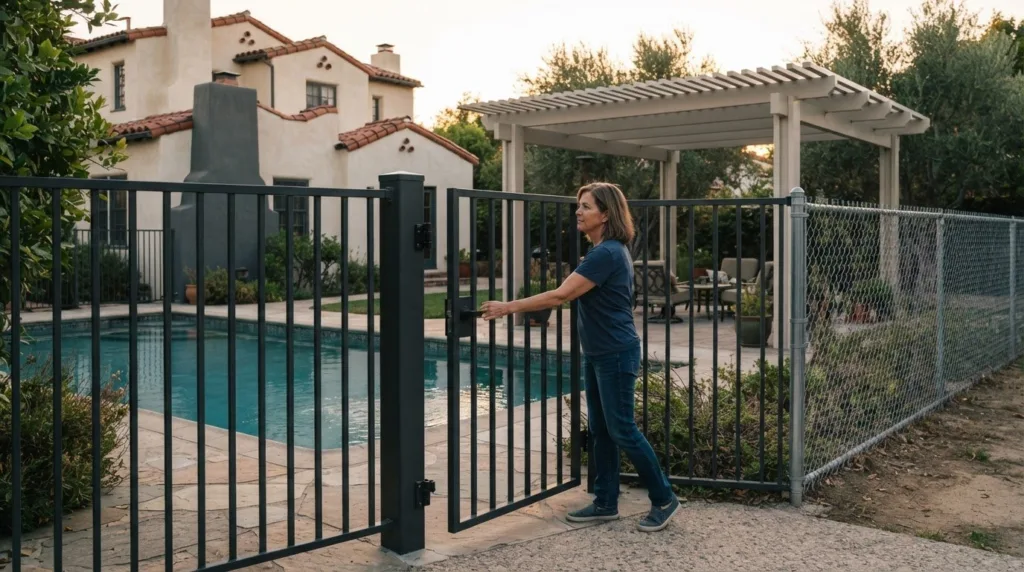
Aluminum fence estimates range from 40-70 years, depending on materials, installation, and exposure. Open rails and pickets preserve sightlines across a yard, unlike solid wood or vinyl panels. That visibility can be useful around pools, where supervision and clear views matter. Aluminum fencing meets many pool safety and code requirements, though suitability depends on the fence design and applicable local rules.
Resistance to Corrosion
Aluminum is rust-resistant, so it avoids the rusting concerns associated with untreated iron. Its powder-coated finish also resists fading for 20 years or more. These qualities make it a practical choice in places where moisture can affect exposed metal. Still, gates, fasteners, and damaged finish areas deserve attention, since a fence’s durability also depends on its components and upkeep.
Strengths and Limitations
Aluminum can provide a long service life with little routine maintenance and open sightlines. It doesn’t need painting or staining, unlike wood, which generally requires routine sealing or staining. Its open construction offers less privacy than solid panels, so it may not suit a boundary that needs full screening. Decide what each fence line needs to accomplish before choosing its style.
Finish and installation influence how an aluminum fence performs over time. Powder coating helps limit fading and surface wear, while correctly fitted posts and gates support the whole structure. For a pool area, compare the planned layout with local requirements for the specific property. For a street-facing boundary, consider whether an open design provides the desired balance of visibility and enclosure.
| Material | Estimated lifespan | Visibility and privacy | Maintenance |
|---|---|---|---|
| Aluminum | 40-70 years | Open; limited privacy | Low; no painting or staining |
| Galvanized steel | 50-75 years | Depends on fence design | Protective coatings help reduce corrosion |
| Chain link | 25 to 35 years | Open; slats add coverage | Coated wire reduces corrosion |
| Wood | Around 20 years | Can provide a solid screen | Routine staining or sealing |
Choose aluminum when a long-lasting, rust-resistant boundary and clear sightlines matter more than full privacy. Compare its estimated lifespan with galvanized steel, then weigh the desired visibility against wood’s screening and maintenance needs.
Which fence material lasts the longest overall?
Wrought iron and galvanized steel rank among the longest-lived common fence materials. Their durability depends on protective finishes and, for wrought iron, regular upkeep.
Yes. Local building codes and HOA covenants may restrict fence materials or appearance. Applicable limits depend on the property’s jurisdiction and governing documents.
Steel and Protective Coatings
Galvanized steel has an estimated lifespan of 50-75 years. A galvanized zinc coating protects the steel core, while powder coating reduces corrosion and surface wear. Those protective layers distinguish steel from wood, which requires routine sealing, and wrought iron, which needs periodic repainting. Inspecting the finish and addressing damaged areas helps preserve the metal’s protection over time.
Vinyl and Climate Sensitivity
Vinyl, also called PVC, has an estimated lifespan of 30-50 years. It resists moisture, rot, insects, and warping, and requires no painting, staining, or sealing. Climate exposure still matters: intense heat, temperature swings, or severe weather can affect a fence’s condition. Under ideal conditions, polyvinyl can last over 100 years, according to the InterNACHI Estimated Life Expectancy Chart.
Wood and Maintenance
Wood’s lifespan varies with the type and its treatment. Cedar fences are estimated to last 20-40 years, while pressure-treated pine lasts 15-25 years. Wood fences average around 20 years. Unlike vinyl, wood needs routine staining or sealing to protect it from moisture and weathering. That recurring care makes wood more maintenance-intensive than coated metal or vinyl.
Wrought Iron Upkeep and Lifespan
Wrought iron can last 50-100+ years, placing it among the longest-lived options. Its trade-off is recurring maintenance: inspect it and repaint with a rust-resistant coating every three to five years. That schedule distinguishes wrought iron from vinyl, aluminum, and composite, which typically offer long lifespans with minimal maintenance when properly installed. Its longevity therefore comes with continued attention.
Other materials occupy a middle ground. Composite fences are estimated at 25-40 years, redwood at 20-35 years, and bamboo at 10-20 years. These ranges sit below wrought iron’s upper estimate, but lifespan alone doesn’t determine the best fit. Compare expected service life with upkeep, weather exposure, and privacy needs. For maximum longevity, wrought iron and galvanized steel stand out. If lower maintenance matters more, vinyl, aluminum, and composite offer durable alternatives when properly installed.
Chain link durability, affordability, and privacy slats
Chain link suits properties that need a practical boundary across a broad area. A standard chain link fence typically lasts 25 to 35 years. Its open weave preserves visibility, while optional privacy slats add coverage. That combination makes it adaptable, but its appearance and screening differ from solid-panel fences.
A protective coating helps limit corrosion on chain-link wire. Galvanized and vinyl-coated wire can support performance through regular outdoor exposure. Because chain link relies on exposed mesh, posts, and connecting hardware, inspect the mesh and connections during routine property maintenance. Damage can affect the fence’s appearance and performance.
Chain link is generally the most budget-friendly fencing option, especially for larger properties. It can be practical for enclosing long boundaries where full visual screening isn’t a priority. Project scope still depends on the layout and property conditions: a long, straightforward boundary differs from a yard with several gates or changing lines.
Privacy slats add visual coverage to chain link without replacing its underlying mesh. They fit through the openings while preserving the fence’s basic framework. Slats can suit a side yard where screening matters; an unslatted run may work better when clear sightlines are preferred. The choice comes down to visibility versus a more secluded feel.
- Choose open mesh for a visible boundary that keeps the yard visually connected to its surroundings.
- Add privacy slats where screening matters more, such as along a backyard boundary.
- Compare coated wire options to reduce corrosion concerns over the fence’s service life.
- Consider the full layout, including long runs, gates, and corners, when weighing affordability.
Even with slats, chain link doesn’t provide the continuous screen of a panel fence. It also lacks wrought iron’s estimated upper lifespan and aluminum’s open, refined appearance. Its value lies in a different balance: practical enclosure, adjustable visibility, and an economical option for larger areas.
For a SoCal property, start with the purpose of each boundary. A perimeter needing clear views may suit open mesh; a private backyard edge may benefit from slats. If greater visual separation is the priority, discuss privacy options for your property as part of the planning process.
Comparing materials by privacy, maintenance, durability, and cost
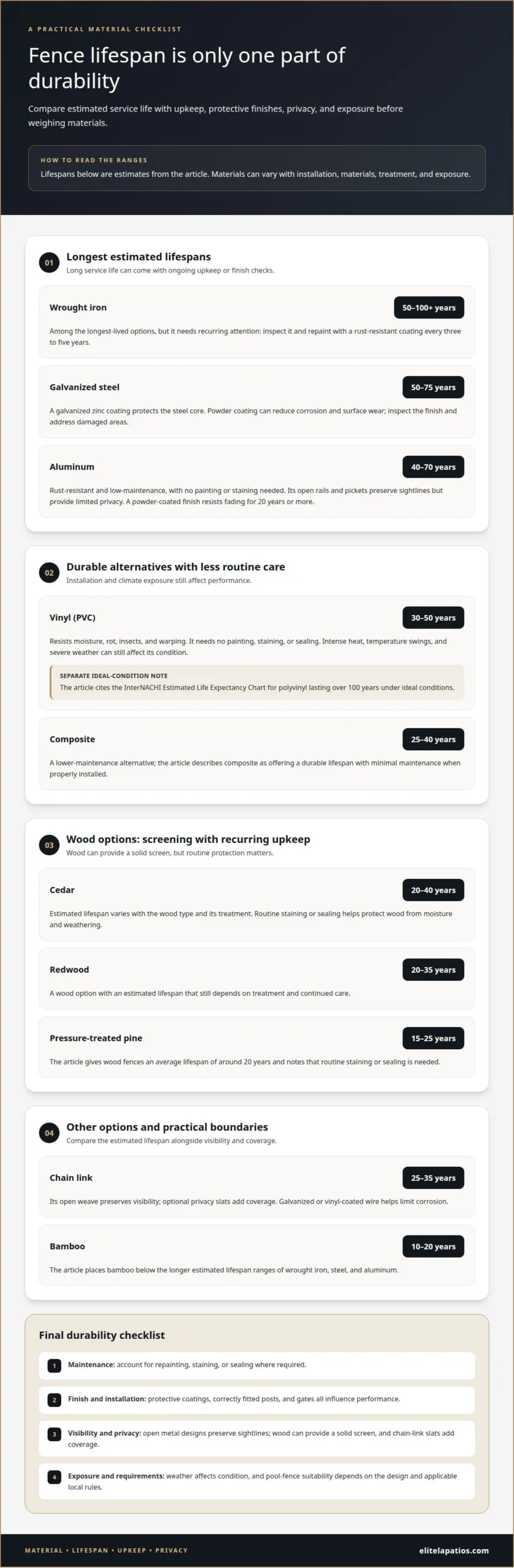
A fence may last a long time yet require more upkeep or provide little privacy. Compare purpose, maintenance, expected longevity, and relative cost together. The estimates below distinguish ten common materials, but they describe typical lifespans, not guaranteed service life.
| Material | Estimated lifespan | Privacy | Maintenance | Cost context |
|---|---|---|---|---|
| Aluminum | 40-70 years | Low; open design | Low | Project-dependent |
| Chain link | 25 to 35 years | Low; slats add coverage | Coated wire reduces corrosion | Generally budget-friendly |
| Galvanized steel | 50-75 years | Depends on design | Coatings protect metal | Project-dependent |
| Wrought iron | 50-100+ years | Low; open design | Repaint every three to five years | Project-dependent |
| Vinyl | 30-50 years | High with solid panels | No painting, staining, or sealing | Project-dependent |
| Composite | 25-40 years | High with solid panels | Low | Project-dependent |
| Cedar | 20-40 years | High with close boards | Routine staining or sealing | Project-dependent |
| Pressure-treated pine | 15-25 years | High with close boards | Routine staining or sealing | Project-dependent |
| Redwood | 20-35 years | High with close boards | Wood upkeep | Project-dependent |
| Bamboo | 10-20 years | Screening depends on construction | Depends on exposure and condition | Project-dependent |
Privacy depends on a fence’s construction, not just its material. Solid vinyl or composite panels can screen a yard, while aluminum and wrought iron favor open sightlines. Chain link remains visible unless fitted with privacy slats. Closely spaced wood boards can provide a screen, but wood needs routine staining or sealing.
Maintenance shapes the ownership experience. Vinyl and aluminum don’t need painting or staining, while wrought iron requires inspection and rust-resistant repainting every three to five years. Galvanized steel and coated chain link rely on protective finishes to reduce corrosion. Composite is durable and low-maintenance; wood requires recurring surface care.
Cost depends on the project, too. Chain link is generally the most budget-friendly choice, especially for larger properties. For other materials, compare the proposed layout, privacy features, and maintenance needs rather than treating lifespan as the only measure of value. A longer-lasting fence may still need more upkeep.
Choose in this order: decide whether privacy or visibility matters more, consider how much maintenance fits your routine, then compare lifespan and project cost. A large boundary with a practical budget may favor chain link; a secluded yard may call for solid panels. If longevity is the priority, weigh steel’s and wrought iron’s service estimates against their coating or repainting needs.
Which fence materials resist rot, rust, insects, and weather best?
Resistance depends on the threat: moisture can encourage rot, while exposed steel can corrode. Vinyl and coated metals address different risks, so match the material to the conditions along each fence line.
Vinyl fencing resists rot, moisture, and pests, making it a strong option where those risks matter. PVC also resists insects and warping. Unlike wood, vinyl doesn’t require painting, staining, or sealing. That reduces routine surface care, though the fence still needs appropriate installation and attention to its overall condition.
For metal, corrosion protection is central. Galvanized zinc coatings protect the steel core, while powder-coated finishes reduce corrosion and surface wear. Aluminum is rust-resistant, and galvanized or vinyl-coated wire helps limit corrosion in chain-link fences. These protections address corrosion, unlike vinyl’s resistance to moisture and pests.
Steel and chain link can suit areas with heavy rain, snow, extreme heat, or temperature swings. Coated metal is a practical consideration where weather exposure is a concern: zinc protects the steel core, and powder coating helps limit surface wear. Galvanized or vinyl-coated chain-link wire likewise helps reduce corrosion.
Wood needs a different kind of protection. Routine staining or sealing helps guard against weathering, but wood doesn’t offer vinyl’s resistance to rot, moisture, and pests. A wood fence in a damp area calls for regular surface care, while vinyl avoids the staining or sealing routine. Choose based on both exposure and the maintenance you’re prepared to sustain.
Use this quick comparison to identify the main risk on your property:
- Moisture, rot, or pests: consider vinyl, which resists these conditions.
- Corrosion: look to galvanized steel, coated chain link, or rust-resistant aluminum.
- Weather extremes: steel and chain link perform best across heavy rain, snow, extreme heat, or temperature swings.
- Wood appearance: plan for routine staining or sealing as part of maintenance.
No single material handles every exposure in the same way. Separate the priorities: note whether moisture, insects, corrosion, or weather extremes matter most, then weigh the corresponding material and its upkeep. For a property where aluminum fencing suits the design, discuss a durable fencing plan for your outdoor space.
Elite L.A. Patios
Elite L.A. Patios helps homeowners bring durability considerations into a cohesive outdoor design. Once you’ve weighed fence materials against privacy, maintenance, and weather exposure, the surrounding structures can also shape the property’s comfort and appearance. Options include premium aluminum lattice patio covers, solid twin wall systems, cantilever structures, and insulated solid roofs. Each supports a different approach to shade and outdoor living, complementing a considered landscape plan without replacing the fence decision itself. If you’re planning improvements alongside a fence, contact Elite L.A. Patios to discuss your outdoor project.
Plan a fence that fits your next chapter
Knowing what the most durable fence material is gives you a starting point. Next, picture how the boundary will serve your property over time. Consider where you want open views, where privacy matters, and how the fence will relate to patios, walkways, and outdoor gathering spaces. A well-planned layout can make these elements feel connected.
Before moving ahead, clarify the priorities that matter most to your household: the look you want, the upkeep you’re comfortable with, and how the outdoor area should function. Those decisions help shape a more cohesive plan for your home. If you’re considering how a fence fits with broader outdoor improvements, contact Elite L.A. Patios to discuss your project. A thoughtful plan can bring greater clarity to your next design decision.
Frequently Asked Questions
What Makes a Fence Durable?
A durable fence resists the conditions most likely to wear it down. Material quality, protective finishes, installation, and ongoing care all affect performance. A metal fence’s coating, for example, helps protect against corrosion, while wood needs surface protection from moisture. Before choosing, identify the main exposures at your property, such as damp soil, direct weather, or frequent use of gates and hardware. Match the material to those conditions.
The 2026 Guide to Popular Fence Materials: What’s Best for Your Home?
The right choice depends on how you use each boundary. For 2026, compare aluminum, steel, wrought iron, chain link, vinyl, composite, and wood by privacy, upkeep, and expected service life. A street-facing fence may benefit from open sightlines, while a backyard boundary may call for solid screening. Also consider gates, slopes, and transitions between outdoor areas. Decide which qualities matter most before narrowing the material choices.
Which fence material works best in harsh climates?
Steel and chain link perform best in regions with heavy rain, snow, extreme heat, or temperature swings. In Southern California, conditions vary by property, so consider the site’s actual exposure rather than assuming every yard faces the same weather. Protective coatings help reduce corrosion on metal, and galvanized or vinyl-coated chain link wire offers added corrosion resistance. Choose a material and finish that suit the conditions along the planned fence line.
What fence material lasts the longest outdoors?
Wrought iron has one of the longest estimated outdoor lifespans, at 50-100+ years. That longevity comes with upkeep: inspect it and repaint with a rust-resistant coating every three to five years. Galvanized steel is another long-lasting option, with an estimated lifespan of 50-75 years. These estimates help frame the comparison, but the maintenance approach differs. Consider whether you prefer periodic coating care or a lower-maintenance material.
How long do vinyl, aluminum, steel, wood, and composite fences last?
Estimated lifespans are 30-50 years for vinyl, 40-70 years for aluminum, and 50-75 years for galvanized steel. Composite is estimated at 25-40 years, while wood averages around 20 years. Wood type changes that estimate: cedar is 20-40 years, and pressure-treated pine is 15-25 years. Use these ranges to compare options, then factor in the upkeep and exposure each material will face on your property.
What is the most durable fence material for coastal or humid climates?
In humid conditions, vinyl resists moisture, rot, and pests, while aluminum is rust-resistant. The right fit depends on whether you prefer privacy or an open appearance. In a coastal setting, consider exposure and protective finishes, especially for metal components. Posts, gates, and connecting hardware matter alongside the main material. Select a design that suits the site and the screening you want.
How much does durable fencing cost per linear foot installed in the United States?
Installed fencing cost per linear foot varies by material and project scope, so no single figure applies to every property. Fence length, layout, gates, and site preparation can all affect the work involved. To compare estimates fairly, keep the requested scope consistent, including the fence line, gate locations, and finish. This makes it easier to see what each installation includes, rather than choosing on headline rate alone.
What maintenance do vinyl, aluminum, steel, and composite fences require?
Vinyl and aluminum don’t need painting or staining, while composite is typically a low-maintenance option when properly installed. Steel depends more on its protective coating: galvanized zinc and powder-coated finishes help reduce corrosion and surface wear. As a practical routine, look over the fence after severe weather and note damaged finishes, loose connections, or gate issues. Addressing visible wear helps keep small maintenance needs from being overlooked.